Disclosure: This site may use affiliate links. Product specifications should be checked against manufacturer or retailer pages before purchase.
Editorial update, June 19, 2026: This recovered page was rebuilt as a practical men's grooming-tool guide using restored or current site media. It avoids firsthand-use claims, live shopping data, stock-status statements, score claims, and brand-owned imagery.
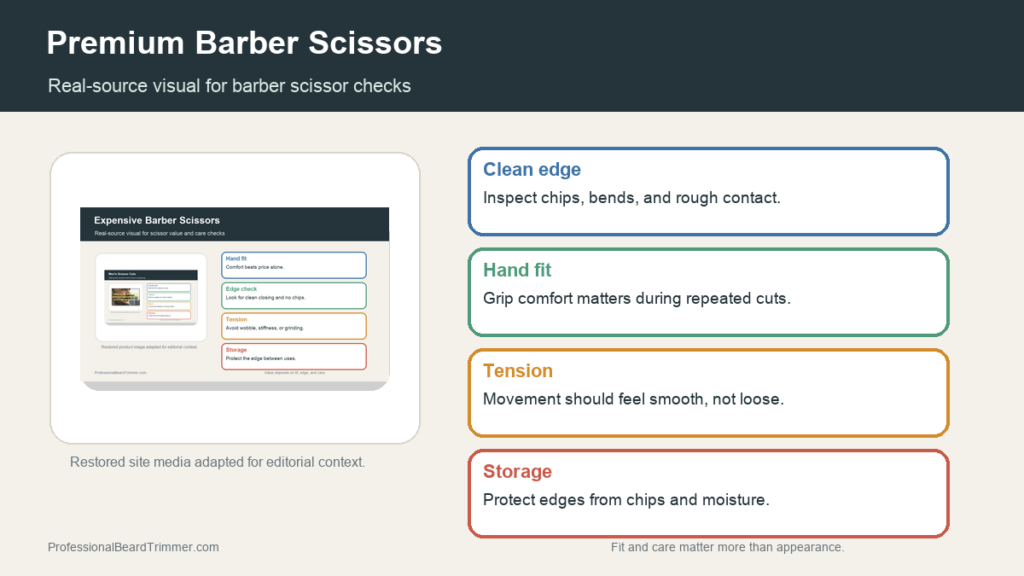
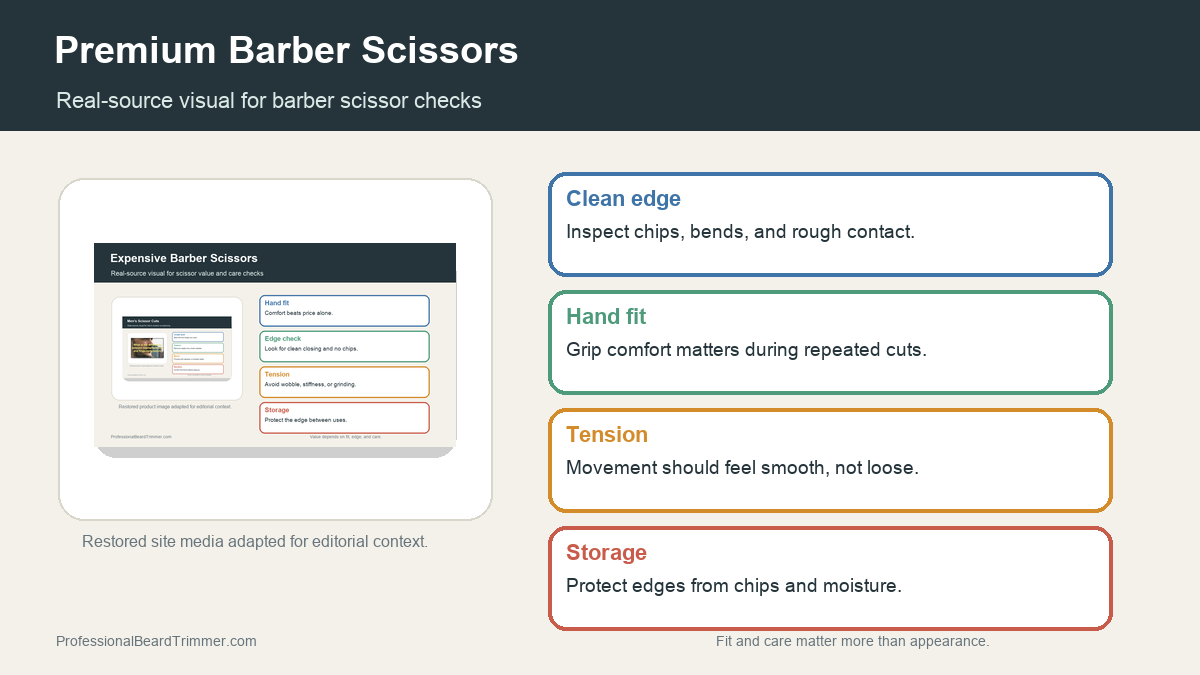
Image note: The image gives barber-scissor context from existing site media. It is not store evidence, investment advice, or proof of a specific scissor's manufacturing details.
Direct answer: Premium barber scissors are worth considering only when the steel, edge condition, hand fit, tension control, balance, and care routine match the cutting work. A tool that feels stable, stays aligned, and can be maintained properly is more useful than one chosen for appearance alone.
Premium barber scissor checks
| Check | What to do | Why it matters |
|---|---|---|
| Steel and edge | Look for a clean edge and material suited to haircutting | Dull or damaged edges fold hair instead of cutting cleanly |
| Hand fit | Check finger rest, ring size, and handle comfort | Poor fit creates strain and sloppy control |
| Tension | Open and close the shears slowly | Loose or tight tension can affect smooth cutting |
| Balance | Hold the tool in a natural cutting grip | Balance matters during repeated sections |
| Storage | Keep edges protected and dry | Good storage reduces chips, corrosion, and accidental damage |
How to evaluate haircutting shears before regular use
- Confirm haircutting use. Use shears made for hair rather than household craft cutting.
- Inspect the edge. Look for chips, bends, corrosion, or rough contact before cutting hair.
- Check hand fit. Make sure the handle and finger rest feel stable without forcing the grip.
- Test tension gently. Open and close the shears to feel for smooth movement without wobble.
- Store protected. Keep the blades dry, covered, and separate from tools that can chip the edge.
Barber scissor checklist
- Clean edge: Cuts hair more predictably and reduces folding.
- Comfortable handle: Supports control during repeated cutting sections.
- Balanced feel: Keeps the hand from fighting the tool.
- Protected storage: Helps preserve alignment and edge condition.
For related reference pages, compare the men's scissor cuts guide, the scissors vs clippers guide, and the barber tool kit guide.
Frequently asked questions
What makes barber scissors feel premium?
Premium-feeling barber scissors usually combine a clean cutting edge, comfortable handle geometry, balanced weight, smooth tension, protected storage, and a care routine that keeps the tool aligned.
Should beginners choose the flashiest shears?
No. Beginners should prioritize hand fit, smooth movement, safe control, and maintainable edges over decorative finishes.
How do I know if scissors are meant for hair?
Haircutting shears are designed for clean hair cutting, controlled tension, and ergonomic hand position. Household scissors are usually too blunt or poorly balanced for precise haircutting.
What damages haircutting scissors?
Common damage comes from cutting non-hair materials, dropping the tool, poor storage, moisture, dirty pivots, and forcing dull edges through thick sections.