Disclosure: This site may use affiliate links. Product specifications should be checked against manufacturer or retailer pages before purchase.
Editorial update, June 18, 2026: This recovered page was rebuilt as a practical tool-choice guide for grooming, without product rankings or test claims.
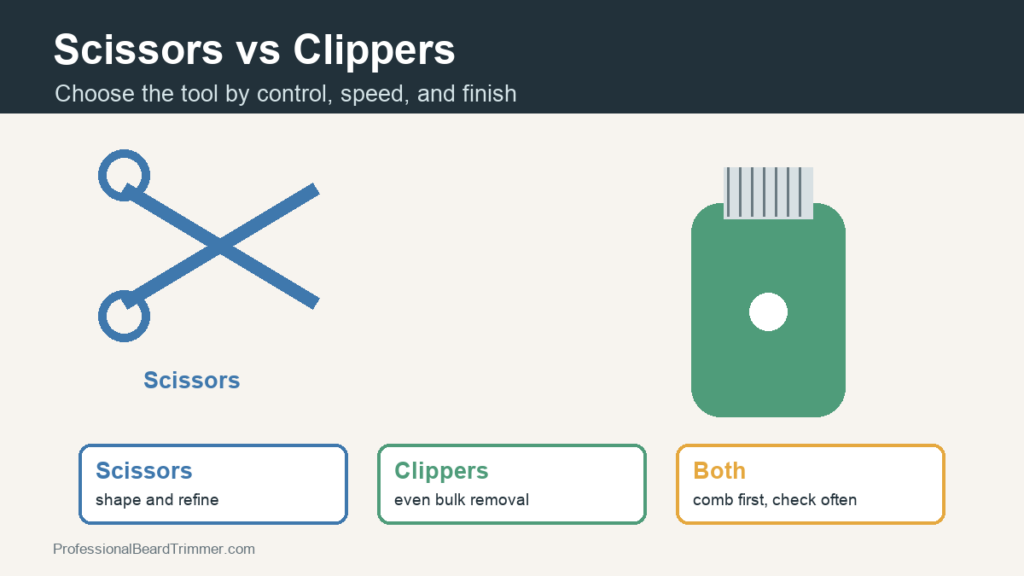
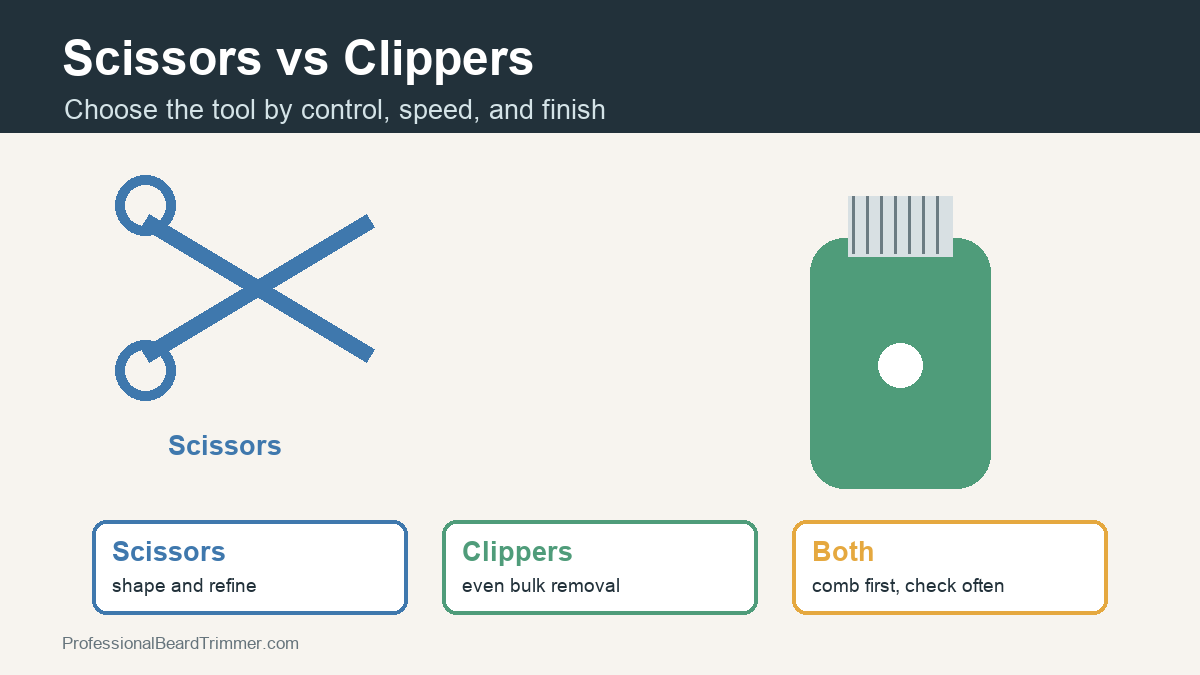
Direct answer: Use clippers when you need even bulk removal, guard-controlled length, or a repeatable fade. Use scissors when you need small shape corrections, texture control, or trimming around irregular areas. Many grooming routines use both: clippers first for length, scissors last for refinement.
Scissors vs clippers decision table
| Decision point | Use this rule | Why it matters |
|---|---|---|
| Even length | Use clippers with the right guard | A guard keeps passes more consistent |
| Small corrections | Use scissors carefully | Scissors remove less hair per cut when controlled |
| Beard bulk | Use clippers first | Bulk reduction is faster and more repeatable |
| Texture or flyaways | Use scissors after combing | Small snips can refine without changing the whole length |
| Edges | Use detail tools, not large scissors | Borders need visibility and control |
How to choose the tool for a trim
- Comb and dry first. Dry, combed hair shows true length and reduces accidental overcutting.
- Remove bulk with guards. Use clippers and a longer guard before considering shorter settings.
- Check symmetry. Pause after each side and compare before moving shorter.
- Refine with scissors. Use small snips for stray hairs or shape adjustments after bulk is even.
- Stop before chasing perfection. Repeated small corrections can turn into accidental length loss.
Tool-choice checklist
- Clippers: Best for repeatable length and efficient bulk removal.
- Scissors: Best for controlled refinement and shape adjustments.
- Comb: Needed for both tools so hair feeds in a predictable direction.
- Mirror and light: Good visibility prevents uneven corrections.
For related reference pages, compare the trimmer vs clipper vs shaver guide, the beard fade guide, and the guard size guide.
Frequently asked questions
Are scissors safer than clippers?
Neither tool is automatically safer. Clippers can cut too short with the wrong guard, while scissors can remove uneven chunks if used without combing and visibility.
Should I trim a beard with scissors or clippers?
Use clippers for even length and bulk control. Use scissors for final shaping, flyaways, and small corrections after the beard is combed.
Can clippers create texture?
Clippers can shape length and blend, but scissors generally give more control for small texture corrections.
What should beginners use first?
Beginners should start with clippers and a longer guard for bulk, then use very small scissor corrections only where needed.