
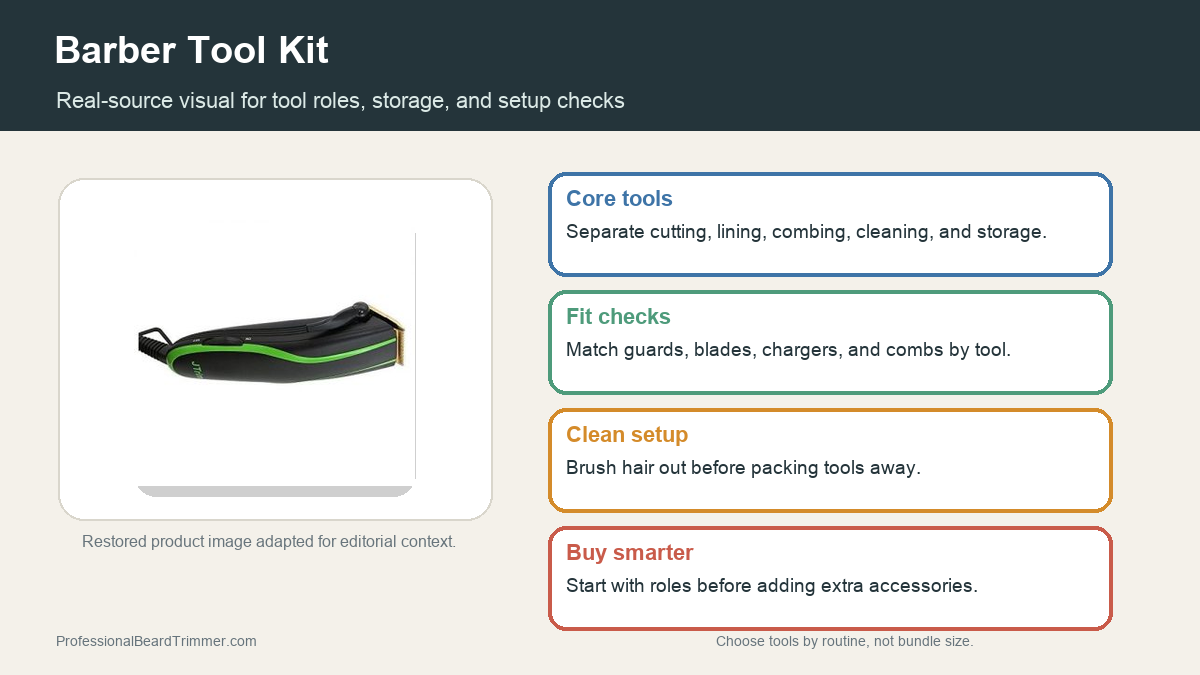
Disclosure: This site may use affiliate links. Product specifications should be checked against manufacturer or retailer pages before purchase.
Editorial update, June 19, 2026: This recovered page was rebuilt as a practical tool-kit planning guide using a restored real kit image. It does not claim hands-on lab testing or current bundle contents.
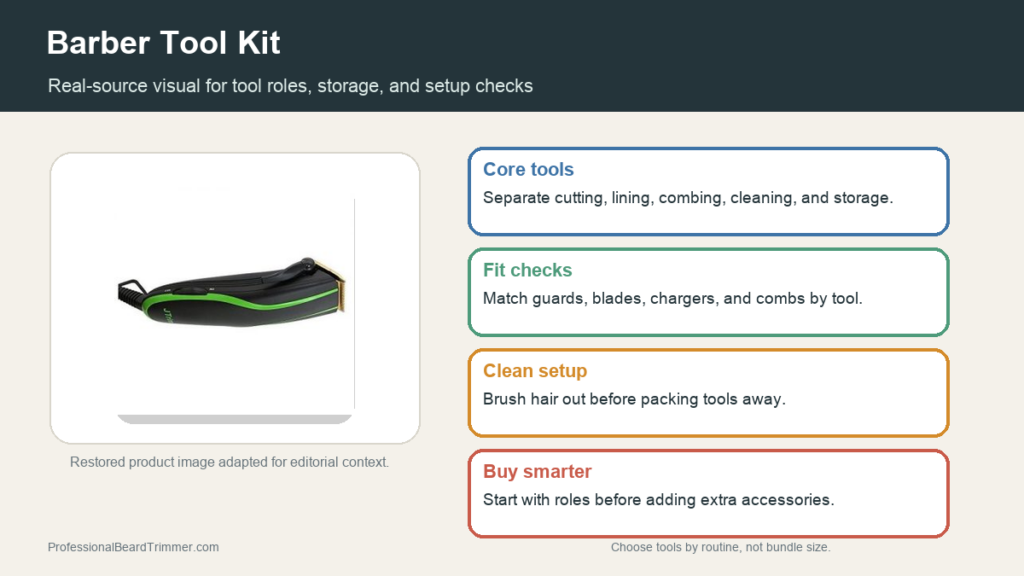
Image note: The visual is adapted from restored site media and is used for kit-planning context, not as official brand material or a guarantee of current contents.
Direct answer: A good barber tool kit should cover cutting, line work, guard lengths, comb control, cleaning, oiling, and storage. Start with tools you will actually maintain, then add accessories only when they solve a real grooming task.
Barber tool kit planning checks
| Check | What to do | Why it matters |
|---|---|---|
| Cutting tool | Choose a clipper or trimmer for the main grooming task | The core tool determines guards, blades, and cleaning needs |
| Length control | Include guards or combs that lock firmly | Secure length control prevents uneven cutting |
| Detail work | Add an edge tool only if you maintain lines or neck cleanup | Detail tools are useful but need careful handling |
| Cleaning supplies | Keep a brush, approved oil, and dry storage space | Maintenance protects tool performance |
| Storage | Use a case or pouch that separates blades, cords, and guards | Organized storage reduces damage and lost accessories |
How to build a useful barber tool kit
- List your grooming jobs. Separate beard trimming, neckline cleanup, fades, bulk cutting, and travel needs.
- Pick the core cutter. Choose the clipper or trimmer that fits the job before adding accessories.
- Match guards and blades. Use exact model fit for guards, blades, chargers, and comb attachments.
- Add cleaning support. Store a brush and approved oil where they will be used after trimming.
- Pack by routine. Arrange the case so daily tools are easiest to reach and sharp parts are protected.
Tool-kit checklist
- Core trimmer or clipper: Handles the main beard, hair, or cleanup task.
- Length guards: Provide repeatable cutting lengths when they lock securely.
- Cleaning brush: Removes hair before it affects blade movement.
- Storage case: Keeps guards, cords, and sharp parts from getting damaged.
For related reference pages, compare the clipper bag organization guide, the cleaning supplies checklist, and the clipper case guide.
Frequently asked questions
What should a basic barber tool kit include?
Start with a main clipper or trimmer, secure guards, a comb, a cleaning brush, approved oil, and a protective storage case.
Should I buy the largest tool kit available?
Not automatically. A smaller kit with tools you maintain and use often is usually more useful than a large bundle with weak fit or unused parts.
How do I keep a barber kit organized?
Separate blades, guards, cords, cleaning supplies, and daily-use tools so sharp parts are protected and accessories are easy to find.
What matters most for replacement parts?
Exact model fit matters most. Guards, blades, chargers, and combs should be matched to the tool they belong to.