
Disclosure: This site may use affiliate links. Product specifications should be checked against manufacturer or retailer pages before purchase.
Editorial update, June 18, 2026: This recovered page was rebuilt as a practical storage and maintenance guide with a neutral diagram, direct answer, checklist, and FAQ.
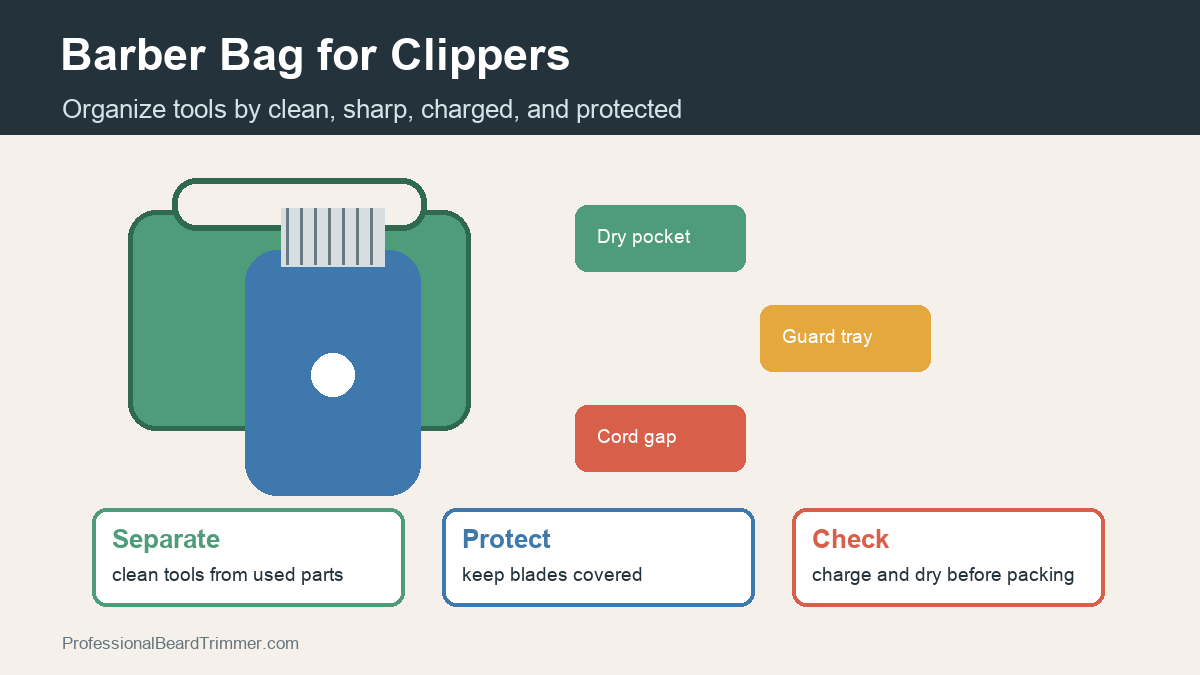
Direct answer: A barber bag for clippers should protect blades, keep guards sorted, separate clean and used attachments, and leave room for cords or chargers without bending them. The best setup is not about carrying more tools; it is about keeping each tool dry, easy to find, and ready for a safe trim.
Barber bag setup decision table
| Decision point | Use this rule | Why it matters |
|---|---|---|
| Blade protection | Use a covered slot or blade guard | Exposed teeth can bend, chip, or catch on cords |
| Guards | Keep combs in one labeled area | Mixed guards slow trimming and make length mistakes easier |
| Dry storage | Pack tools only after they are dry | Closed damp pockets can trap residue and odor |
| Cords and chargers | Coil loosely in a separate pocket | Tight bends can stress cables and connectors |
| Daily use | Place the most-used tool where it is easy to reach | A simple layout reduces rushed handling |
How to pack clippers safely
- Clean before packing. Brush loose hair from blades and guards before putting tools back in the bag.
- Dry every part. Let attachments and exterior surfaces dry before closing a pocket or case.
- Cover sharp parts. Use blade covers, sleeves, or protected compartments for exposed teeth.
- Group by job. Keep main clippers, detail trimmers, guards, cleaning tools, and cords in separate zones.
- Check before leaving. Confirm the tool is off, the cable is not pinched, and the blade area is protected.
Clipper bag checklist
- Main tool pocket: Holds the clipper or trimmer without crushing the blade area.
- Guard storage: Keeps combs sorted by length or tool family.
- Cleaning pocket: Stores brush, cloth, and small care items away from clean guards.
- Cord space: Prevents charging cables from rubbing against blades.
For related reference pages, compare the barber cleaning supplies guide, the trimmer guard checklist, and the clean-and-oil guide.
Frequently asked questions
What should a clipper bag hold?
A clipper bag should hold the main tool, guards, a brush, dry cloth, charger or cord, and protective blade storage. Keep wet or used attachments separate until they are cleaned and dry.
Should blades be covered inside a barber bag?
Yes. Covering blades helps prevent bent teeth, scratches, and accidental contact with cords or other metal items.
How do I keep guards organized in a bag?
Group guards by tool family and length label. Do not rely on color alone unless the color system is consistent for that exact set.
Can I store a damp trimmer in a bag?
No. Dry the exterior and attachments first. Closed damp storage can trap residue and make the next cleanup harder.