
Disclosure: This site may use affiliate links. Product specifications should be checked against manufacturer or retailer pages before purchase.
Editorial update, June 18, 2026: This recovered page was rebuilt as a neutral cleaning workflow guide with a diagram, direct answer, checklist, and FAQ.
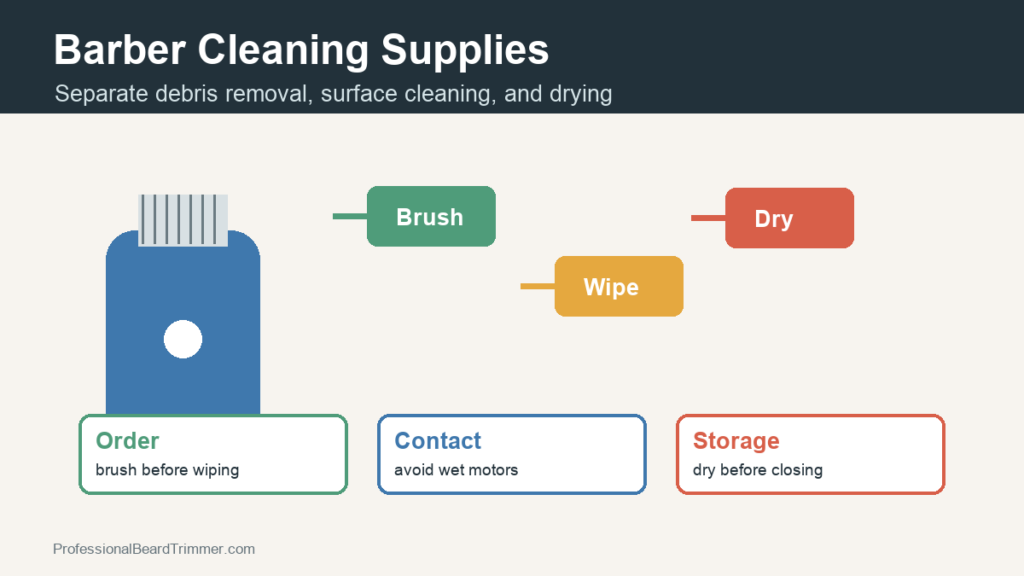
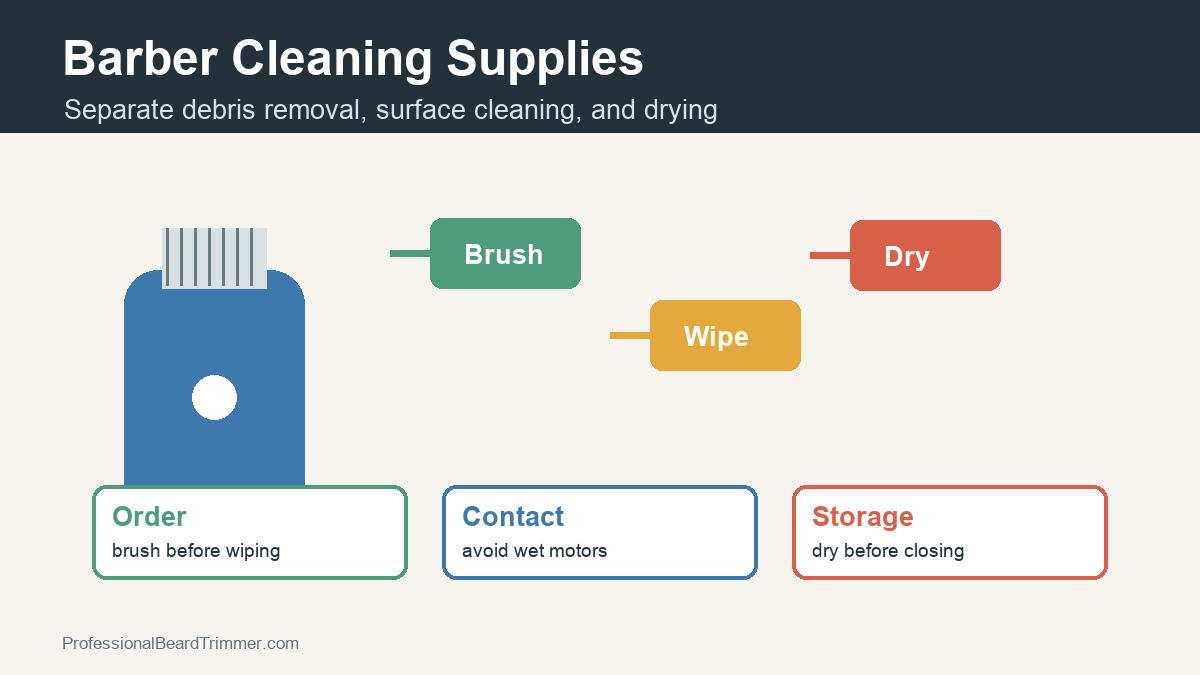
Direct answer: Barber cleaning supplies should cover three jobs: removing loose hair, cleaning safe contact surfaces, and drying tools before storage. Use a brush first, keep liquids away from motors and charging ports, follow the tool maker directions, and replace cracked guards or worn blades instead of trying to clean them back to safe condition.
Which cleaning supply does what?
| Decision point | Use this rule | Why it matters |
|---|---|---|
| Loose hair | Use a small brush before any wipe | Hair trapped under guards makes later cleaning less effective |
| Blade surface | Use only methods allowed by the tool maker | Wrong liquids can damage finishes, motors, or charging points |
| Guards and combs | Remove, brush, wipe, and dry separately | Wet or dirty guards can pull hair and store residue |
| Station surface | Clean after tools are moved away | This reduces debris transfer back to clean attachments |
| Storage | Store only when dry | Closed damp cases can trap odor and residue |
How to clean a clipper or trimmer after use
- Unplug and power off. Turn the tool off and disconnect charging cables before cleaning.
- Remove loose hair. Brush the blade area, guard teeth, and attachment rails before using any wipe.
- Separate attachments. Clean guards and combs away from the motor body so moisture stays controlled.
- Dry fully. Let parts dry before reinstalling guards, closing a case, or putting tools in a drawer.
- Inspect before next use. Check for cracked guards, loose clips, rust, unusual heat, or dull pulling.
Cleaning setup checklist
- Brush: Use for loose hair around blades, guards, and case seams.
- Dry cloth: Use for exterior surfaces and final drying.
- Small tray: Keeps guards sorted while they dry.
- Replacement plan: Retire cracked guards, warped combs, and dull blades.
For related reference pages, compare the clean-and-oil guide, the trimmer pulling hair guide, and the trimmer guard fit checklist.
Frequently asked questions
Do clippers need to be cleaned after every use?
Yes. At minimum, remove loose hair and check the blade area after each use. A deeper wipe or blade-care routine depends on the tool maker instructions and how often the tool is used.
Can I rinse any clipper under water?
No. Only rinse tools or attachments that the manufacturer says are washable. Keep water away from non-washable motor bodies and charging ports.
Why dry guards before storing them?
Drying prevents residue and odor from being trapped in a closed case or drawer. It also makes cracks, weak clips, and bent teeth easier to spot.
When should cleaning stop and replacement start?
Replace parts when a guard is cracked, a clip no longer locks, a blade pulls after cleaning and oiling, or the tool heats unusually during normal use.