
Disclosure: This site may use affiliate links. Product specifications should be checked against manufacturer or retailer pages before purchase.
Editorial update, June 18, 2026: This recovered page was rebuilt as a tool-organization guide instead of a vague history article.
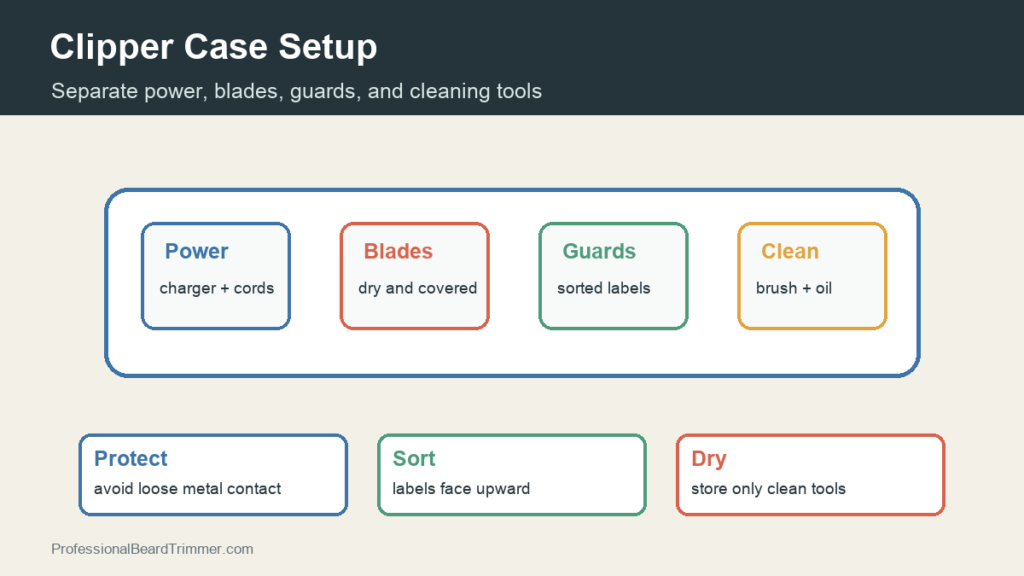
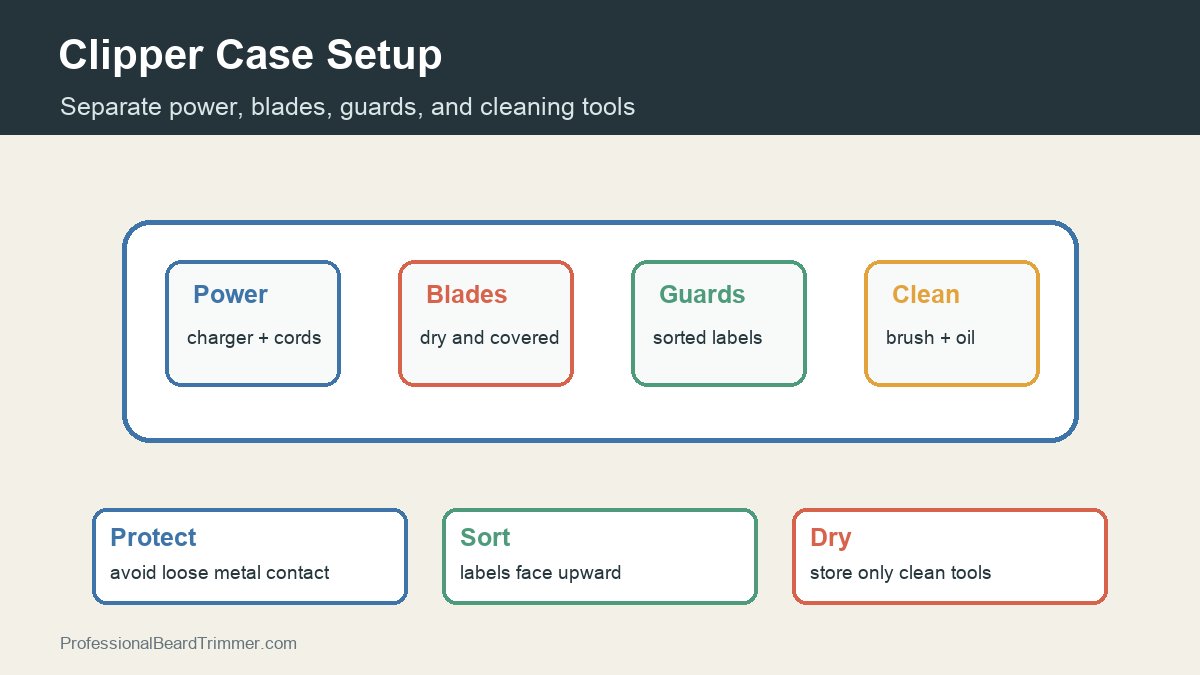
Direct answer: A clipper case should protect the tool, separate sharp or metal parts, keep guards sorted by label, and leave room for cleaning items. The best setup is simple: power gear in one zone, blades covered, guards grouped by length, and brushes or oil stored away from loose hair.
Clipper case organization table
| Decision point | Use this rule | Why it matters |
|---|---|---|
| Power items | Store charger and cord in one section | Loose cords can hide smaller parts |
| Blades | Cover or separate metal cutting parts | Separation helps prevent edge damage |
| Guards | Sort by length label | Sorted guards are faster to check before a trim |
| Cleaning tools | Keep brush and oil easy to reach | Maintenance is more likely when tools are visible |
| Dry storage | Let tools dry before closing the case | Moisture and trapped hair make storage less sanitary |
How to organize a clipper case
- Empty the case. Remove loose hair, broken guards, and duplicate items that make inspection harder.
- Assign zones. Separate power items, cutting parts, guards, and cleaning tools.
- Protect blades. Use covers or a separate pocket so metal parts do not scrape other tools.
- Label guard rows. Keep frequently used guard lengths in a predictable order.
- Close only after drying. Wipe tools and combs before storing them in a closed case.
Case setup checklist
- Separate compartments: Prevent cords, guards, and blades from becoming one pile.
- Guard order: Keep comb labels visible for faster setup.
- Cleaning pocket: Keep brush and oil close to the clipper.
- Dry interior: Avoid closing damp tools inside the case.
For related reference pages, compare the barber bag organization guide, the cleaning supplies checklist, and the blade replacement checklist.
Frequently asked questions
What should go in a clipper case?
A practical case can hold the clipper, charger, guard combs, blade cover, brush, oil, and a small cleaning cloth. Keep each group separated.
Should guards and blades touch inside a case?
It is better to separate them. Loose metal contact can dull edges or damage plastic guard teeth.
How often should I clean a clipper case?
Clean it whenever loose hair or product buildup appears. A quick wipe after each trim keeps storage easier to manage.
Can I store a damp clipper in a case?
Let the tool dry first. Closing damp tools inside a case can make the kit harder to keep clean.