Disclosure: This site may use affiliate links. Product specifications should be checked against manufacturer or retailer pages before purchase.
Editorial update, June 19, 2026: This recovered page was rebuilt as a practical grooming-tool guide using restored old-site media. It does not claim hands-on lab testing, current manufacturer specifications, offers, or availability.
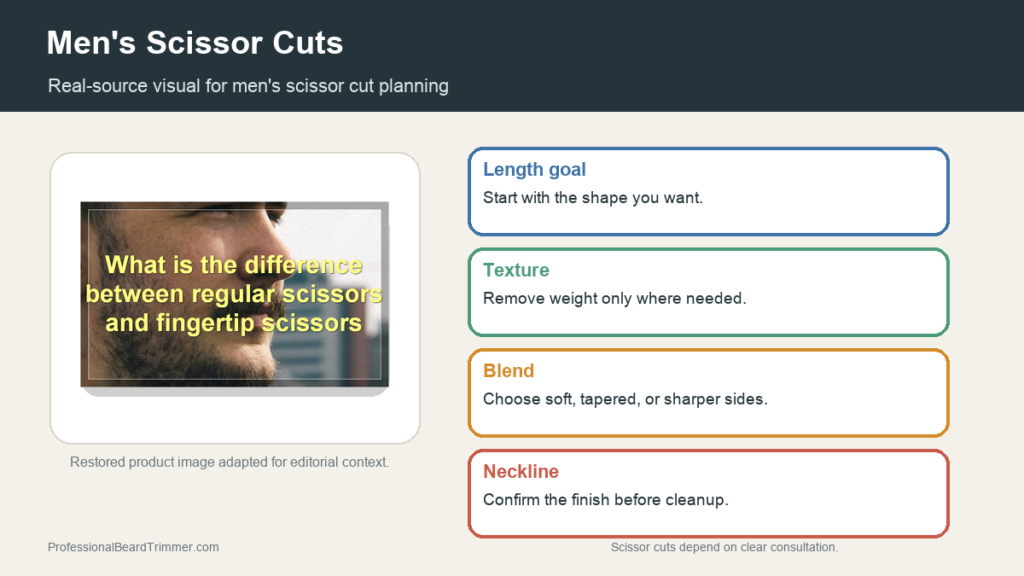
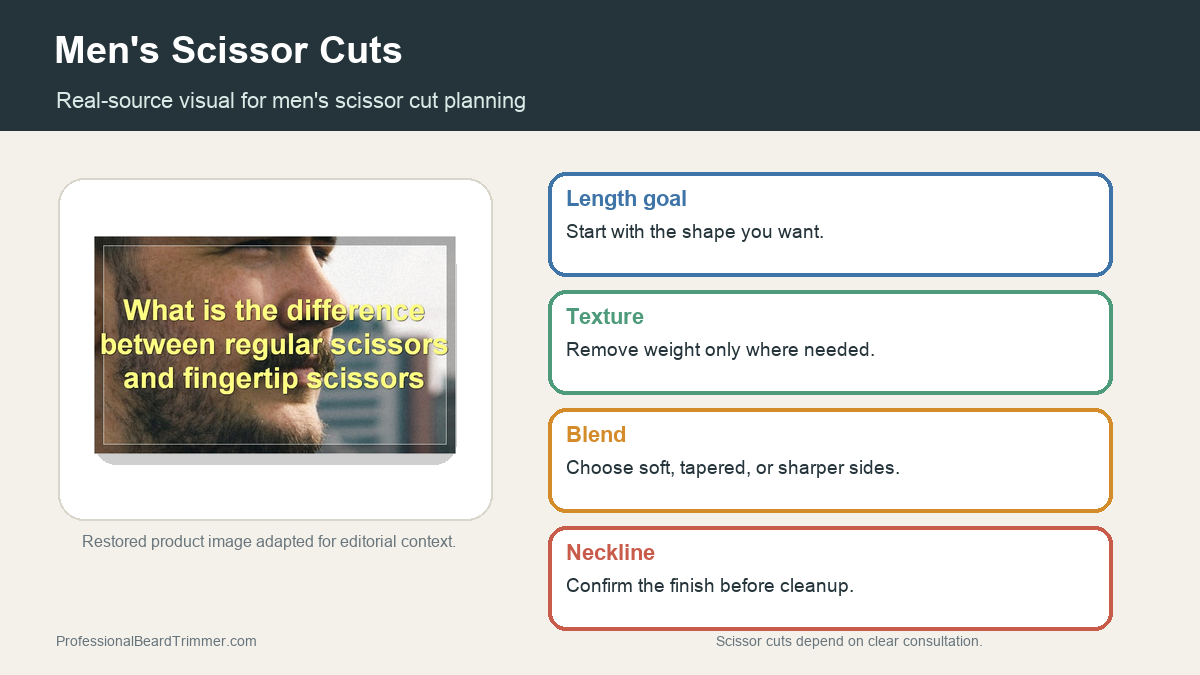
Image note: The image gives real scissors-category context from restored site media. It is a planning guide, not a claim that a specific haircut result was tested.
Direct answer: Men's scissor cuts are best when you want shape, movement, texture, longer length control, or a softer finish than guard-based clipping. Ask for the target length, how much weight to remove, how the sides should blend, and whether the neckline should stay natural or sharp.
When a men's scissor cut makes sense
| Check | What to do | Why it matters |
|---|---|---|
| Longer length | Use scissors when the top needs shape rather than a guard length | Scissors give more control over movement |
| Texture | Ask for light texture only where hair looks bulky | Too much removal can make hair hard to style |
| Blend | Decide whether sides should be scissor-over-comb, tapered, or clipped | The blend changes the overall finish |
| Hair behavior | Discuss cowlicks, waves, thickness, and styling habits | Natural growth affects the final shape |
| Home limits | Keep home trimming conservative around fringe and neckline | Mistakes are harder to hide on longer shapes |
How to ask for a men's scissor cut
- Bring a length reference. Use a photo or clear length note so the barber knows the target shape.
- Describe daily styling. Say whether you air dry, use product, part the hair, or need low-maintenance shape.
- Choose the side finish. Ask for scissor-over-comb, a soft taper, or clipper blending depending on the look.
- Control texture. Request weight removal only where the hair feels bulky or heavy.
- Confirm the neckline. Choose a natural, tapered, or sharper neckline before the finish work begins.
Scissor cut consultation checklist
- Target length: Keeps the haircut aligned with the style goal.
- Texture plan: Controls bulk without over-thinning.
- Blend choice: Decides whether the cut looks soft, tapered, or sharper.
- Neckline finish: Changes maintenance and overall polish.
For related reference pages, compare the men's scissor haircut guide, the fade consultation guide, and the trimmer, clipper, and shaver comparison.
Frequently asked questions
When are scissors better than clippers for men's hair?
Scissors are often better for longer tops, softer sides, natural texture, shape control, and styles where a fixed guard length would look too blunt.
What should I ask for before a scissor cut?
Ask for target length, how much weight to remove, side blending method, neckline finish, and how the cut should work with your normal styling routine.
Can a scissor cut still include clipper work?
Yes. Many men's cuts use scissors on top with clipper or trimmer work on the sides, neckline, or edges.
What is risky about cutting scissor styles at home?
Longer scissor shapes need section control, even tension, and careful blending. Small mistakes can leave uneven weight or visible steps.