Disclosure: This site may use affiliate links. Product specifications should be checked against manufacturer or retailer pages before purchase.
Editorial update, June 19, 2026: This recovered page was rebuilt as a practical men's grooming guide using restored old-site media. It does not claim direct barber work, lab measurement, retailer offer data, or availability.
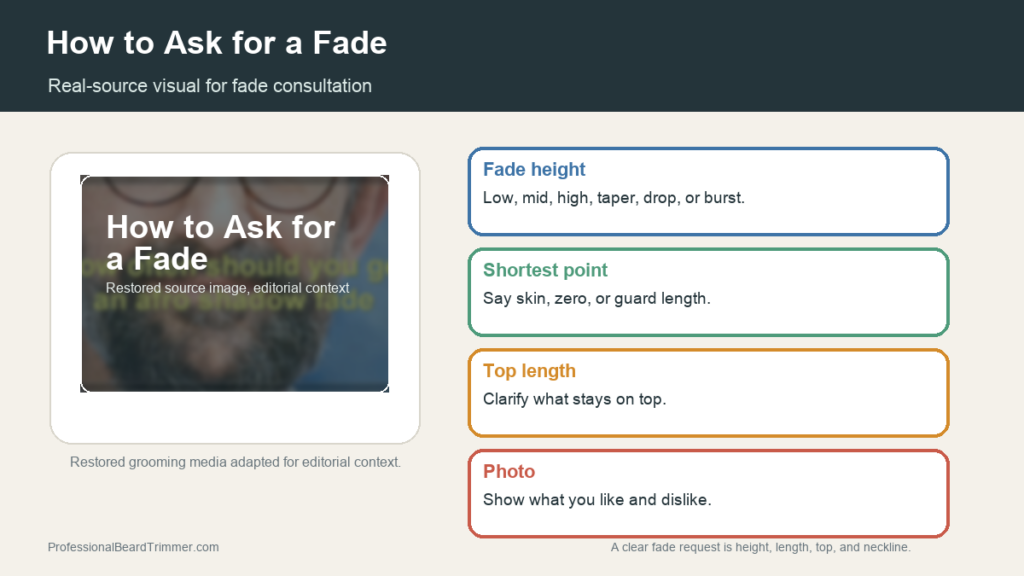
Image note: The image gives restored haircut-category context. It is a consultation aid, not proof of a specific barber service or final cut.
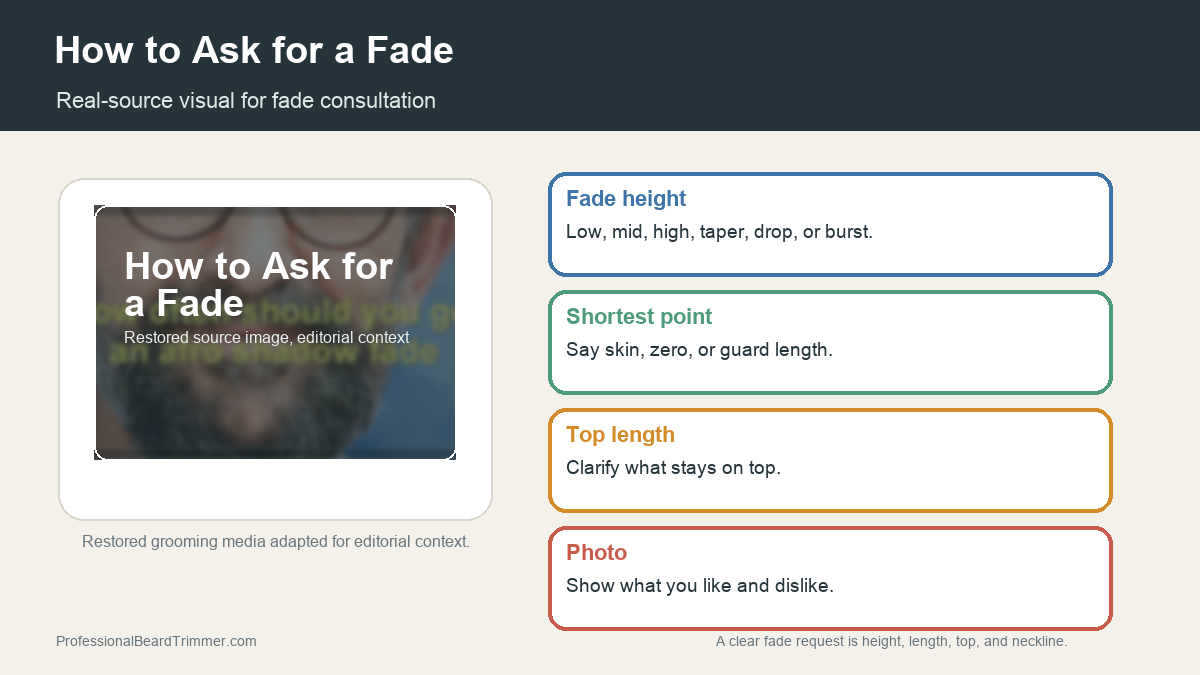
Direct answer: To ask for a fade, name the fade height, the shortest guard or skin level, how much length to keep on top, and the neckline finish. Bring a reference photo and say whether you want a low, mid, high, taper, drop, or burst shape.
Fade request checklist
| Check | What to do | Why it matters |
|---|---|---|
| Fade height | Low, mid, high, taper, drop, or burst | Height changes the whole haircut silhouette |
| Shortest point | Skin, foil, zero, half, or named guard | This controls how close the fade starts |
| Top length | Say how much to keep, remove, or blend | The top determines whether the fade looks balanced |
| Neckline | Natural, tapered, rounded, or squared | The back finish affects upkeep |
| Reference photo | Show a similar hair type and head shape when possible | Photos reduce wording confusion |
How to ask a barber for a fade
- Choose the fade height. Decide whether the fade should stay low, sit around the temple, or rise higher on the sides.
- State the shortest length. Tell the barber whether the shortest area should be skin, foil, zero, or a specific guard.
- Explain the top. Say how much length to keep on top and whether it should be textured, combed, or left heavier.
- Confirm the neckline and sideburns. Choose a natural, tapered, rounded, or squared neckline before the final edge work.
- Use a reference photo. Show a clear photo, then describe what you do and do not like about it.
Fade consultation checklist
- Fade height: Sets where the blend starts and stops.
- Shortest guard: Defines how close the cut begins.
- Top-length instruction: Keeps the haircut balanced.
- Reference photo: Reduces barber-client confusion.
For related reference pages, compare the clipper taper guide, the clipper lever guide, and the low taper curly hair guide.
Frequently asked questions
What should I say when asking for a fade?
Say the fade height, the shortest length, how much hair to keep on top, and the neckline finish. A reference photo helps the barber match the shape you want.
Should I ask for a low, mid, or high fade?
Choose a low fade for a subtle shape, a mid fade for a balanced everyday cut, and a high fade for a stronger contrast. Start lower if you are unsure.
What does skin fade mean?
A skin fade blends down to bare skin or very close cutting at the shortest point. It needs more upkeep than a longer guard fade.
How do I avoid getting the wrong fade?
Use a photo, name the fade height, confirm the shortest point, and explain what you want left on top before cutting begins.