Disclosure: This site may use affiliate links. Product specifications should be checked against manufacturer or retailer pages before purchase.
Editorial update, June 19, 2026: This recovered page was rebuilt as a practical clipper lever guide using a restored real adjustable clipper image. It does not claim hands-on lab testing or current manufacturer specifications.
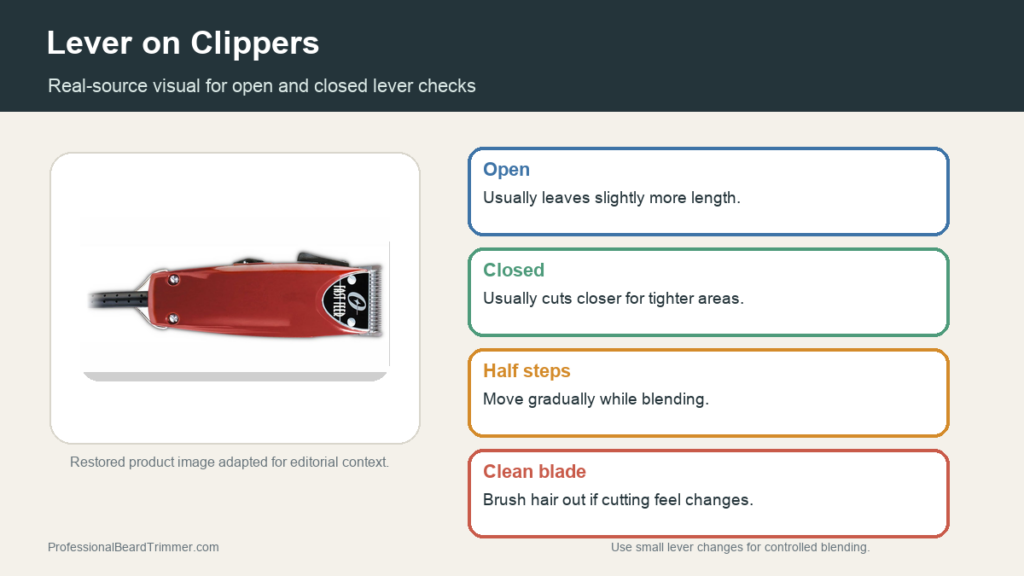
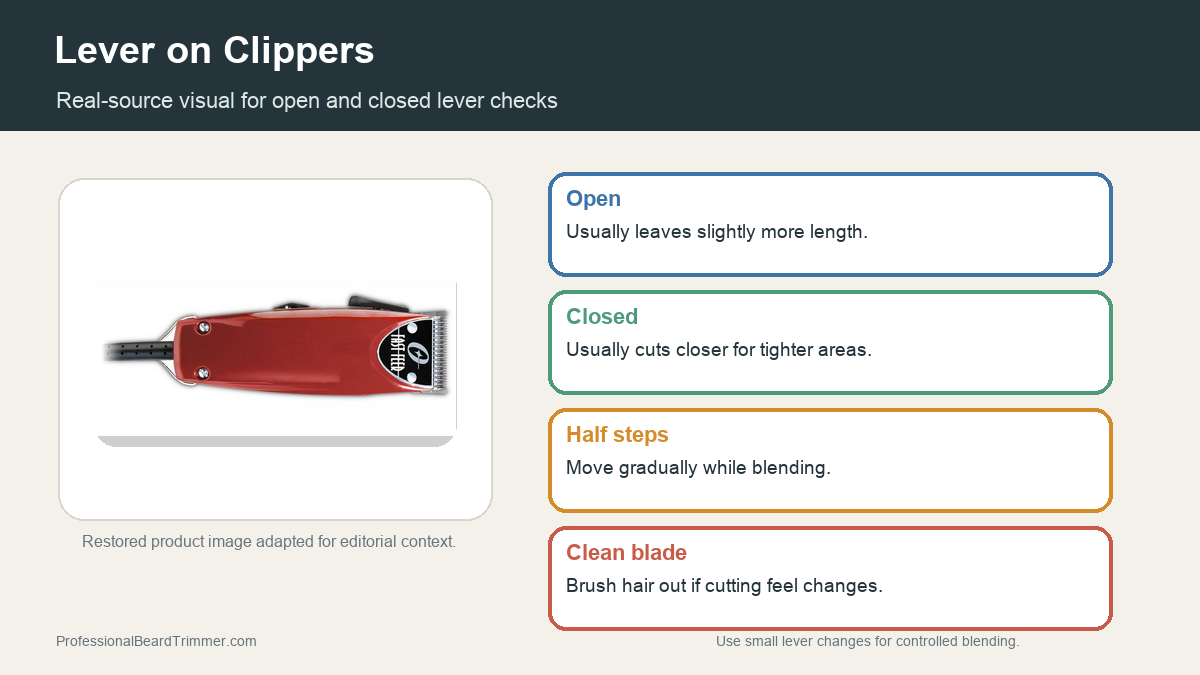
Image note: The image provides real clipper context. Lever positions and cutting feel can vary by exact clipper, blade, guard, hair state, and maintenance condition.
Direct answer: The lever on clippers changes how close the blade cuts between guard lengths. A closed lever usually cuts shorter, while an open lever usually leaves slightly more length. Use it in small steps, keep the blade clean, and avoid forcing a fade if the blade pulls or heats.
Clipper lever position checks
| Check | What to do | Why it matters |
|---|---|---|
| Closed lever | Use for the shorter end of a blend | It usually cuts closer than the open position |
| Open lever | Use to soften the transition before moving to another guard | It usually leaves slightly more length |
| Half steps | Move the lever gradually instead of jumping positions | Small changes make blending easier to control |
| Guard match | Combine lever positions with guards intentionally | A lever cannot replace every guard length |
| Blade care | Clean hair out during longer sessions | Buildup can change cutting feel and heat |
How to use a clipper lever for controlled blending
- Start longer. Begin with a safer guard or open lever when you are unsure of the length.
- Close gradually. Move the lever in small steps as you refine the shorter area.
- Use short passes. Blend with controlled strokes instead of pressing hard into one line.
- Clean as needed. Brush hair from the blade if the clipper starts dragging or heating.
- Stop before overcutting. Pause and reassess when the transition looks close rather than chasing one more pass.
Lever blending checklist
- Open lever: Helps leave a little more length for blending.
- Closed lever: Helps tighten the shorter part of a transition.
- Matching guards: Keep length changes controlled.
- Clean blade: Keeps lever adjustments more predictable.
For related reference pages, compare the open vs closed lever guide, the clipper lever position checklist, and the clipper taper guide.
Frequently asked questions
What does the lever on clippers do?
The lever adjusts the blade position so the clipper cuts closer or leaves slightly more length between guard sizes.
Is open lever longer or shorter?
On most adjustable clippers, an open lever leaves slightly more length and a closed lever cuts closer.
Can a lever replace guards?
No. A lever helps fine-tune a blend, but guards are still needed for larger length changes.
Why does the clipper pull when using the lever?
Pulling can come from trapped hair, a dry or dirty blade, weak power, poor blade seating, or trying to remove too much hair in one pass.