Disclosure: This site may use affiliate links. Product specifications should be checked against manufacturer or retailer pages before purchase.
Editorial update, June 19, 2026: This recovered page was rebuilt as a practical haircut and grooming-length guide using restored old-site media. It does not claim hands-on barber testing, current product specifications, retailer offers, or availability.
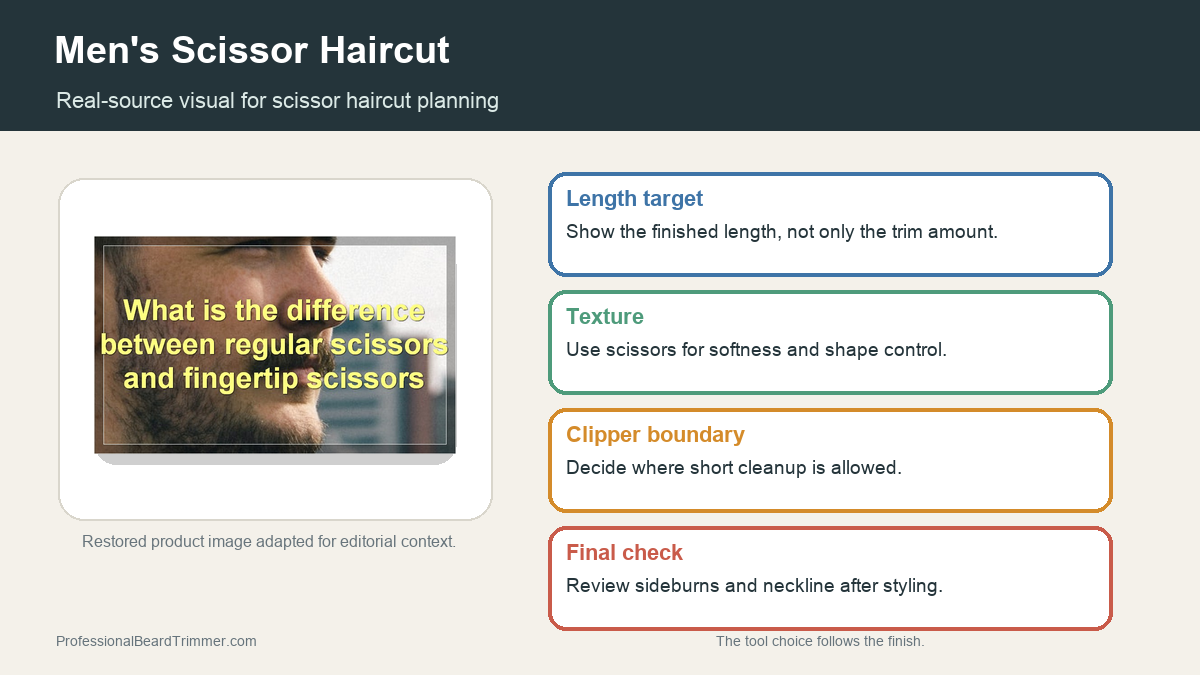
Image note: The image gives real scissors-category context from restored site media. It is a planning aid, not proof of a specific haircut service or hands-on test.
Direct answer: A men's scissor haircut is best when you want shape, softness, texture control, or longer finished length. Clippers are better for short uniform sections, fades, and fast cleanup. Many good men's cuts use scissors on top and clippers or a trimmer only for the edges.
Scissor haircut decision checks
| Check | What to do | Why it matters |
|---|---|---|
| Finished length | Show where the hair should sit after styling | Scissor cuts depend on the final shape, not only the amount removed |
| Texture goal | Say whether you want weight, movement, or a cleaner outline | Texture changes how scissors should be used |
| Clipper role | Decide whether clippers are only for sides, neckline, or cleanup | This avoids an accidental short clipper-heavy result |
| Sideburns and neckline | Choose soft, natural, tapered, or sharper cleanup | The finish affects how long the cut looks clean |
| Maintenance | Ask how often the shape will need a trim | Longer scissor styles lose shape differently than clipper cuts |
How to ask for a men's scissor haircut
- Bring a length reference. Use a photo or clear finished-length note so the consultation is specific.
- Describe the finish. Tell the barber whether you want soft movement, a cleaner business cut, or a textured casual shape.
- Define the clipper areas. State whether clippers should be used on the sides, neckline, sideburns, or not at all.
- Check before more length is removed. After the first section, confirm the amount removed before the cut becomes too short.
- Check the styled result. Look at the cut after product or drying before final neckline and sideburn cleanup.
Scissor haircut checklist
- Clear target length: Prevents over-cutting during scissor work.
- Texture preference: Guides thinning, layering, and weight removal.
- Clipper boundary: Keeps short cleanup from taking over the whole haircut.
- Finish check: Confirms neckline, sideburns, and daily styling shape.
For related reference pages, compare the long-hair barber guide, the men's scissor cuts guide, and the scissors vs clippers guide.
Frequently asked questions
Is a scissor haircut better than clippers for men?
It is better when the goal is shape, texture, longer top length, or a softer finish. Clippers are better for short uniform sections, fades, and fast cleanup.
Can a men's haircut use both scissors and clippers?
Yes. Many men's haircuts use scissors for the top and shape, then clippers or a trimmer for sides, sideburns, neckline, or beard connection.
What should I ask before a scissor haircut?
Confirm the finished length, texture goal, side length, neckline finish, and whether clippers should be used only for cleanup.
Why can a scissor cut look uneven after styling?
Uneven results can come from unclear length targets, hair texture, drying pattern, too much weight removal, or a finish that was not checked after styling.