Disclosure: This site may use affiliate links. Product specifications should be checked against manufacturer or retailer pages before purchase.
Editorial update, June 19, 2026: This recovered page was rebuilt as a practical men's haircut and grooming-tool guide using restored old-site media. It does not claim hands-on barber testing, current product specifications, retailer offers, or availability.
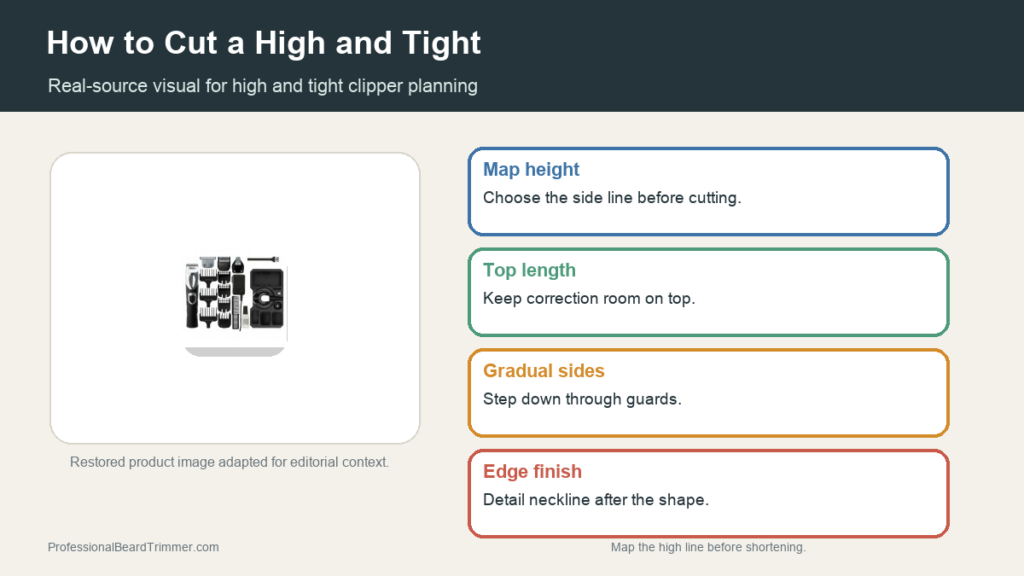
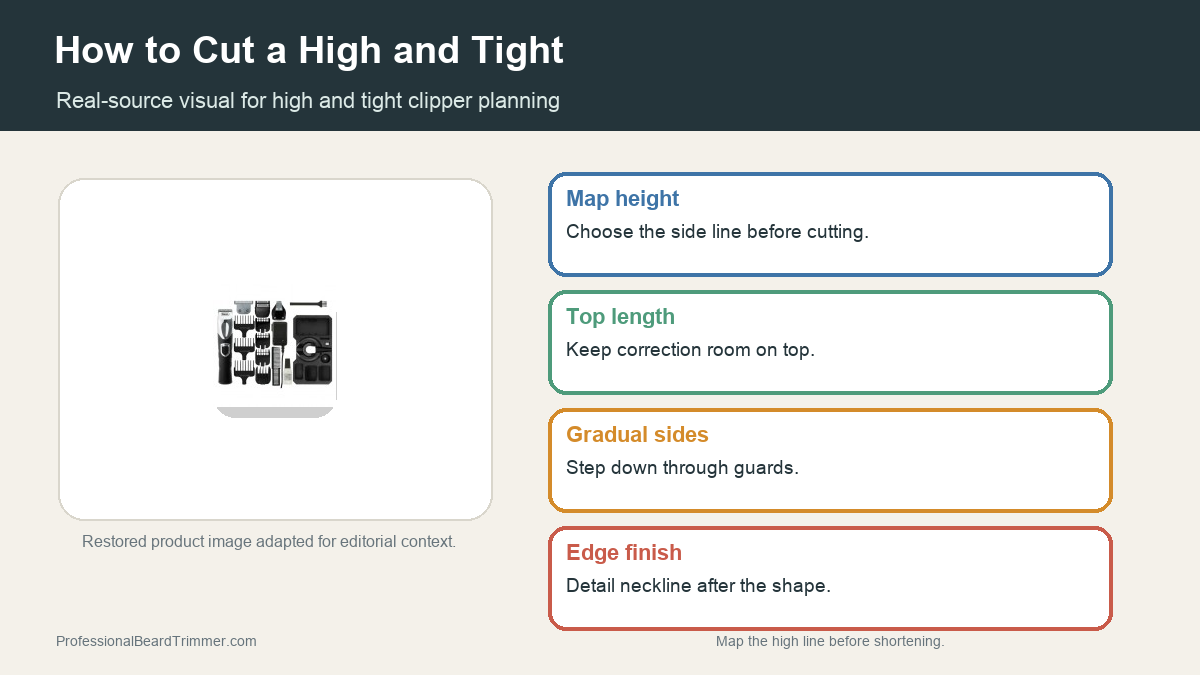
Image note: The image gives tool-category context from restored site media. It is not a service demonstration or proof of a tested clipper.
Direct answer: A high and tight haircut uses very short sides with a higher transition and a slightly longer top. The safest plan is to mark the side height first, start with a longer guard on the top, shorten the sides gradually, and finish neckline and sideburn details after the shape is balanced.
High and tight haircut checks
| Check | What to do | Why it matters |
|---|---|---|
| Side height | Decide where the short section should stop before cutting | A high transition is hard to lower after the fact |
| Top length | Keep the top slightly longer than the sides unless a near-uniform cut is intended | The top creates the haircut shape |
| Guard changes | Move shorter in planned steps | Sudden jumps can leave harsh lines |
| Blend line | Use light pressure and small lever or guard adjustments | The transition is the most visible part |
| Final cleanup | Detail neckline, sideburns, and stray hairs at the end | Edges should follow the finished shape |
How to cut a high and tight safely
- Map the height. Choose the point where the tight side section should stop before the first pass.
- Start with the top. Set the top length conservatively so the haircut does not become too flat.
- Shorten the sides in steps. Work down through guards or lever positions instead of jumping straight to the shortest pass.
- Soften the transition. Use light pressure and small adjustments where the side length meets the top.
- Finish the edges. Clean the neckline, sideburns, and beard connection only after the main shape is even.
High and tight checklist
- Planned side height: Controls the defining shape of the cut.
- Conservative top length: Keeps room for correction.
- Gradual guard steps: Reduce harsh lines during blending.
- Final edge detail: Makes the short cut look deliberate.
For related reference pages, compare the burr haircut guide, the clipper taper guide, and the clipper lever guide.
Frequently asked questions
What makes a haircut high and tight?
A high and tight has very short sides that rise high on the head, with a top section left slightly longer for shape.
Should I start with the shortest guard?
No. Start longer, map the side height, and shorten in controlled steps so mistakes are easier to correct.
Can a high and tight be cut at home?
It can be, but the high transition is unforgiving. Use mirrors, good light, conservative guards, and stop if the blend line becomes uneven.
How is a high and tight different from a burr cut?
A burr cut is usually more uniform, while a high and tight has a stronger contrast between very short sides and a slightly longer top.