Disclosure: This site may use affiliate links. Product specifications should be checked against manufacturer or retailer pages before purchase.
Editorial update, June 19, 2026: This recovered page was rebuilt as a practical men's grooming-tool guide using restored or current site media. It avoids firsthand-use claims, live shopping data, stock-status statements, score claims, and brand-owned imagery.
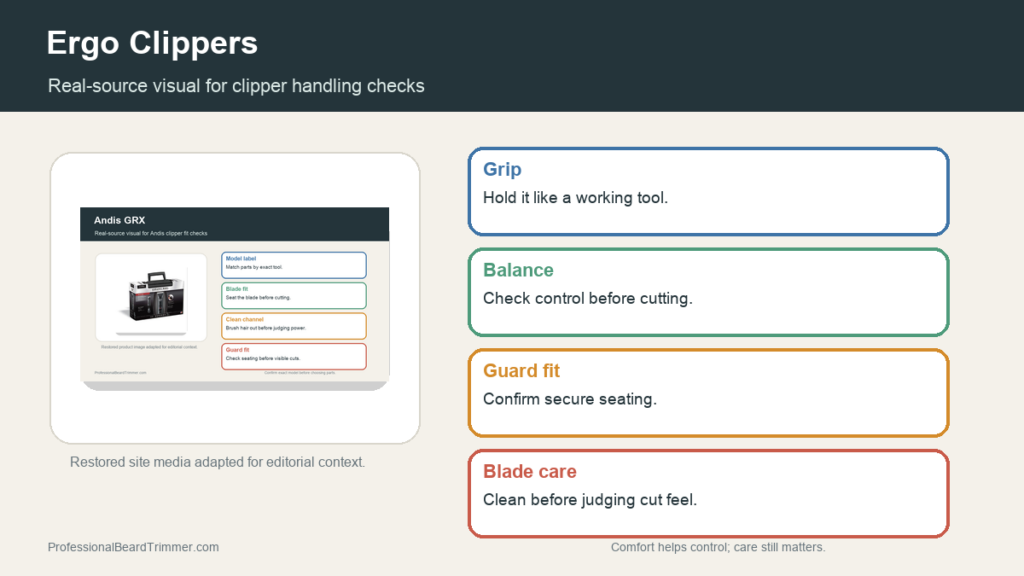
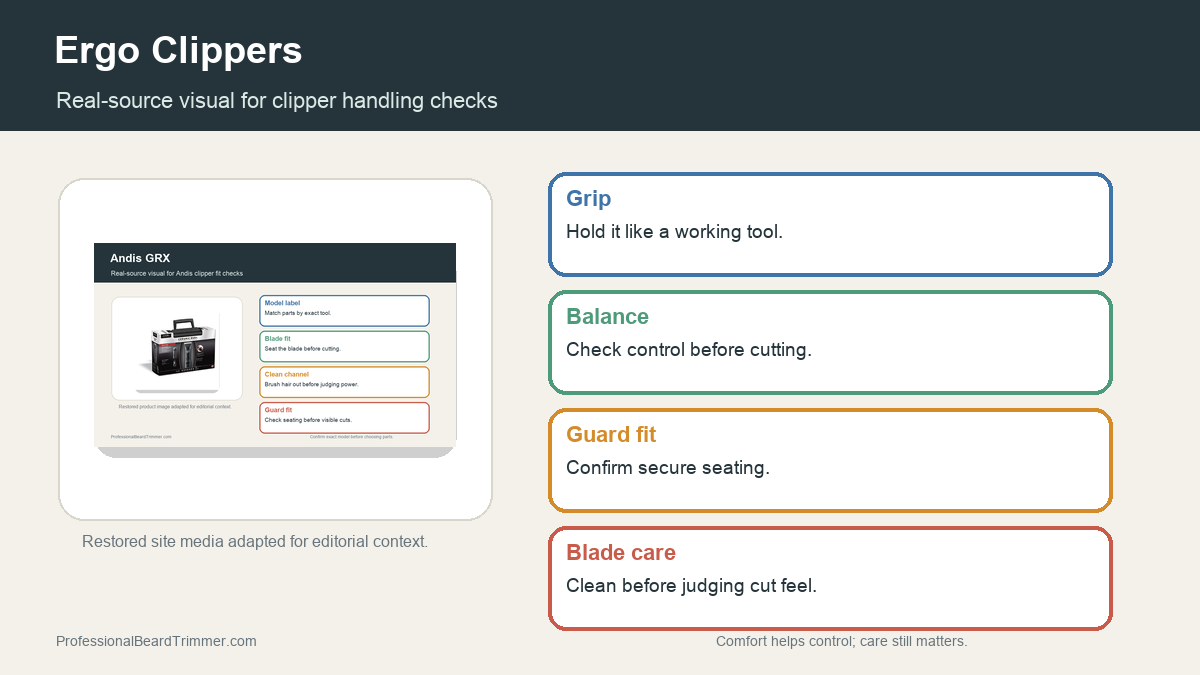
Image note: The image gives clipper-handling context from existing site media. It is not exact-model evidence or proof that a specific ergonomic clipper was used.
Direct answer: Ergo clippers should be judged by how the body fits the hand, whether the weight feels balanced, whether guards seat securely, and whether the blade cuts cleanly after normal cleaning. Comfortable handling matters, but setup and maintenance still control the final cut.
Ergo clipper handling checks
| Check | What to do | Why it matters |
|---|---|---|
| Grip shape | Hold the body as you would during a full pass | A comfortable grip reduces wrist strain |
| Weight balance | Check whether the clipper tips forward or feels heavy at the rear | Balance affects control during longer sessions |
| Guard fit | Attach guards and check secure seating | Loose guards can change the intended length |
| Blade care | Brush hair from the teeth before judging cut feel | Debris can make a comfortable clipper feel rough |
| Power path | Keep cords or chargers matched to the tool | Power problems can mimic poor cutting control |
How to judge clipper comfort and control
- Hold it in a working grip. Judge the tool in the same hand position used for fading, guard work, or cleanup.
- Check balance before cutting. Notice whether the tool feels nose-heavy, rear-heavy, or stable during short movements.
- Attach the planned guard. Make sure the guard does not rock, lift, or slide during a light pass.
- Clean the blade. Brush hair out before deciding whether the tool cuts poorly.
- Use controlled passes. Move slowly and keep pressure consistent instead of forcing the clipper through one area.
Clipper handling checklist
- Comfortable grip: Supports longer sessions without fighting the tool.
- Balanced body: Keeps passes steadier around curves and tapers.
- Secure guard: Protects the planned cutting length.
- Clean blade: Keeps handling checks separate from maintenance problems.
For related reference pages, compare the Andis vs Wahl guide, the barber clipper set guide, and the clipper sound troubleshooting guide.
Frequently asked questions
What makes clippers ergonomic?
Ergonomic clippers are easier to control because the grip shape, weight balance, surface texture, and switch placement fit the user's hand and cutting routine.
Do ergo clippers cut better by default?
No. Comfort helps control, but cutting quality still depends on blade condition, guard fit, cleaning, power feel, and technique.
What should I check before judging clipper comfort?
Check grip, balance, guard seating, blade cleanliness, power feel, and whether the tool can move through the planned passes without awkward pressure.
Why can comfortable clippers still leave uneven areas?
Uneven areas can come from inconsistent pressure, mismatched guards, poor brushing between passes, dirty blades, or trying to remove too much hair in one pass.