Disclosure: This site may use affiliate links. Product specifications should be checked against manufacturer or retailer pages before purchase.
Editorial update, June 19, 2026: This recovered page was rebuilt as a practical haircut, taper, and barber-tool guide using restored or current site media. It avoids hands-on test claims, live shopping data, score claims, medical claims, identity stereotypes, and unapproved affiliate language.
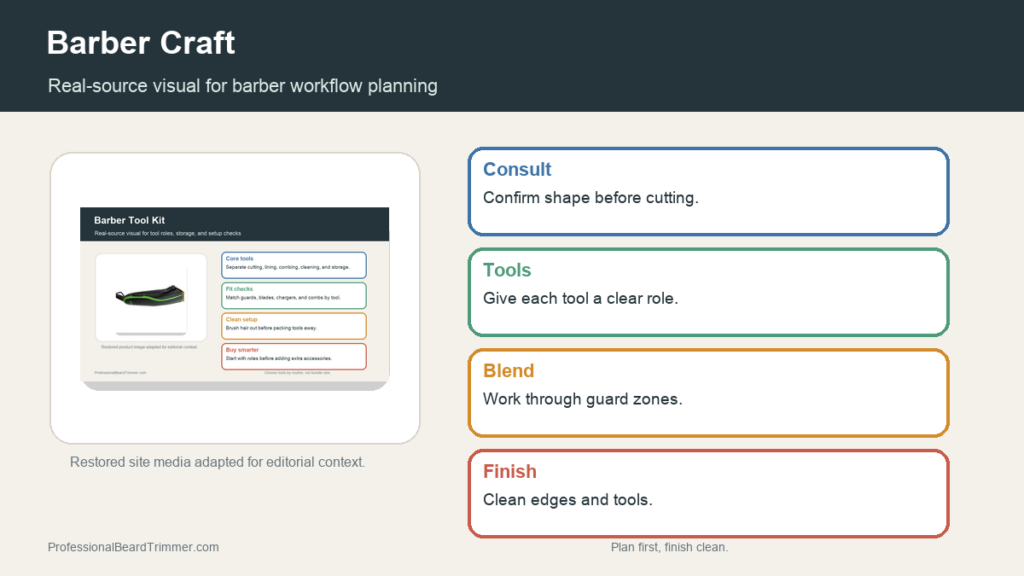
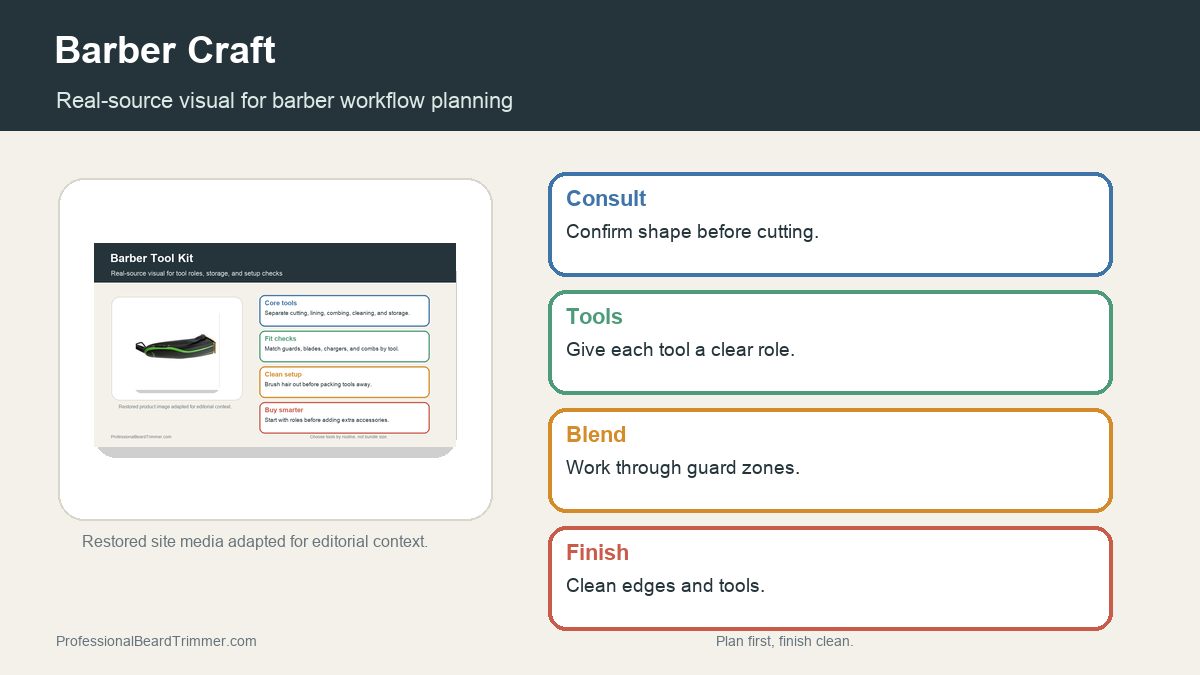
Image note: The image gives barber-tool context from restored site media. It is a practical craft guide, not a claim about a specific shop or service result.
Direct answer: Barber craft is the practical skill of turning a consultation into a controlled haircut using the right clipper, guard, trimmer, comb, sectioning, cleanup, and finishing sequence.
Barber craft workflow checks
| Check | What to do | Why it matters |
|---|---|---|
| Consultation | Confirm length, shape, neckline, and maintenance before cutting | A clear plan prevents avoidable corrections |
| Tool role | Use clippers for bulk and guards, trimmers for lines and finishing | Each tool should have a defined job |
| Guard plan | Move through guard lengths in a controlled order | Skipping steps can leave visible lines |
| Section control | Work one area at a time and check balance | Consistent sections improve symmetry |
| Clean finish | Brush hair away, check edges, and clean tools after use | Finishing affects comfort and hygiene |
How to approach a clean haircut workflow
- Confirm the target. Ask about length, taper height, neckline, and daily styling before cutting.
- Choose the tool sequence. Decide where clippers, guards, trimmers, combs, and scissors belong in the workflow.
- Blend in controlled zones. Work through guard changes and lever positions without jumping too far.
- Refine the edges. Use a detail trimmer only after the main haircut shape is balanced.
- Finish and clean. Brush away loose hair, check the outline, and clean tools before storage.
Barber craft checklist
- Clear consultation: Turns vague style goals into a cut plan.
- Defined tool roles: Keeps clippers, trimmers, and guards from being misused.
- Controlled blend zones: Reduce visible lines and uneven patches.
- Clean finishing: Improves comfort, hygiene, and the final outline.
For related reference pages, compare the barber tool kit guide, the barber cleaning supplies guide, and the lineup tool guide.
Frequently asked questions
What does barber craft mean?
Barber craft means the practical combination of consultation, tool control, sectioning, blending, edge cleanup, and finishing that turns a haircut plan into a clean result.
Which tools matter most for barber craft?
The core tools are a reliable clipper, secure guards, a detail trimmer, combs, cleaning tools, and a simple storage routine that protects blades and accessories.
Why is consultation part of the craft?
Consultation sets the target length, taper height, neckline, and maintenance expectations before cutting begins, which reduces mistakes and unnecessary corrections.
When should a trimmer be used?
A trimmer is best used after the main shape is balanced, especially for lineups, sideburn edges, neckline cleanup, and short finishing details.