Disclosure: This site may use affiliate links. Product specifications should be checked against manufacturer or retailer pages before purchase.
Editorial update, June 20, 2026: This recovered page was rebuilt as a practical men's haircut, fade consultation, and grooming planning guide using restored or current site media. It avoids fake testing, live commercial data, stereotypes, shop visit claims, and affiliate language.
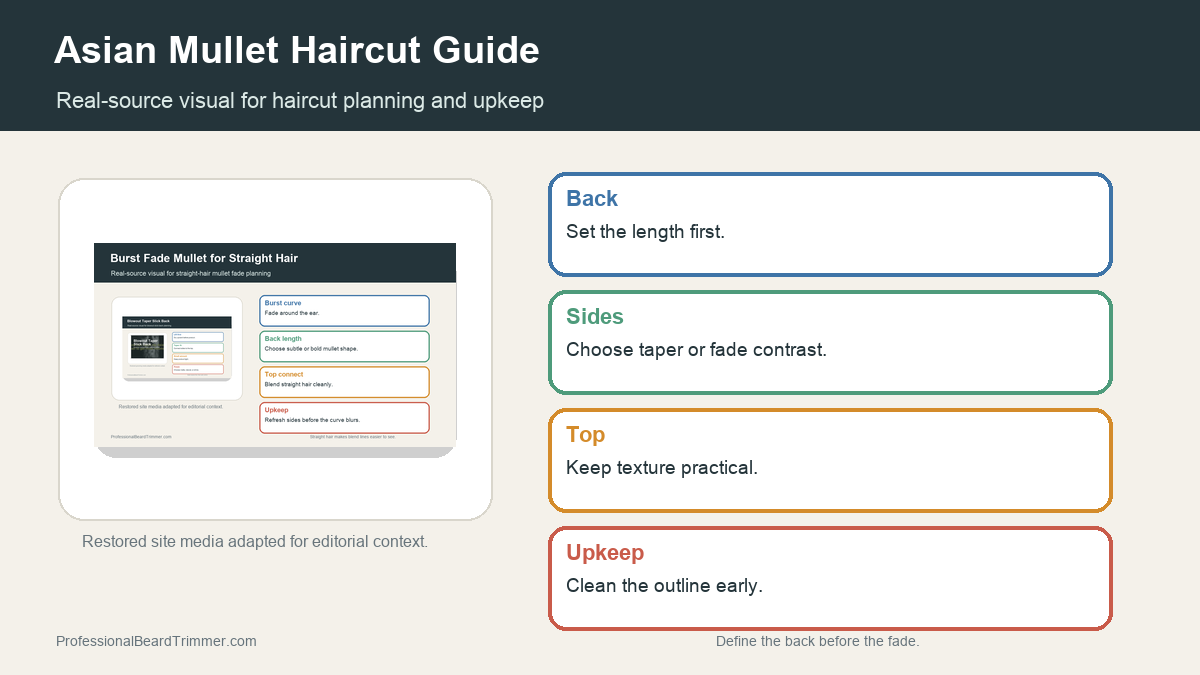
Image note: The image uses restored mullet/fade media for editorial context. It does not imply one fixed look for every hair type.
Direct answer: An Asian mullet haircut should be planned by hair texture, top length, side taper, back length, neckline shape, and upkeep. The style works best when the back has intentional length and the sides are controlled, not when the cut is only described as a trend name.
Asian mullet planning checks
| Check | What to do | Why it matters |
|---|---|---|
| Top length | Decide whether the top should be textured, swept, or left heavier | The top controls the style's balance |
| Side taper | Choose a low taper, burst fade, or softer side blend | Side contrast changes how bold the mullet looks |
| Back length | Set a clear back-length limit before cutting | A controlled back keeps the shape intentional |
| Neckline | Keep the neckline shaped but not overcut | The back shape is the main visual cue |
| Upkeep | Plan trims before the sides or back lose structure | Mullet shapes need regular cleanup |
How to ask for an Asian mullet haircut
- Bring a side and back reference. Show the barber the side taper and back length, not only the front view.
- Set the back length first. Decide how much length should stay at the nape before discussing the fade.
- Choose the side treatment. Pick a low taper, burst fade, or softer blend based on how bold the profile should be.
- Keep the top practical. Use texture or light volume that fits the hair type and daily routine.
- Refresh the outline. Clean the neckline and sideburns before the shape turns bulky.
Asian mullet upkeep checklist
- Back-length target: Keeps the mullet shape intentional.
- Side contrast: Controls how bold the haircut looks.
- Top texture: Adds movement without making the style hard to maintain.
- Outline refresh: Keeps the haircut clean as it grows.
For related reference pages, compare the mullet fade guide, the burst fade mullet guide, and the fade consultation guide.
Frequently asked questions
What should I ask for with an Asian mullet haircut?
Ask for the top length, back length, side taper or fade height, neckline shape, and how much texture should stay in the top and back.
Is every Asian mullet the same style?
No. Hair density, texture, face shape, and upkeep change the best version. Treat the phrase as a haircut category, not a single fixed template.
Should the sides be faded?
A fade can work, but a low taper or softer blend may be better if you want less contrast or easier grow-out.
How often should the shape be cleaned up?
Refresh the sideburns, neckline, and side weight before the back and sides lose the intended silhouette.