Disclosure: This site may use affiliate links. Product specifications should be checked against manufacturer or retailer pages before purchase.
Editorial update, June 19, 2026: This recovered page was rebuilt as a practical men's haircut and clipper-planning guide using restored or current site media. It avoids hands-on test claims, live shopping data, score claims, and stereotypes.
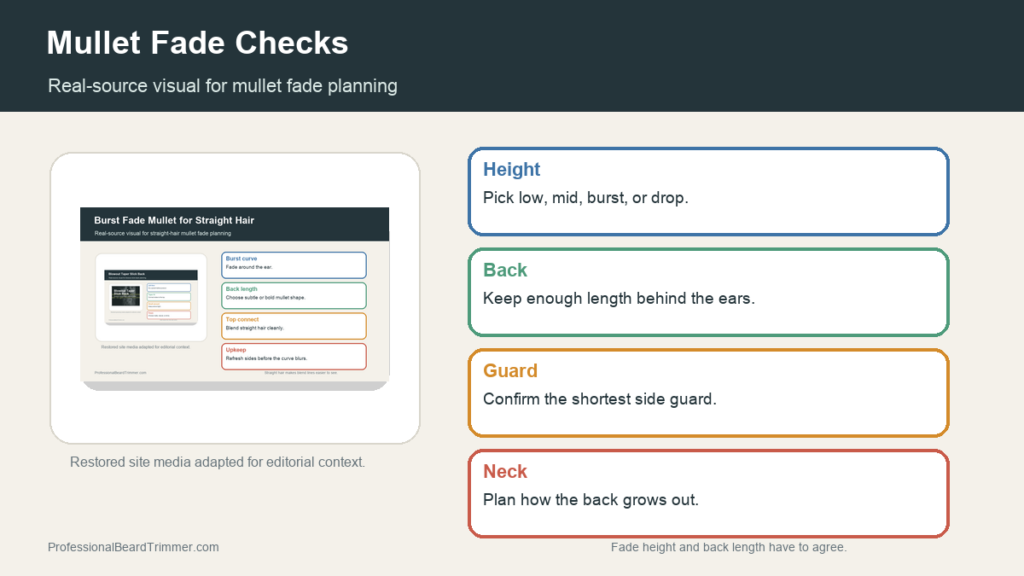
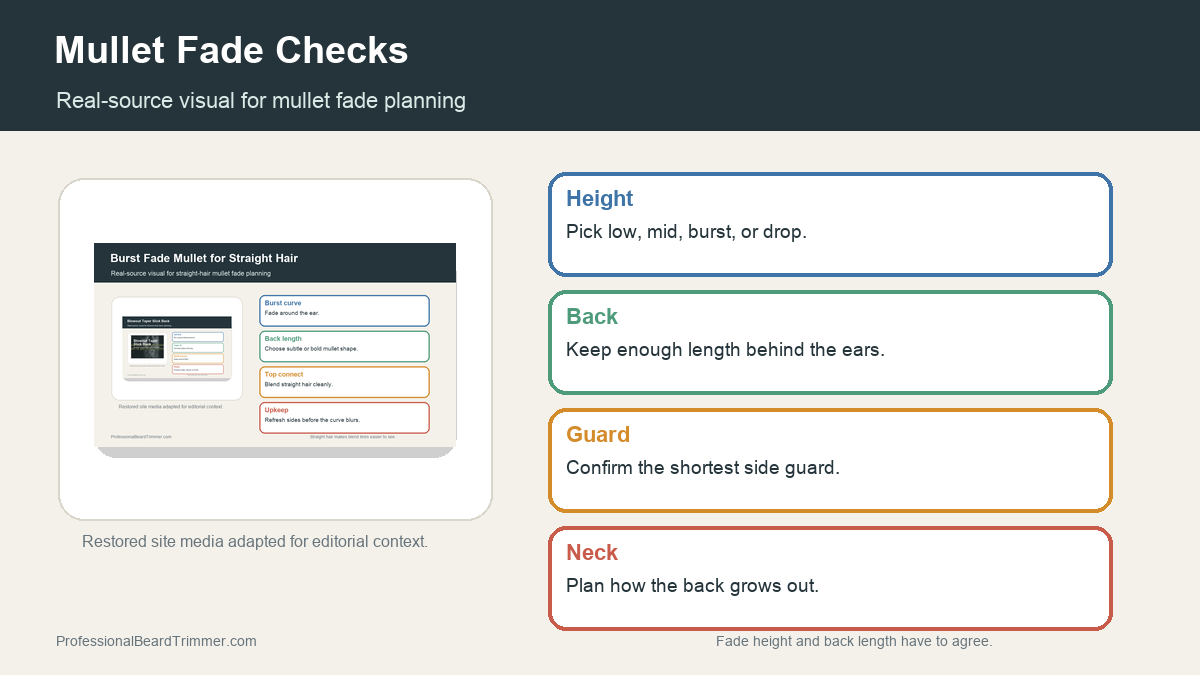
Image note: The image gives fade and guard-planning context from existing site media. It is not a trend ranking, paid placement, or proof of a hands-on haircut service.
Direct answer: A mullet haircut fade should be planned by fade height, top length, back length, neckline shape, and how much side contrast you want. Bring a side and back reference photo, then ask the barber to confirm guard numbers before cutting the fade shorter.
Mullet fade planning checks
| Check | What to do | Why it matters |
|---|---|---|
| Fade height | Choose low, mid, burst, or drop placement before cutting | Fade placement changes the whole shape |
| Back length | Keep enough length in back to preserve the mullet outline | Over-cutting the back turns it into a regular fade |
| Top length | Match the top to the back so the transition looks intentional | A disconnected top can make the haircut look unfinished |
| Guard numbers | Confirm the shortest side guard and blend range | Clear guard language reduces chair-side surprises |
| Neckline | Decide whether the back stays natural, tapered, or shaped | The neckline controls how the cut grows out |
How to ask for a mullet haircut fade
- Choose the fade shape. Pick low, mid, burst, or drop placement before discussing length.
- Show the back view. Use a reference that shows the back, because the mullet shape depends on it.
- Confirm the shortest guard. Ask what the shortest side guard will be before the first close pass.
- Blend without losing the back. Keep the side blend clean while preserving enough length behind the ears.
- Plan cleanup timing. Ask when the sides and neckline will need a tidy-up.
Mullet fade checklist
- Fade height: Controls how bold the side contrast looks.
- Back length: Keeps the haircut reading as a mullet.
- Guard range: Makes the blend easier to describe and repeat.
- Neckline plan: Helps the cut grow out cleaner.
For related reference pages, compare the fade request guide, the number 3 fade guide, and the guard size guide.
Frequently asked questions
What fade works best with a mullet haircut?
Low, burst, and drop fades often preserve more back length, while a high fade creates stronger contrast. The best choice depends on how much side exposure you want.
What should I tell the barber for a mullet fade?
State the fade height, shortest guard, top length, back length, neckline shape, and whether you want the sides subtle or high contrast.
Can a mullet fade be low maintenance?
The longer back can be simple, but the faded sides need cleanup as they grow. Ask the barber how often the sides should be refreshed.
Should I bring a reference photo?
Yes. Bring side and back views so the barber can see the fade placement and the amount of length you want to keep.