
Disclosure: This site may use affiliate links. Product specifications should be checked against manufacturer or retailer pages before purchase.
Editorial update, June 19, 2026: This recovered page was rebuilt as a practical grooming-tool guide using restored old-site media. It does not claim hands-on lab testing, current manufacturer specifications, offers, or availability.
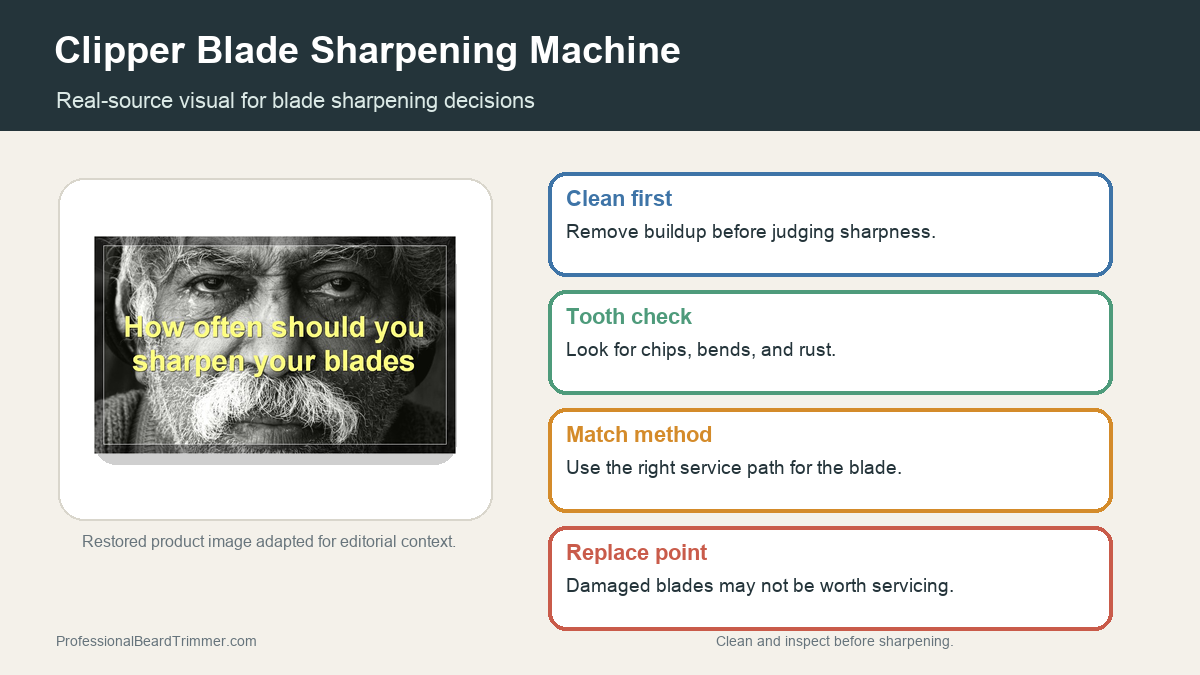
Image note: The image gives real blade-sharpening context from restored site media. It should not be treated as proof that a specific sharpening machine, service, or blade result was tested.
Direct answer: A clipper blade sharpening machine only makes sense when the blade is clean, undamaged, compatible with the sharpening method, and worth servicing. Many home users are better served by cleaning, checking blade seating, replacing damaged blades, or sending barber blades to a qualified service.
Clipper blade sharpening decision checks
| Check | What to do | Why it matters |
|---|---|---|
| Blade condition | Inspect teeth for chips, bends, rust, or uneven wear | Damaged teeth can make sharpening unsafe or ineffective |
| Cleaning first | Brush and clean the cutter channel before judging sharpness | Hair and buildup can mimic a dull blade |
| Blade type | Confirm the blade style before using any sharpening method | Different blades may need different service handling |
| Replacement point | Replace blades with visible damage, poor seating, or persistent pulling | Not every blade is worth servicing |
| Service choice | Use a qualified service for valuable barber or grooming blades | Incorrect sharpening can change blade geometry |
How to decide whether to sharpen a clipper blade
- Clean the blade first. Remove trapped hair and buildup before deciding that the blade is dull.
- Inspect the teeth. Look for chips, bends, rust, or uneven tooth alignment before any sharpening decision.
- Check blade seating. Make sure the blade sits correctly on the clipper because poor seating can feel like dullness.
- Match the method. Use only a sharpening method suited to that blade style and condition.
- Replace or send out when needed. Choose replacement or a qualified service when the blade is damaged, valuable, or uncertain.
Blade sharpening checklist
- Clean blade channel: Rules out buildup before blaming sharpness.
- Intact teeth: Keeps close cutting safer and more predictable.
- Correct blade style: Prevents using the wrong sharpening method.
- Replacement decision: Avoids wasting effort on damaged blades.
For related reference pages, compare the clipper blade sharpener guide, the Wahl blade replacement checklist, and the ceramic clipper blade guide.
Frequently asked questions
When does a clipper blade sharpening machine make sense?
It makes sense when the blade is clean, not visibly damaged, suited to the sharpening method, and valuable enough to service instead of replace.
What should I check before sharpening clipper blades?
Check cleanliness, tooth condition, rust, blade seating, blade type, and whether the clipper still pulls after basic cleaning.
When should a clipper blade be replaced instead?
Replace a blade when teeth are chipped or bent, the blade will not seat correctly, corrosion is visible, or pulling continues after cleaning and basic checks.
Can dirty blades feel dull?
Yes. Trapped hair, residue, and poor seating can make a blade pull or drag even when the cutting edge is not the main problem.