Disclosure: This site may use affiliate links. Product specifications should be checked against manufacturer or retailer pages before purchase.
Editorial update, June 18, 2026: This recovered page was rebuilt as a blade-care decision guide and avoids unsafe at-home sharpening claims.
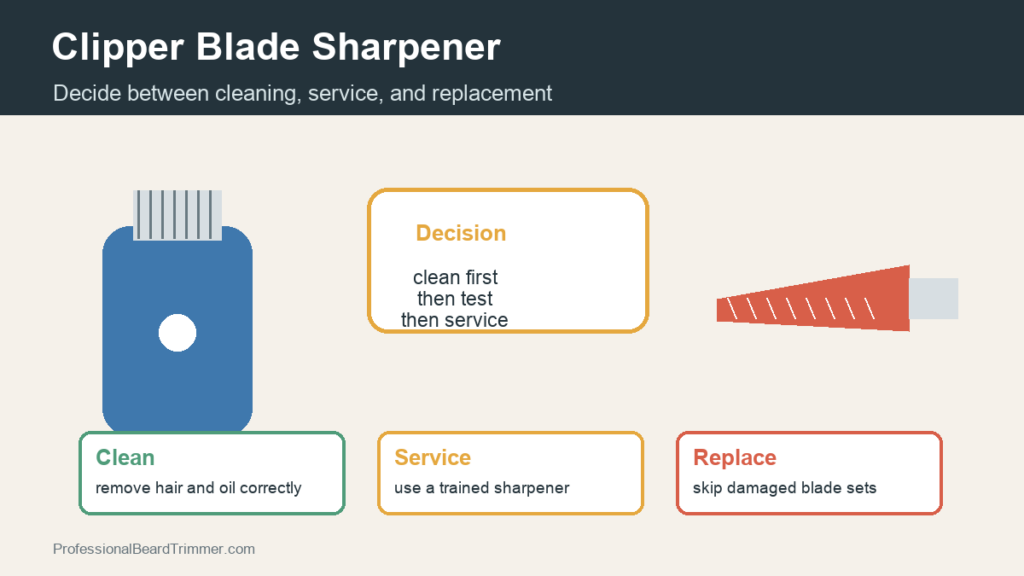
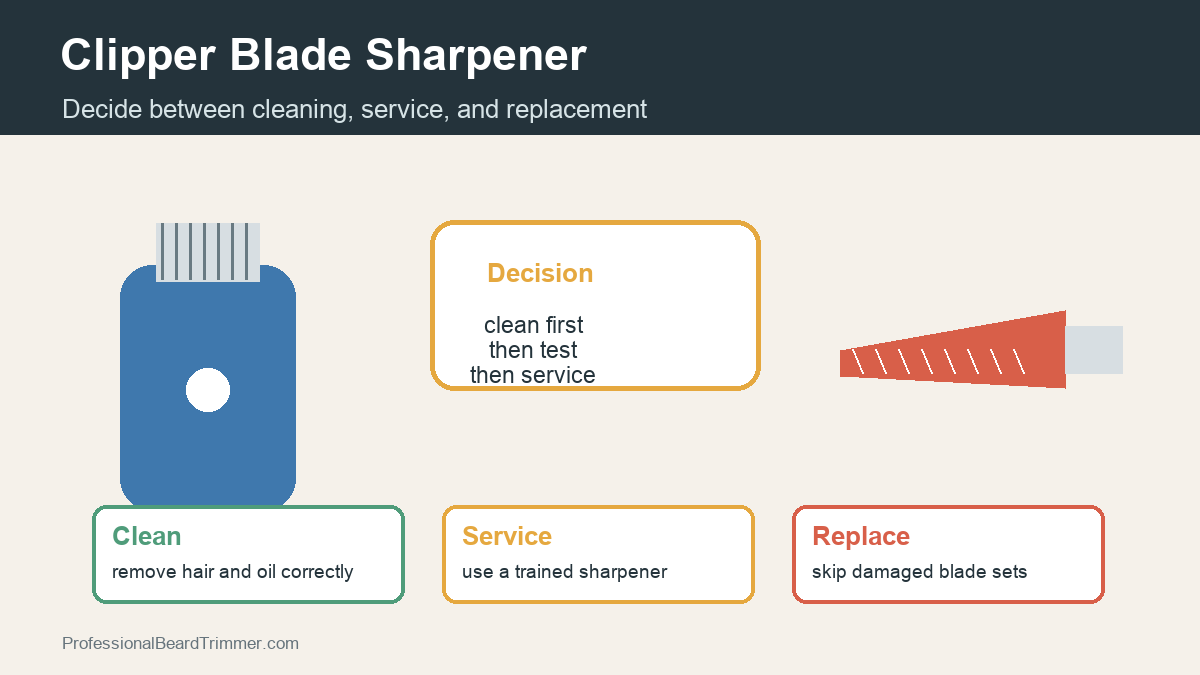
Direct answer: A clipper blade sharpener is useful only when the blade is still structurally sound and the work is done with the right equipment. Clean and oil the blade first, test for pulling, inspect for bent or chipped teeth, and use a qualified sharpening service or replace the blade if damage is visible.
Sharpen, service, or replace?
| Decision point | Use this rule | Why it matters |
|---|---|---|
| Hair buildup | Clean and oil before any sharpening decision | Debris can mimic a dull blade |
| Pulling after care | Check alignment and edge condition | Pulling can come from fit, speed, or dullness |
| Bent or chipped teeth | Replace the blade set | Sharpening cannot make damaged teeth safe |
| Good blade, dull edge | Use a qualified service | Blade geometry needs controlled equipment |
| Frequent heat | Stop and inspect the tool | Heat can signal friction, debris, or alignment issues |
How to decide what a dull blade needs
- Brush the blade. Remove loose hair and debris before judging sharpness.
- Apply proper care. Use the cleaning and oiling routine recommended for the blade system.
- Inspect the teeth. Look for chips, bent teeth, rust, or uneven alignment.
- Test briefly. Try a short pass and stop if the blade pulls, heats, or chatters.
- Choose service or replacement. Use a qualified service for a sound blade; replace a damaged or unsafe blade.
Blade-care decision checklist
- Clean first: Debris is the easiest problem to rule out.
- Inspect teeth: Damaged teeth should not be sharpened back into use.
- Check alignment: A misaligned blade can feel dull even when the edge is usable.
- Use proper service: A controlled sharpening setup protects blade geometry.
For related reference pages, compare the ceramic blade tradeoff guide, the blade replacement guide, and the trimmer pulling hair guide.
Frequently asked questions
Can I sharpen clipper blades at home?
Avoid improvised sharpening. Clipper blades need controlled geometry, so a qualified service is safer for a sound blade, while damaged blades should be replaced.
How do I know a blade is dull instead of dirty?
Clean and oil first, then test briefly. If pulling remains after cleaning, alignment and edge condition should be checked.
Should chipped blades be sharpened?
No. Bent, chipped, rusty, or cracked blade sets should be replaced instead of sharpened.
Why does a blade heat up after sharpening?
Heat can come from friction, poor alignment, debris, or insufficient care. Stop using the tool and inspect the blade before continuing.