Disclosure: This site may use affiliate links. Product specifications should be checked against manufacturer or retailer pages before purchase.
Editorial update, June 19, 2026: This recovered page was rebuilt as a practical natural-hair, waves, taper, and edge-cleanup guide using restored or current site media. It avoids hands-on test claims, live shopping data, score claims, medical claims, and identity stereotypes.
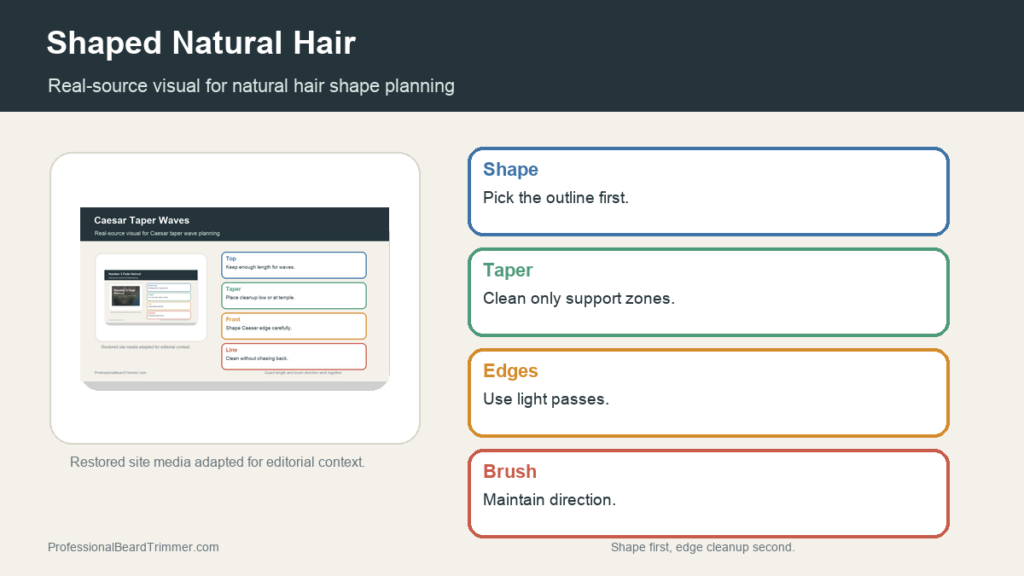
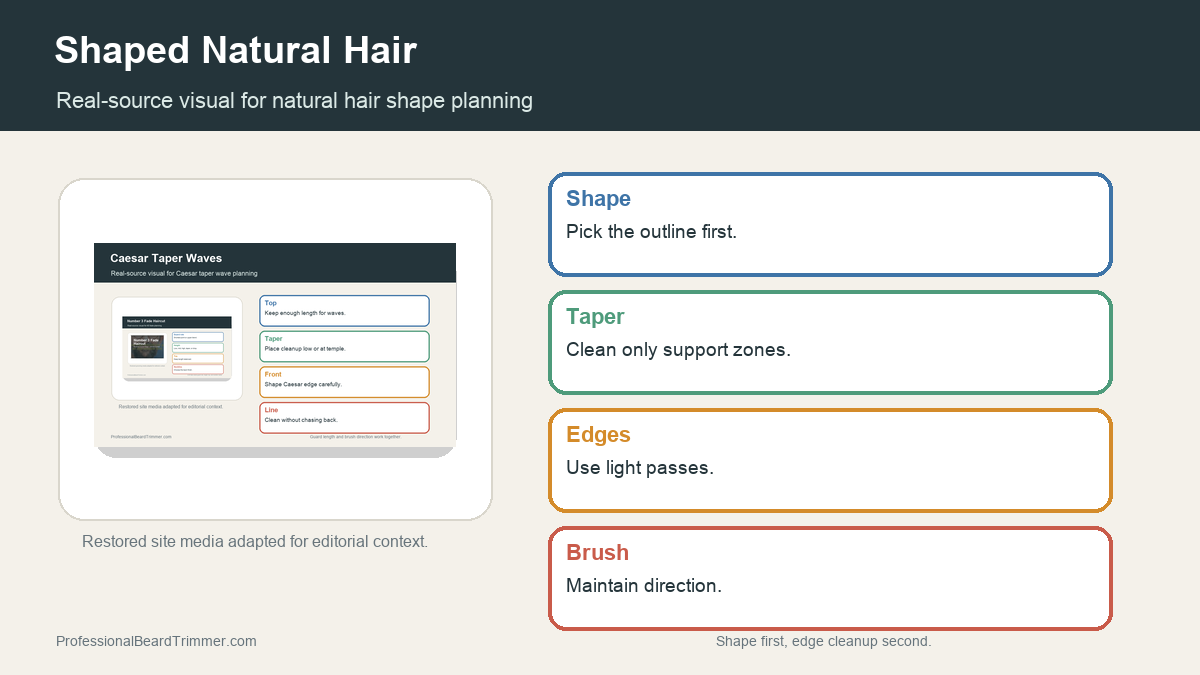
Image note: The image gives natural-hair shape context from existing site media. The guide focuses on grooming shape and maintenance, not hair-growth treatment.
Direct answer: Shaped natural hair looks cleaner when the silhouette is planned first, the taper supports that shape, and edges are cleaned with light clipper or trimmer passes instead of pushing the line too far.
Shaped natural hair checks
| Check | What to do | Why it matters |
|---|---|---|
| Silhouette | Decide round, square, tapered, or fuller shape | The outline controls the whole haircut |
| Taper area | Choose low temple, sideburn, and neckline cleanup | A taper can sharpen the shape without removing too much bulk |
| Edge control | Use short and light passes near the hairline | Heavy pressure can make the edge uneven |
| Brush routine | Brush in the direction that supports the shape | Consistent brushing keeps the outline controlled |
| Neckline | Clean loose neck hair after the shape is set | The back finish affects how neat the cut looks |
How to plan shaped natural hair
- Choose the outline. Pick the overall shape before changing the sides or neckline.
- Set the taper zone. Decide where the sideburns, temples, and neckline should be cleaned.
- Keep passes light. Use controlled trimmer or clipper passes around edges.
- Brush with the shape. Brush in a direction that supports the chosen silhouette.
- Finish the neckline. Clean the back last so it matches the front and side shape.
Shaped natural hair checklist
- Planned silhouette: Keeps the shape intentional.
- Controlled taper: Sharpens the outline without overcutting.
- Light edge cleanup: Protects the natural line.
- Consistent brushing: Maintains the shape between cuts.
For related reference pages, compare the fade consultation guide, the line-up clipper guide, and the open and closed clipper guide.
Frequently asked questions
How do you shape natural hair without overcutting?
Plan the silhouette first, then clean only the edges and taper zones that support that shape. Avoid chasing a sharper line if it moves the natural edge too far.
Should shaped natural hair use a taper?
A taper can help around the temples, sideburns, and neckline, but it should support the outline rather than remove too much fullness.
What tool helps with edge cleanup?
A detail trimmer or line-up clipper gives better control around the temples, sideburns, and neckline.
How often should the shape be refreshed?
Refresh the outline when edges blur enough to affect the silhouette. Light cleanup is usually better than recutting the whole shape each time.