
Disclosure: This site may use affiliate links. Product specifications should be checked against manufacturer or retailer pages before purchase.
Editorial update, June 19, 2026: This recovered page was rebuilt as a foil-shaver finish and care guide using a restored real shaver image. It does not claim hands-on lab testing or current manufacturer specifications.
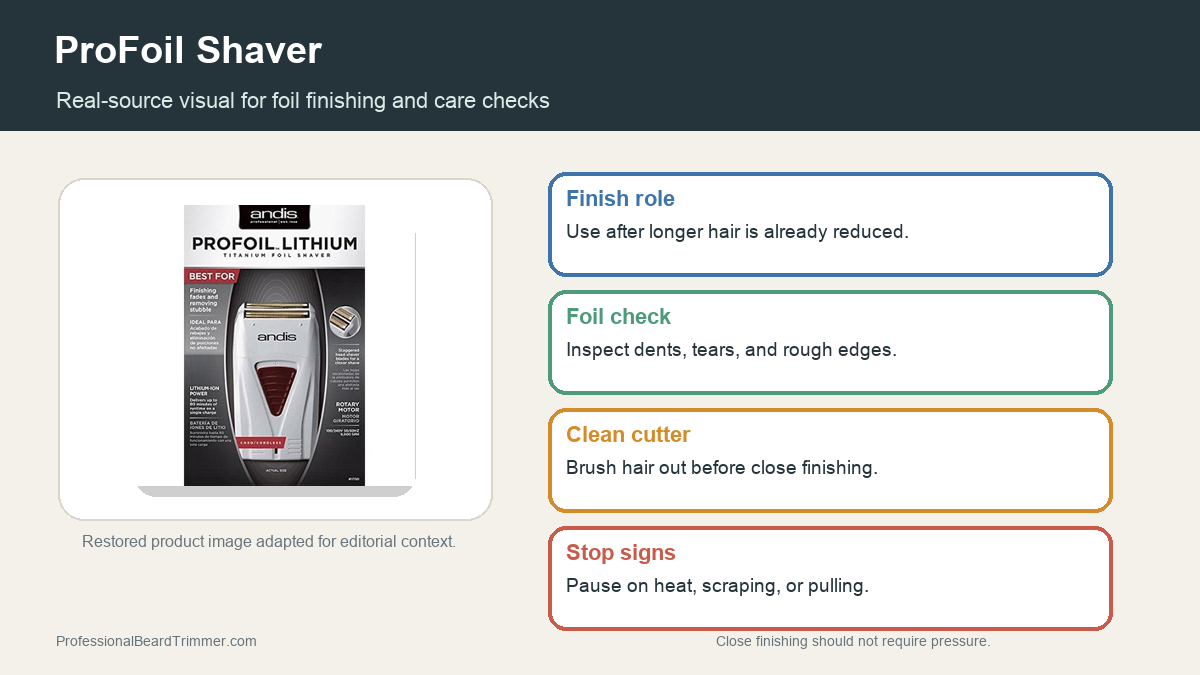
Image note: The image is a source-based editorial adaptation from restored site media. It is not official brand material, retailer imagery, or proof of hands-on testing.
Direct answer: A ProFoil-style shaver is best used for short finishing after longer hair has already been reduced. Check the foil, cutter area, cleaning state, charge, and skin comfort before close work, and stop if the foil feels rough, hot, dented, or irritating.
ProFoil shaver care and finish checks
| Check | What to do | Why it matters |
|---|---|---|
| Best role | Use it for close finishing on short stubble after trimming | Foil shavers are not designed for long bulk removal |
| Foil condition | Inspect the foil for dents, cracks, or rough edges | Damaged foil can irritate skin quickly |
| Cutter area | Brush away trapped hair before judging performance | Buildup can make a shaver feel weak or hot |
| Skin limit | Use light contact and short passes | Close finishing should not require pressure |
| Stop signs | Pause on heat, scraping, pulling, or uneven sound | These signs call for cleaning or service checks |
How to check a foil shaver before close finishing
- Reduce long hair first. Use a trimmer or clipper before using a foil shaver on longer growth.
- Inspect the foil. Look for dents, torn mesh, rough edges, or uneven seating.
- Clean the cutter area. Brush loose hair out so the cutter can move freely.
- Use light contact. Glide the foil over short stubble instead of pressing into skin.
- Stop on irritation. Pause if heat, scraping, pulling, or rough feedback continues after cleaning.
Foil shaver checklist
- Intact foil: Protects skin during close finishing.
- Clean cutter area: Helps the shaver cut short stubble evenly.
- Short pre-trim: Keeps the foil shaver in its intended finishing role.
- Dry storage: Keeps the foil and cutter area ready for the next use.
For related reference pages, compare the foil shaver guide, the trimmer vs electric shaver guide, and the shaver head replacement checklist.
Frequently asked questions
What is a ProFoil-style shaver best used for?
It is best used for close finishing on short stubble after a trimmer or clipper has already removed longer hair.
Can a foil shaver cut long beard hair?
A foil shaver is not ideal for long hair. Reduce the hair first, then use the foil shaver for close finishing.
What should I check before close shaving?
Check foil condition, cutter cleanliness, charge, heat, sound, and skin comfort before using the shaver close to skin.
When should I stop using a foil shaver?
Stop if the foil is dented or torn, if the shaver scrapes, or if heat and pulling continue after basic cleaning.