
Disclosure: This site may use affiliate links. Product specifications should be checked against manufacturer or retailer pages before purchase.
Editorial update, June 19, 2026: This recovered page was rebuilt as a practical haircut, styling, and grooming-tool guide using restored or current site media. It avoids fake testing, live commercial data, shop visit claims, and affiliate language.
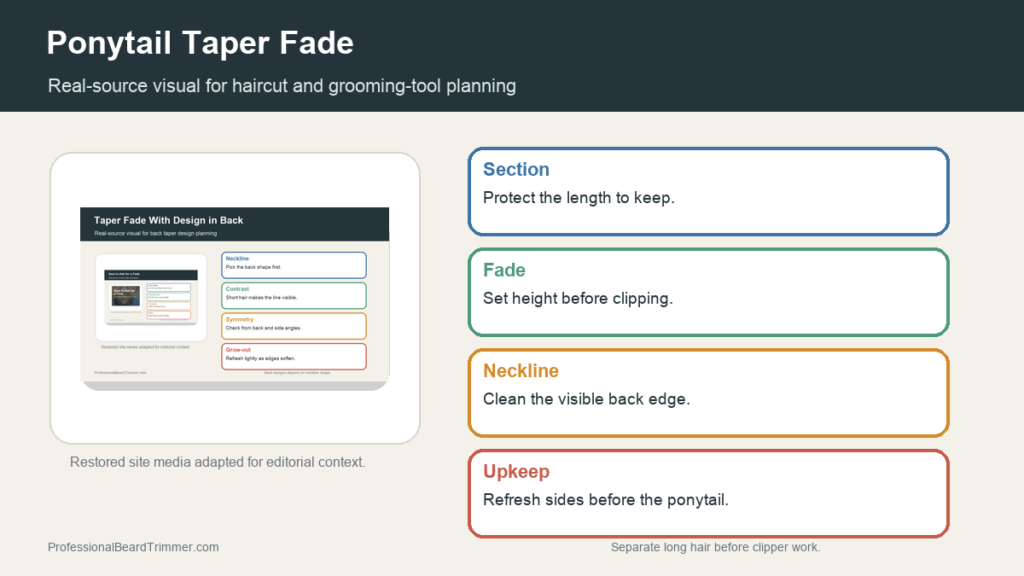
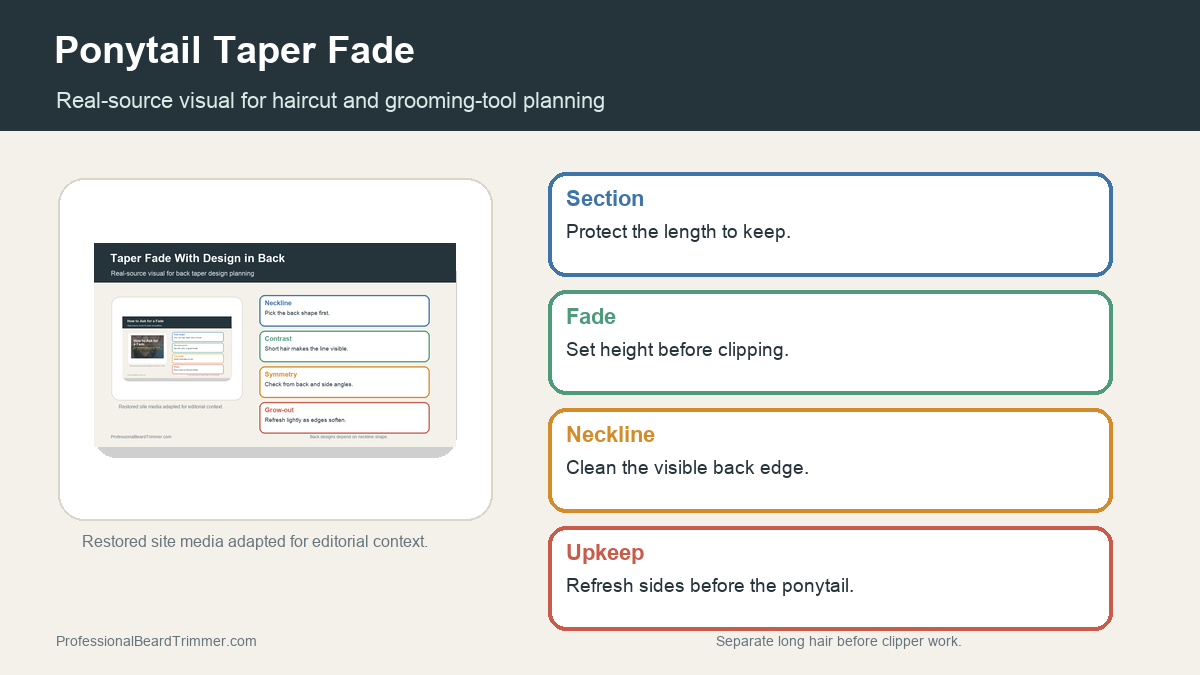
Image note: The image uses restored taper-fade media for planning context. It does not claim a shop visit or a one-size-fits-all fade height.
Direct answer: A ponytail with taper fade works when the long top or back length is protected while the sides, neckline, and temple area are cleaned with a planned fade. The key is separating tied length from clipper zones before any cutting starts.
Ponytail taper fade planning checks
| Check | What to do | Why it matters |
|---|---|---|
| Length to keep | Tie or section the hair that must stay long | Protected length prevents accidental overcutting |
| Fade height | Choose low, mid, or higher taper before clipping | Fade height changes the whole silhouette |
| Neckline | Decide how clean the back edge should look | The neckline is visible when hair is tied |
| Tool control | Use clippers for the fade and trimmers for edge detail | Tool roles reduce patchy transitions |
| Upkeep | Refresh side and neckline cleanup before the long section needs trimming | The fade grows out faster than the ponytail |
How to plan a ponytail and taper fade
- Section the long hair. Tie or clip away the ponytail section before working with clippers.
- Choose the fade height. Confirm where the taper starts and how much contrast you want around the sides and neckline.
- Blend gradually. Use planned guard changes instead of jumping from long hair to a close finish.
- Finish the neckline. Clean the neckline and sideburns after the fade shape is balanced.
- Plan maintenance. Schedule side and neckline cleanup before the fade loses shape.
Ponytail fade checklist
- Protected long section: Keeps the ponytail length separate from clipper work.
- Defined fade height: Prevents the sides from climbing too high.
- Clean neckline: Matters because tied hair exposes the back edge.
- Upkeep plan: Keeps the fade clean while the long section grows.
For related reference pages, compare the taper fade back design guide, the fade consultation guide, and the sectioning comb guide.
Frequently asked questions
Can long hair and a taper fade work together?
Yes. The long section must be separated first, then the fade should be planned around the sides, temples, and neckline.
What fade height works with a ponytail?
A low or controlled taper is often easier to maintain, but the right height depends on how much contrast you want when the hair is tied.
Why does the neckline matter with a ponytail?
Tied hair exposes the back edge, so neckline cleanup has a bigger effect than it does on some loose styles.
How should this style be maintained?
Refresh the side taper, neckline, and sideburns more often than the long section so the style keeps its shape.