Disclosure: This site may use affiliate links. Product specifications should be checked against manufacturer or retailer pages before purchase.
Editorial update, June 19, 2026: This recovered page was rebuilt as a practical men's haircut, taper, and clipper-control guide using restored or current site media. It avoids firsthand-service claims, identity stereotypes, live shopping data, score claims, and brand-owned imagery.
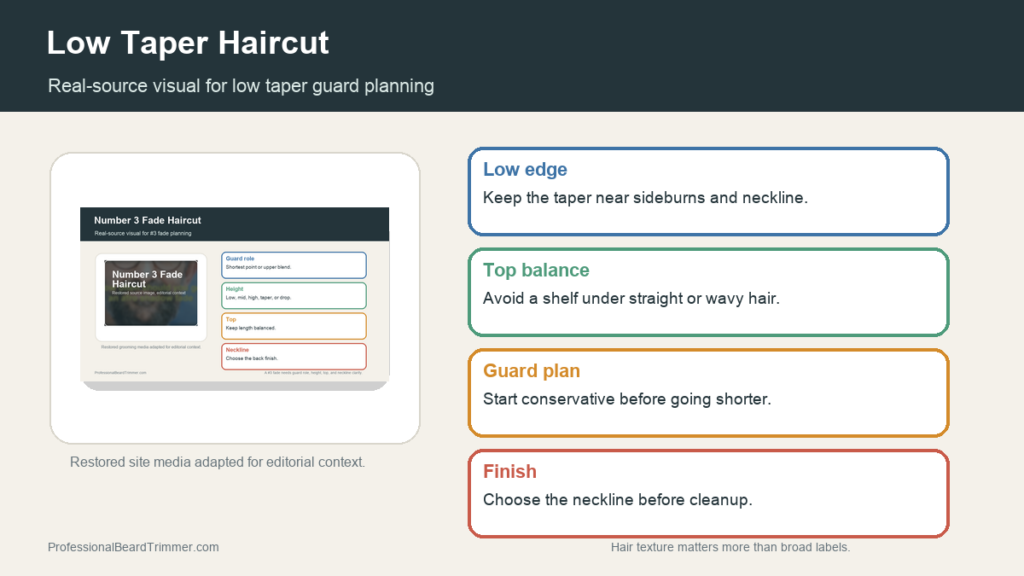
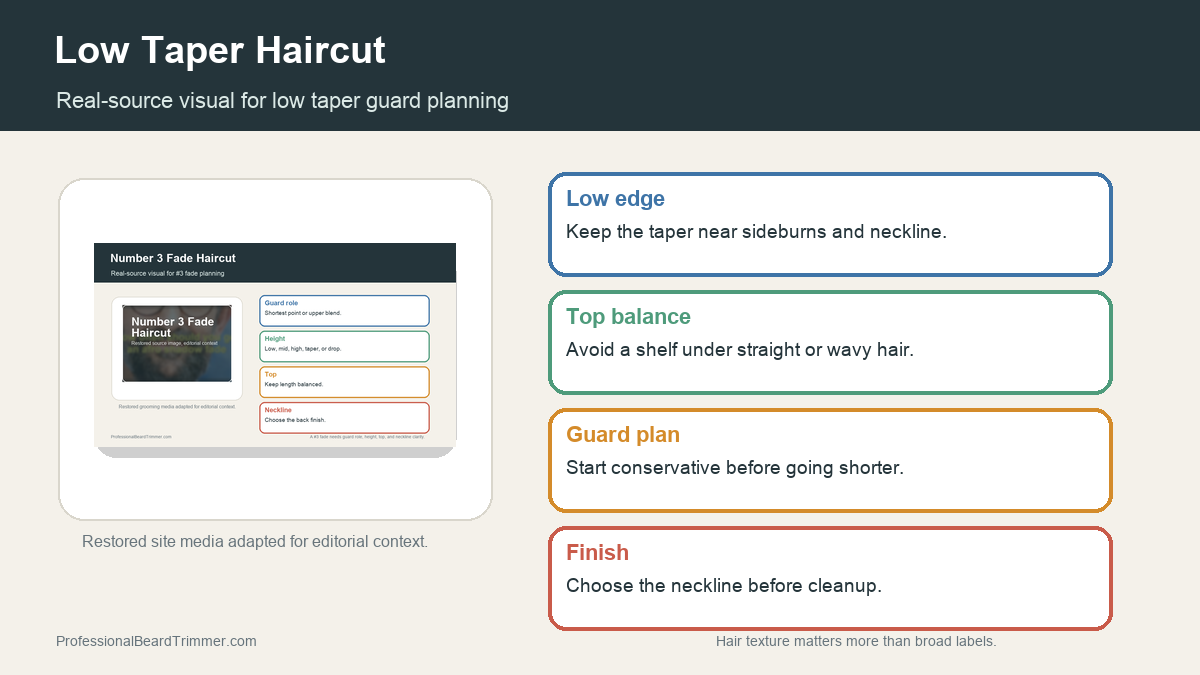
Image note: The image gives taper-planning context from existing site media. It is not a barber-service record or exact result for every hair type.
Direct answer: A low taper haircut on straight or wavy hair keeps the shortest area low near the sideburns and neckline while leaving more weight through the sides and top. The best result depends on hair density, guard choice, neckline finish, and how much contrast you want.
Low taper planning checks
| Check | What to do | Why it matters |
|---|---|---|
| Taper placement | Keep the shortest area low near the sideburns and neckline | This creates a clean edge without turning into a high fade |
| Top length | Keep enough length for natural flow or light styling | Straight and wavy hair can show shelves if the side is too short |
| Guard choice | Choose conservative side guards before adding more contrast | It is easier to go shorter than to put length back |
| Neckline | Pick natural, rounded, or squared cleanup | The back finish changes how polished the cut feels |
| Maintenance | Refresh edges when the taper loses shape | Low tapers can grow out softly but the neckline blurs first |
How to ask for a low taper haircut
- Use the phrase low taper. Ask for the taper to stay low around the sideburns and neckline.
- Set top length. Explain whether the top should stay natural, textured, or easier to comb back.
- Choose contrast. Say whether you want a soft office-friendly taper or a sharper short edge.
- Pick the neckline. Choose natural, rounded, or squared cleanup before the final edge work.
- Check the side profile. Make sure the side transition does not leave a shelf under the top.
Low taper haircut checklist
- Low side placement: Keeps the taper subtle and wearable.
- Balanced top: Prevents straight or wavy hair from looking disconnected.
- Conservative guard start: Avoids cutting the sides too short too quickly.
- Clean neckline: Makes the low taper look finished.
For related reference pages, compare the 3 on sides haircut guide, the 2-3 fade guide, and the fade consultation guide.
Frequently asked questions
What is a low taper haircut?
A low taper haircut keeps the shortest blending low around the sideburns and neckline while leaving more length through the upper sides and top.
Is a low taper good for straight hair?
Yes. It can work well for straight hair when the transition is softened so the top does not look disconnected from the sides.
What should I ask for?
Ask for a low taper, state whether you want soft or sharp contrast, and explain the top length and neckline finish you prefer.
How often should a low taper be cleaned up?
The neckline and sideburn area usually need cleanup first, while the top can often go longer between cuts.