Disclosure: This site may use affiliate links. Product specifications should be checked against manufacturer or retailer pages before purchase.
Editorial update, June 19, 2026: This recovered page was rebuilt as a practical men's haircut, taper, and clipper-control guide using restored or current site media. It avoids firsthand-service claims, identity stereotypes, live shopping data, score claims, and brand-owned imagery.
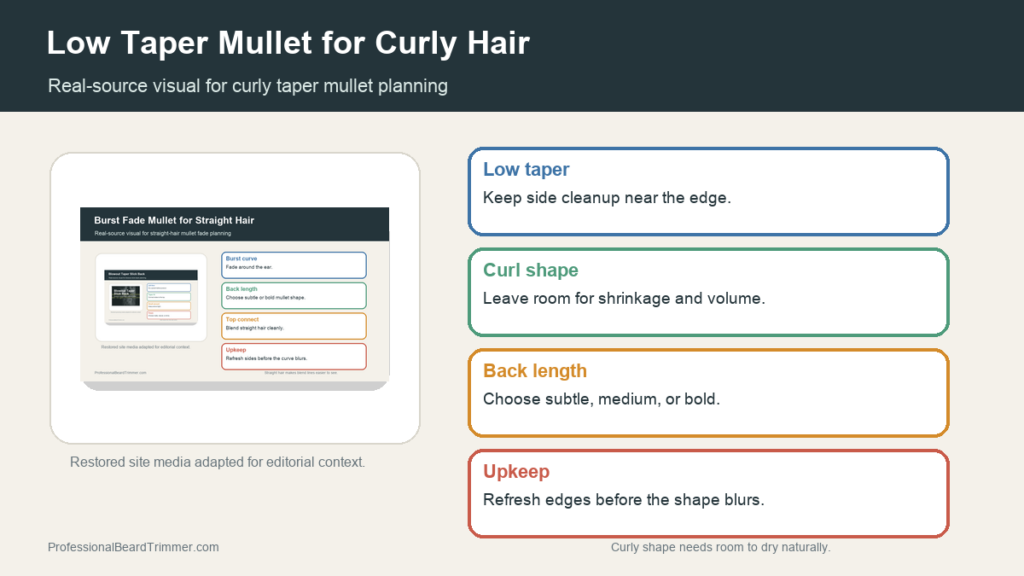
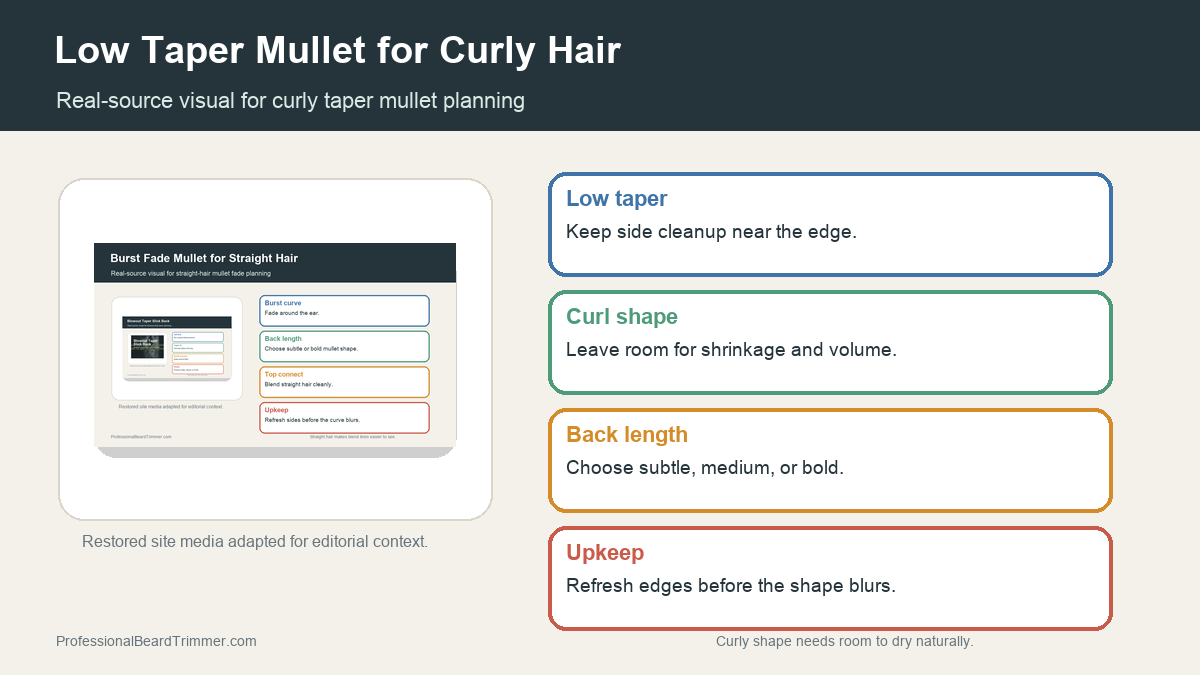
Image note: The image gives haircut-planning context from existing site media. It is not a barber-service record or proof of a specific finished result.
Direct answer: A low taper mullet for curly hair works best when the taper stays low around the sideburns and neckline, while the back length and curl shape remain intentional. The haircut should be planned around curl shrinkage, side contrast, and how often the taper will be cleaned up.
Low taper mullet planning checks
| Check | What to do | Why it matters |
|---|---|---|
| Taper height | Keep the taper low around the sideburn and neckline | This preserves more curl shape through the sides and back |
| Back length | Choose subtle, medium, or bold back length before cutting | The back controls whether the style reads as mild or dramatic |
| Curl shape | Leave room for shrinkage and natural volume | Curly hair can look shorter after drying |
| Guard plan | Use gradual guard changes around the side edge | A harsh jump can make the taper look disconnected |
| Upkeep | Refresh the taper before the back length needs a full trim | The short edge loses shape faster than the mullet length |
How to ask for a low taper mullet on curly hair
- Describe the back length. Say whether you want a subtle or stronger mullet shape before the taper is placed.
- Keep the taper low. Ask for the taper to stay near the sideburns and neckline rather than climbing high on the side.
- Plan for curl shrinkage. Leave enough length so curls do not collapse into a shorter shape after drying.
- Blend the side edge. Use gradual guard steps so the taper supports the curl shape instead of cutting into it.
- Set cleanup timing. Plan taper cleanup when the edge blurs, even if the back can keep growing.
Curly mullet taper checklist
- Low taper placement: Keeps the side cleanup controlled without removing too much curl.
- Back length plan: Makes the mullet shape look intentional.
- Curl shrinkage allowance: Prevents the finished cut from becoming shorter than expected.
- Regular edge cleanup: Keeps the taper readable as curls grow.
For related reference pages, compare the straight-hair burst fade mullet guide, the low taper curly hair guide, and the curly mullet fade guide.
Frequently asked questions
What is a low taper mullet for curly hair?
It is a mullet shape with extra back length and a low taper around the sideburns and neckline, planned so the curls keep their volume and shape.
Should the taper stay low on curly hair?
Usually yes if you want to preserve curl shape. A higher fade removes more side volume and can make the mullet look sharper but less soft.
What should I tell the barber?
Ask for a low taper around the sideburns and neckline, explain the back length you want, and mention that the cut should account for curl shrinkage.
How often does it need cleanup?
The taper edge usually needs cleanup before the back length does, because the short side and neckline blur faster than the curl shape.