Disclosure: This site may use affiliate links. Product specifications should be checked against manufacturer or retailer pages before purchase.
Editorial update, June 19, 2026: This recovered page was rebuilt as a practical haircut, fade, and clipper-planning guide using restored or current site media. It avoids hands-on test claims, live shopping data, score claims, and unsupported barber-service claims.
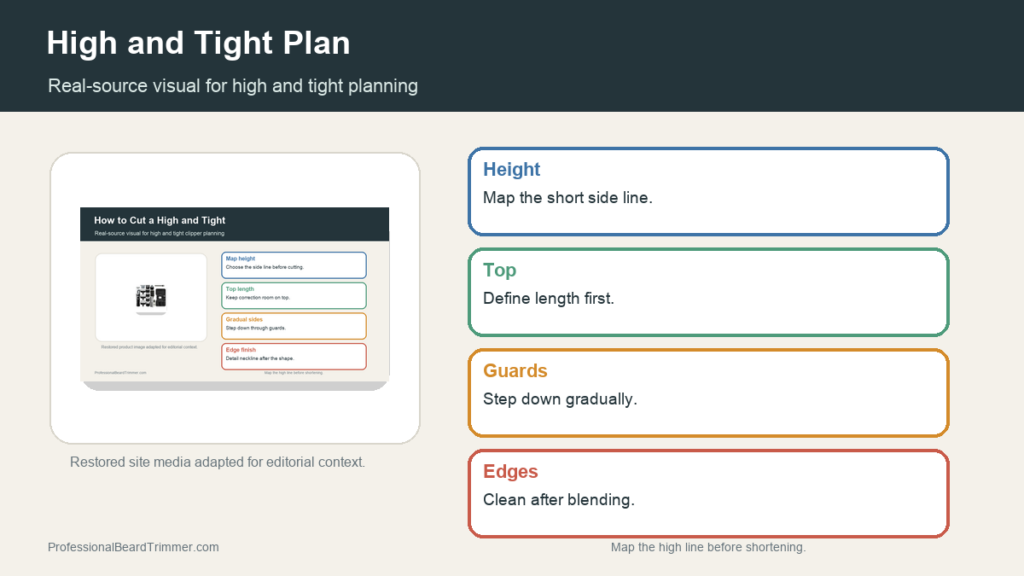
Image note: The image gives clipper and guard context from existing site media. Exact length depends on the clipper, guard system, lever position, and hair density.
Direct answer: A high and tight works best when the side height is mapped before cutting, the top length is defined, and the neckline is cleaned conservatively. The shortest part should be chosen after checking scalp contrast and guard fit.
High and tight haircut checks
| Check | What to do | Why it matters |
|---|---|---|
| Side height | Mark how high the short section should rise | The line controls how sharp the haircut feels |
| Top length | Choose a guard or scissor length before starting | The top keeps the cut balanced |
| Guard range | Step down through guards instead of jumping short | Gradual changes reduce hard lines |
| Edge finish | Clean sideburns and neckline after the blend | Short cuts rely on tidy edges |
| Blade comfort | Brush hair away and pause if the blade feels hot | Close work should stay controlled |
How to plan a high and tight
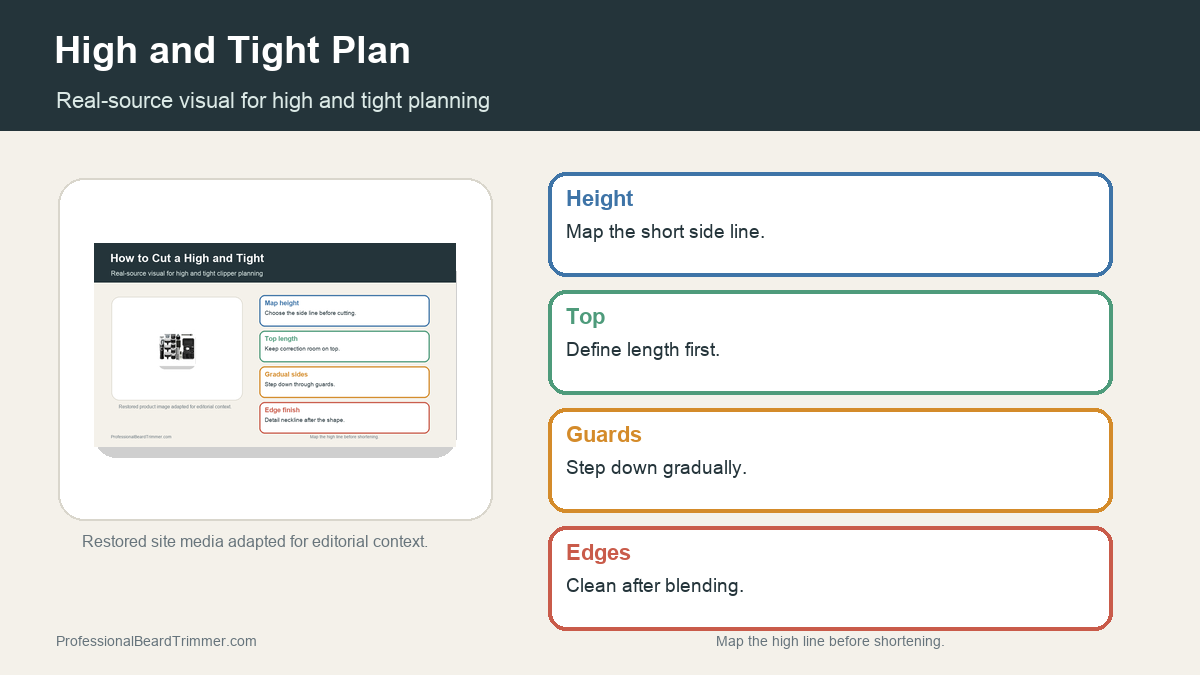
- Set the height. Decide where the high side section should stop before any short pass.
- Choose the top length. Confirm whether the top stays short with a guard or longer with scissors.
- Blend in steps. Move through guard and lever changes so the sides do not show a hard shelf.
- Check symmetry. Compare both sides in good light before cleaning the edges.
- Finish the neckline. Use small trimmer passes so the back looks clean without overcutting.
High and tight checklist
- Mapped side height: Prevents the cut from rising higher than intended.
- Defined top length: Keeps the shape from looking unfinished.
- Gradual guard plan: Makes the side blend easier to control.
- Clean edge finish: Makes a short haircut look deliberate.
For related reference pages, compare the high and tight cutting guide, the burr haircut guide, and the guard size guide.
Frequently asked questions
What is a high and tight haircut?
It is a short haircut with very close sides and back plus a controlled amount of length on top.
How high should the sides go?
Choose the side height before cutting. A higher line looks sharper, while a slightly lower line grows out softer.
Can a high and tight use guards?
Yes. Guards and lever changes help step the sides into the top without creating a hard line.
What should I tell a barber?
State the top length, the side height, how close the sides should go, and how you want the neckline finished.