
Disclosure: This site may use affiliate links. Product specifications should be checked against manufacturer or retailer pages before purchase.
Editorial update, June 19, 2026: This recovered page was rebuilt as a practical haircut, styling, and grooming-tool guide using restored or current site media. It avoids fake testing, live commercial data, shop visit claims, and affiliate language.
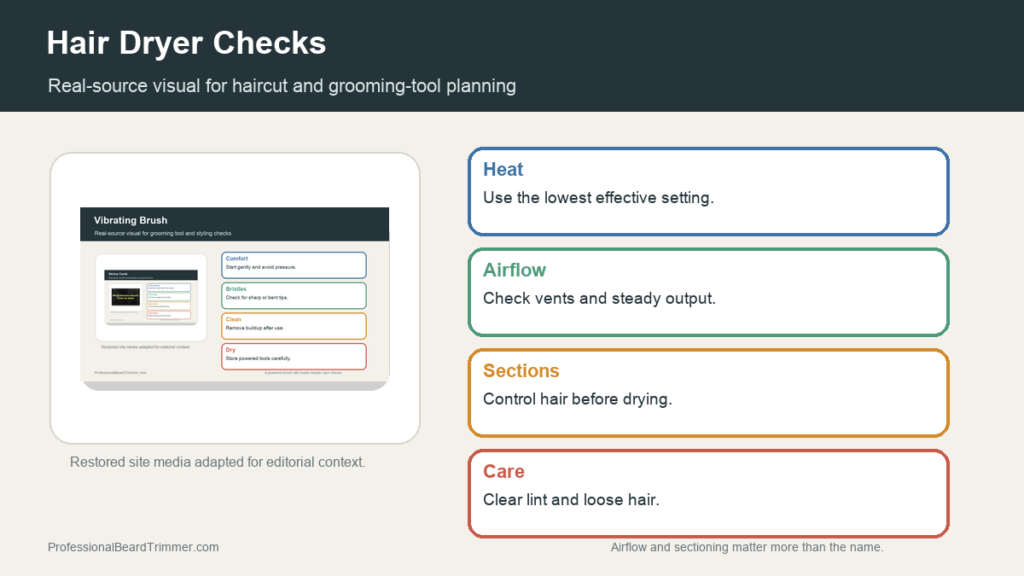
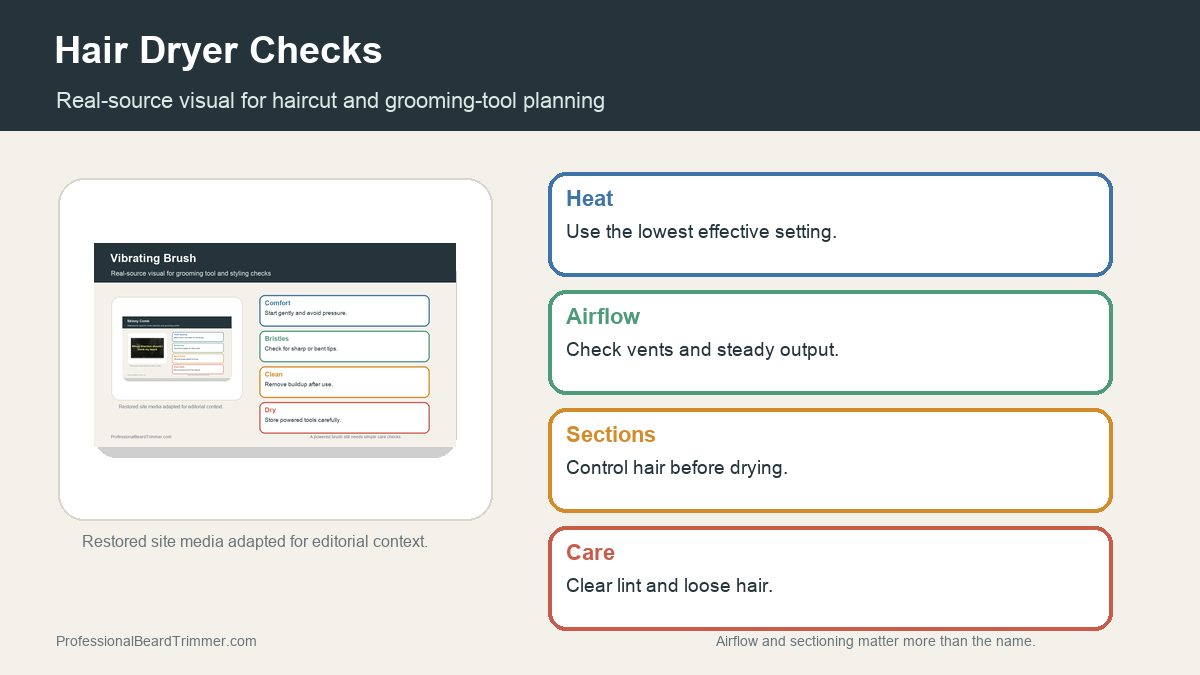
Image note: The image uses restored hair-tool media for editorial styling context. It is not an official product image and does not claim current specifications or hands-on testing.
Direct answer: A BaByliss Pro RoseFX hair dryer or similar salon dryer should be judged by heat control, airflow, cord condition, filter cleanliness, sectioning, and how comfortably it supports your styling routine. Do not assume a dryer is right for you from the name alone.
Hair dryer use and care checks
| Check | What to do | Why it matters |
|---|---|---|
| Heat control | Use the lowest effective heat for your hair and finish | More heat is not always better |
| Airflow | Check for steady air before styling | Weak airflow can extend drying time |
| Sectioning | Dry in manageable sections with a comb or brush | Sectioning reduces repeated passes |
| Distance | Keep the nozzle moving and avoid holding heat in one spot | Concentrated heat can feel harsh |
| Cleaning | Keep vents and filter areas clear of lint and hair | Blocked airflow can make the tool work harder |
How to use a hair dryer more safely
- Check the cord and vents. Look for visible damage, lint, or blocked intake before turning the dryer on.
- Start with lower heat. Use the lowest heat and airflow that still supports the style you want.
- Work in sections. Use a comb, brush, or clips to control the hair instead of reheating the same area repeatedly.
- Keep the tool moving. Avoid holding heat in one spot and let the airflow do the work.
- Clean after buildup. Let the tool cool, then remove lint or loose hair from accessible vent areas.
Hair dryer checklist
- Heat control: Helps styling without using unnecessary heat.
- Steady airflow: Makes drying more predictable.
- Sectioning tool: Keeps hair organized during drying.
- Clear vents: Protect airflow and reduce avoidable strain.
For related reference pages, compare the vibrating hair brush guide, the sectioning comb guide, and the barber tool kit guide.
Frequently asked questions
What should I check before using a hair dryer?
Check the cord, vents, airflow, heat controls, sectioning plan, and whether the dryer feels stable before styling.
Is higher heat always faster?
No. Higher heat can feel harsh and may not improve the finish. Use the lowest effective heat and keep the airflow moving.
Why does a hair dryer lose airflow?
Airflow can drop because of lint, hair buildup, blocked vents, wear, or using the tool in a way that restricts intake.
How does sectioning help blow-drying?
Sectioning keeps hair controlled, reduces repeated passes, and helps the dryer and brush or comb work together more predictably.