Disclosure: This site may use affiliate links. Product specifications should be checked against manufacturer or retailer pages before purchase.
Editorial update, June 19, 2026: This recovered page was rebuilt as a practical grooming-tool or styling-product guide using restored or current site media. It avoids live commercial data, retailer claims, fake testing, and medical or growth promises.
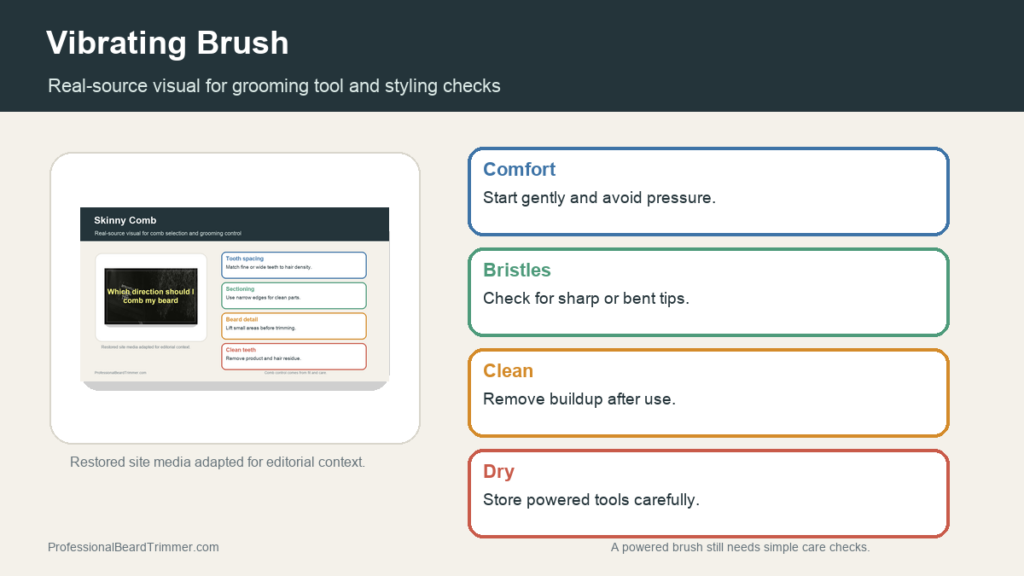
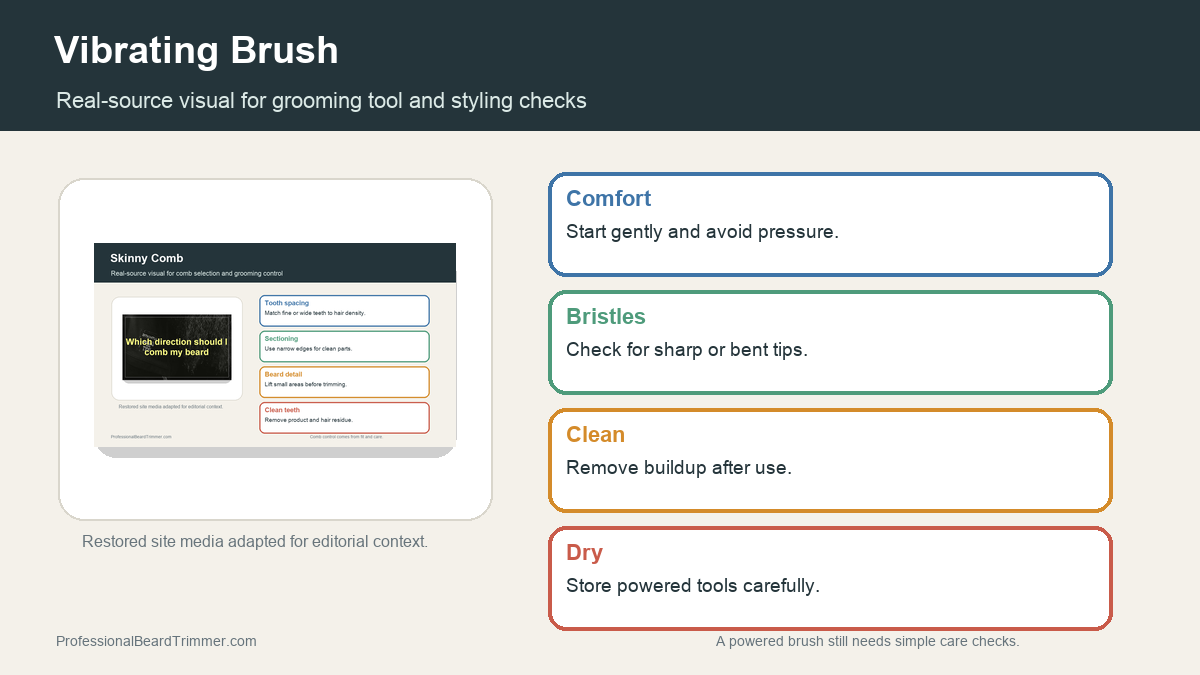
Image note: The image is based on restored comb and styling-tool media. It gives grooming-tool context without pretending to show a specific powered brush model.
Direct answer: A vibrating hair brush should be judged by comfort, bristle condition, cleaning access, battery or power setup, and whether it actually improves detangling or styling. It should not be treated as a hair-growth treatment or a substitute for scalp care.
Vibrating hair brush checks
| Check | What to do | Why it matters |
|---|---|---|
| Use case | Use it for gentle detangling, styling prep, or comfort checks | A powered brush is not automatically better than a simple comb |
| Bristles | Check for sharp, bent, or dirty bristles before use | Rough bristles can irritate the scalp |
| Power | Confirm battery or charging setup before wet areas | Powered grooming tools need extra care around moisture |
| Cleaning | Remove hair buildup and wipe contact surfaces | Clean tools reduce residue transfer |
| Comfort | Stop if vibration feels harsh or causes tenderness | Comfort matters more than novelty |
How to use a vibrating brush carefully
- Detangle first. Remove knots gently with fingers or a wide-tooth comb before using vibration.
- Start on a low setting. Use the mildest setting first and avoid pressing hard into the scalp.
- Work in sections. Brush small areas instead of dragging through the full length at once.
- Clean after use. Remove hair and wipe the brush head according to the tool design.
- Store dry. Keep powered brushes away from moisture unless the exact label confirms water-safe use.
Brush and comb care checklist
- Comfort first: The tool should feel gentle, not scratchy or harsh.
- Clean bristles: Reduce buildup before the next grooming session.
- Dry storage: Protects powered parts and keeps the brush ready.
- Simple backup: A regular comb may be better for precise styling lines.
For related reference pages, compare the skinny comb guide, the open comb vs closed comb guide, and the styling clay guide.
Frequently asked questions
What is a vibrating hair brush good for?
It can help with gentle styling prep, comfort-based brushing, and detangling routines, but it is not automatically better than a regular comb or brush.
Can a vibrating brush grow hair?
Do not treat a vibrating brush as a hair-growth treatment. Use it as a grooming tool and avoid medical or growth claims.
How should a powered hair brush be cleaned?
Remove loose hair, wipe accessible surfaces, avoid soaking powered parts unless the exact label allows it, and store the brush dry.
When should I stop using it?
Stop if the brush feels sharp, pulls hair, causes tenderness, heats unexpectedly, or has damaged bristles.