Disclosure: This site may use affiliate links. Product specifications should be checked against manufacturer or retailer pages before purchase.
Editorial update, June 20, 2026: This recovered page was rebuilt as a practical men's grooming, clipper length, and haircut planning guide using restored or current site media. It avoids fake testing, live commercial data, shop visit claims, medical promises, and affiliate language.
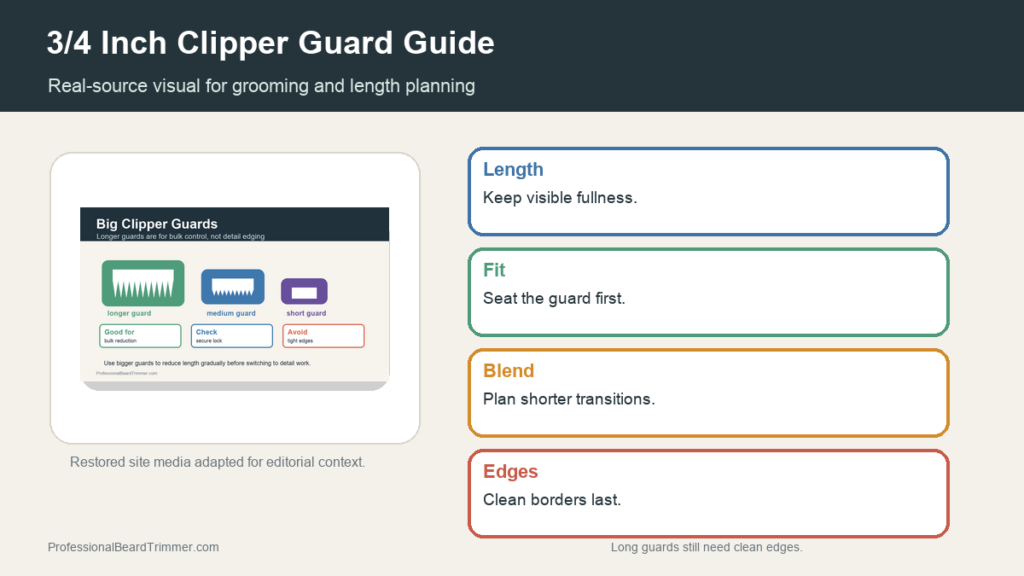
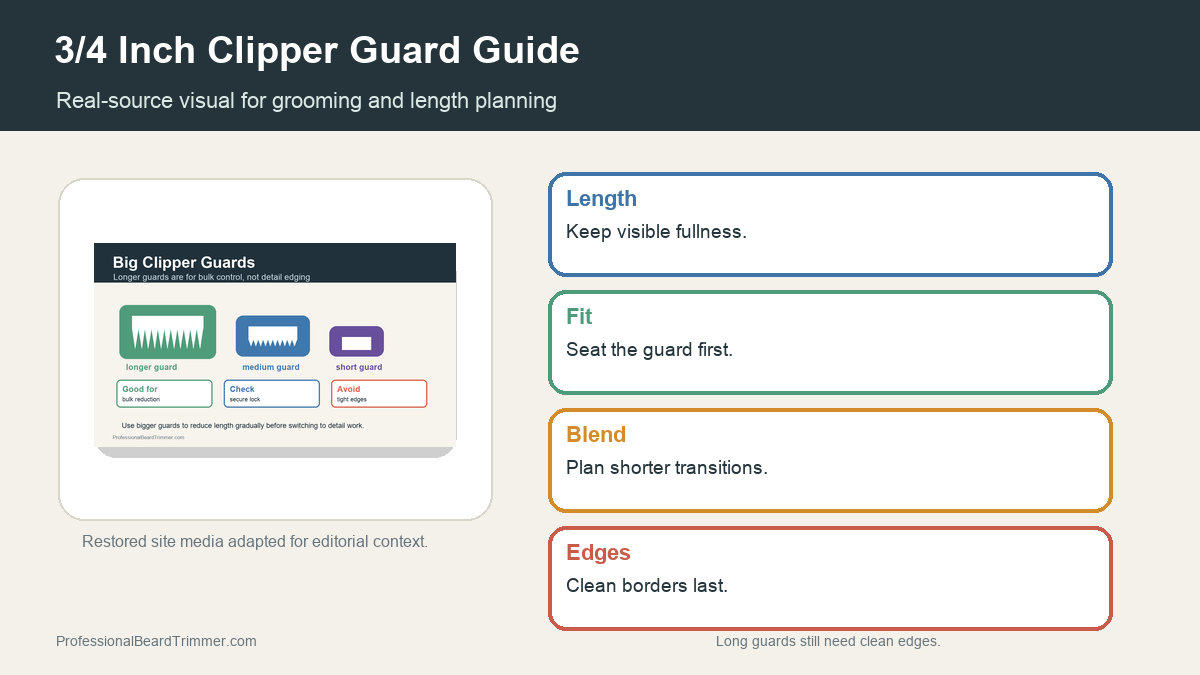
Image note: The image uses an existing guard-length visual for editorial context. It supports length planning and does not claim universal fit across every clipper.
Direct answer: A 3/4 inch clipper guard is a longer guard choice for controlled bulk, softer beard shaping, and fuller haircut sections. Treat it as a planning length, then check guard fit, hair direction, clipper power, and edge cleanup before deciding whether to blend shorter around the neckline or sides.
3/4 inch guard planning checks
| Check | What to do | Why it matters |
|---|---|---|
| Length goal | Use it when you want visible length rather than a close cut | A longer guard leaves room for shape and texture |
| Guard fit | Seat the guard firmly before the first pass | Loose guards can create uneven sections |
| Hair direction | Comb or brush hair into its natural direction first | Lifted hair cuts more predictably |
| Blend plan | Decide where shorter guards or trimmer edges begin | A long guard still needs clean transitions |
| Cleanup | Use a trimmer for neckline, sideburns, or beard borders | Edges define the final look |
How to use a 3/4 inch guard more evenly
- Start clean and dry. Brush the hair or beard into its natural direction before judging length.
- Attach the guard securely. Confirm the guard is seated and does not lift when you touch the front teeth.
- Use slow even passes. Move with steady pressure and overlap passes so longer hair feeds into the blade.
- Check the shape before shortening. Step back and decide whether the result needs blending rather than another full pass.
- Finish the borders. Use a trimmer for the neckline, sideburns, cheek line, or haircut edge cleanup.
3/4 inch guard checklist
- Longer guard control: Keeps fullness while reducing bulk.
- Secure attachment: Protects the target length.
- Blend awareness: Prevents a blocky jump from long to short sections.
- Edge cleanup: Makes the longer length look intentional.
For related reference pages, compare the big clipper guards guide, the Wahl combs guide, and the Andis guard fit guide.
Frequently asked questions
What is a 3/4 inch clipper guard used for?
It is used for longer beard shaping, fuller haircut sections, bulk reduction, and softer transitions where a close guard would remove too much length.
Is 3/4 inch the same on every clipper?
No. Approximate length and fit depend on the guard system, clipper blade, lever position, and whether the attachment seats securely.
Can a 3/4 inch guard work on beards?
Yes, it can work for fuller beard sections, but neckline, cheek line, and mustache edges usually need a shorter guard, scissors, or a detail trimmer.
Why can a long guard cut unevenly?
Uneven results can come from loose guard fit, hair direction, moving too fast, weak clipper power, or trying to remove too much bulk in one pass.