Disclosure: This site may use affiliate links. Product specifications should be checked against manufacturer or retailer pages before purchase.
Editorial update, June 19, 2026: This recovered page was rebuilt as a practical men's grooming, haircut planning, and tool-care guide using restored or current site media. It avoids fake testing, live commercial data, shop visit claims, and affiliate language.
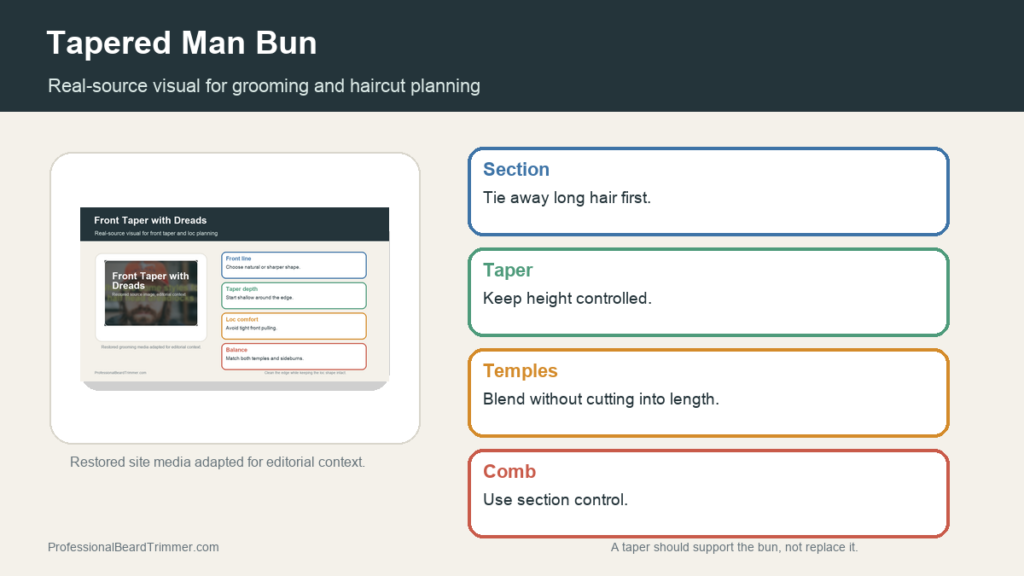
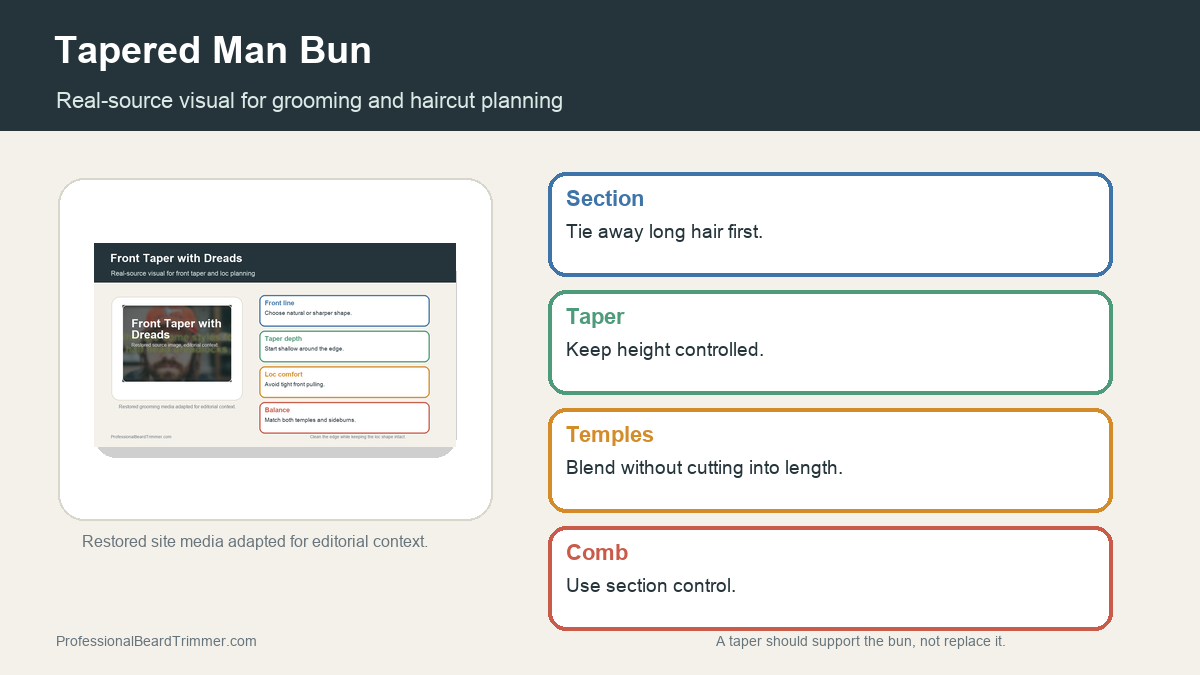
Image note: The image uses restored taper media for long-hair planning context. It does not claim a service visit or a universal taper height.
Direct answer: A tapered man bun keeps the long section intact while cleaning the temples, sideburns, and neckline. The safest plan is to section the long hair first, choose a conservative taper height, then finish edges with controlled trimmer work.
Tapered man bun checks
| Check | What to do | Why it matters |
|---|---|---|
| Long section | Separate the bun length before taper work | It keeps the haircut boundary clear |
| Taper height | Choose a low or controlled taper unless more contrast is wanted | A taper can climb higher than expected |
| Temple control | Blend the front edge without cutting into long hair | Temple shape affects the tied look |
| Neckline | Clean the back edge after the long section is secured | The neckline is visible when hair is up |
| Comb work | Use a comb to manage sections and avoid random bulk removal | Section control protects balance |
How to plan a tapered man bun
- Tie away the long hair. Secure the bun section so the taper boundary is visible.
- Set the taper height. Choose the lowest height that gives the cleanup you want.
- Blend around the temples. Use small controlled passes where the taper meets the front hairline.
- Clean the neckline. Finish the back edge after the sides are balanced.
- Plan touch-ups. Refresh taper and neckline cleanup before trimming the bun length.
Tapered man bun checklist
- Sectioned bun length: Protects long hair from accidental clipper passes.
- Controlled taper height: Keeps cleanup from turning into a high fade.
- Temple detail: Improves the look when hair is tied back.
- Comb control: Keeps section lines and loose bulk manageable.
For related reference pages, compare the front taper planning guide, the taper design guide, and the sectioning comb guide.
Frequently asked questions
What is the difference between a tapered man bun and a faded man bun?
A taper is usually a smaller cleanup around temples, sideburns, and neckline, while a fade creates stronger contrast across a larger side area.
Should the long hair be cut before tapering?
The long hair should be sectioned first. Only trim it if the overall length or shape needs adjustment after the taper plan is clear.
How high should the taper go?
Start conservatively if you want to keep the bun as the main feature. A higher taper creates more contrast and is harder to undo.
How often does a tapered man bun need cleanup?
The taper, temples, sideburns, and neckline usually need cleanup before the bun length needs a full trim.