Disclosure: This site may use affiliate links. Product specifications should be checked against manufacturer or retailer pages before purchase.
Editorial update, June 20, 2026: This recovered page was rebuilt as a practical men's grooming, barber workflow, and cleanup guide using restored or current site media. It avoids fake testing, live commercial data, shop visit claims, medical promises, and affiliate language.
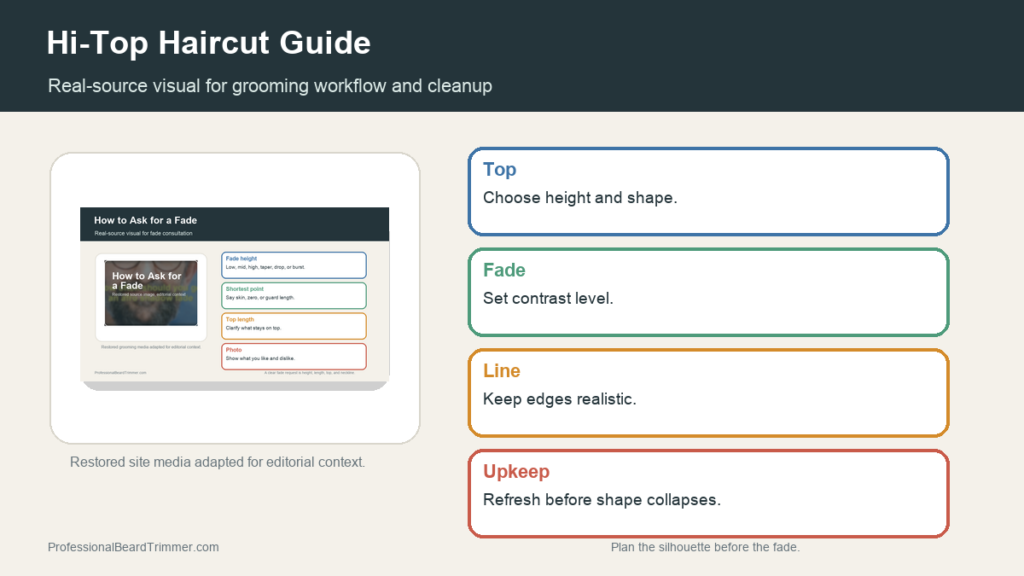
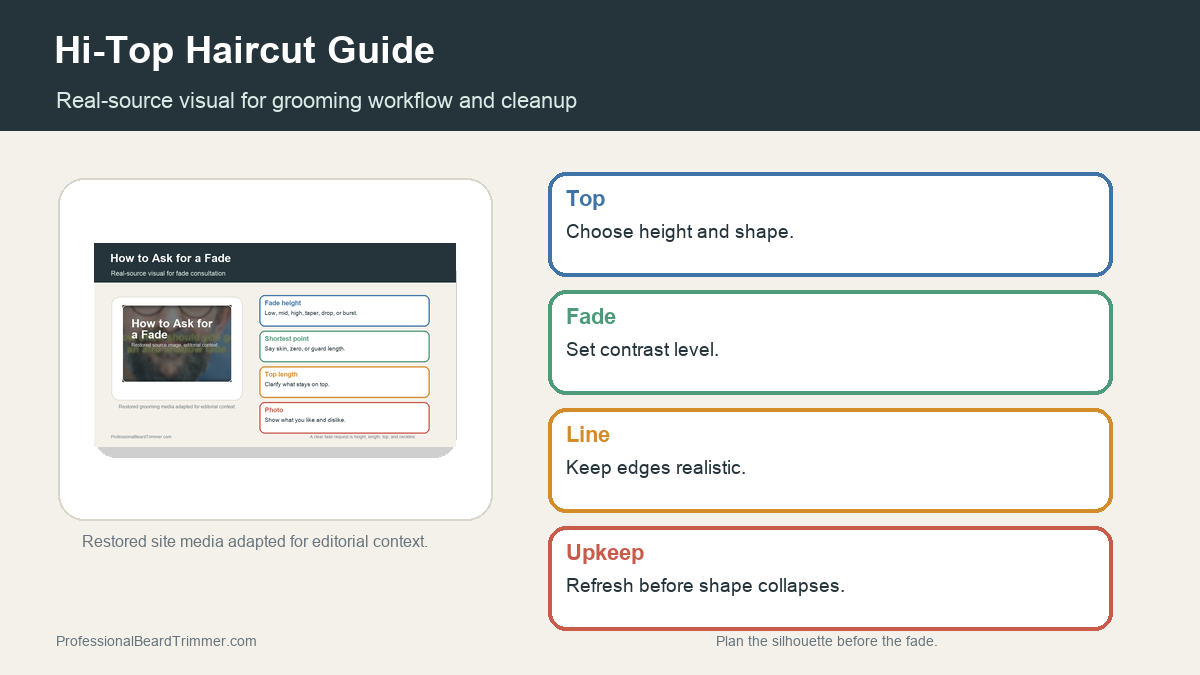
Image note: The image uses restored fade consultation media for editorial context. It does not claim a visit to a specific barbershop.
Direct answer: A hi-top haircut should be planned around top height, side shape, fade height, hairline cleanup, and daily upkeep. The cleanest result comes from deciding the silhouette first, then matching clippers, guards, and edge work to that shape instead of asking only for a generic fade.
Hi-top haircut planning checks
| Check | What to do | Why it matters |
|---|---|---|
| Top height | Choose how tall and square or rounded the top should be | The top creates the main silhouette |
| Side shape | Decide whether the sides should taper softly or fade tightly | Side shape changes the haircut's width |
| Fade height | Choose low, mid, or high fade before cutting | Fade height controls contrast |
| Hairline | Clean edges lightly without pushing the line too far back | A realistic edge grows out better |
| Upkeep | Plan brushing, sponge work, trimming, or shape refresh timing | Daily routine keeps the top controlled |
How to ask for a hi-top haircut
- Bring a clear shape reference. Describe the top height, side width, and whether the top should be squared, rounded, or textured.
- Choose fade height. Agree on low, mid, or high fade before the sides are cut.
- Set the hairline approach. Ask for a clean but realistic edge that follows the natural line.
- Connect sideburns and beard. Plan how the haircut should meet facial hair, if you wear any.
- Schedule shape refreshes. Refresh edges and side weight before the top loses its intended silhouette.
Hi-top haircut checklist
- Top silhouette: Defines the style from the front and profile.
- Fade height: Controls how much contrast the haircut has.
- Hairline control: Keeps the edge clean without overcutting.
- Upkeep plan: Helps the shape last between cuts.
For related reference pages, compare the fade consultation guide, the taper fade barbershop guide, and the hairline guide.
Frequently asked questions
What should I ask for with a hi-top haircut?
Ask for the top height, top shape, side width, fade height, hairline cleanup, and how the sideburns or beard should connect.
Is a hi-top always a high fade?
No. A hi-top can use different side treatments. Low, mid, or high fade choices should be based on the desired contrast and face balance.
How do you keep a hi-top looking clean?
Maintain the hairline, side weight, and top shape with a consistent brush, sponge, pick, or trim routine that matches the hair texture.
Should the hairline be pushed back for a sharper look?
No. A clean edge should respect the natural hairline so the haircut grows out better and does not need aggressive correction.