Disclosure: This site may use affiliate links. Product specifications should be checked against manufacturer or retailer pages before purchase.
Editorial update, June 20, 2026: This recovered page was rebuilt as a practical men's haircut, beard-shape, and barber consultation guide using restored or current site media. It avoids fake testing, live commercial data, identity stereotypes, medical promises, and affiliate language.
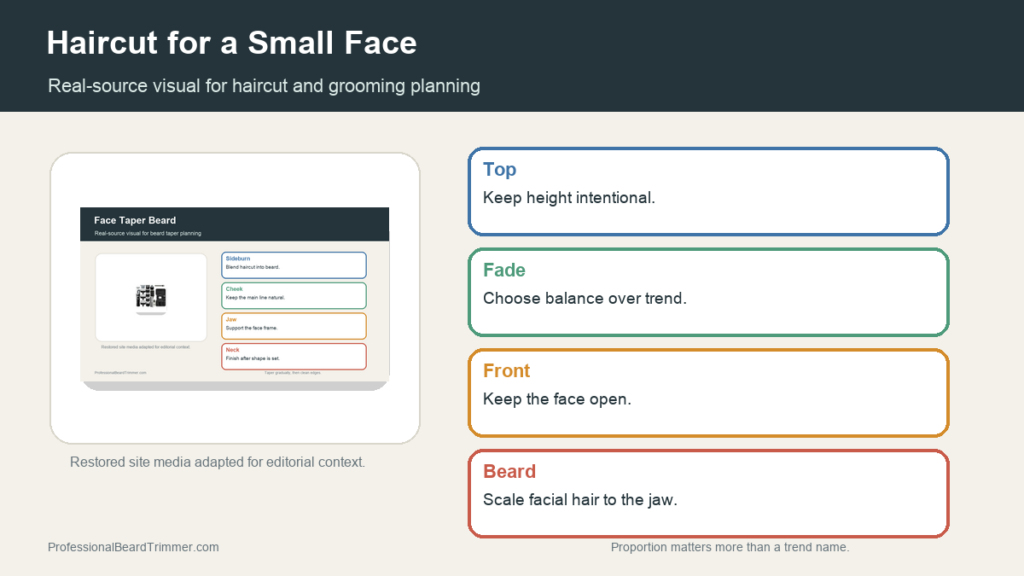
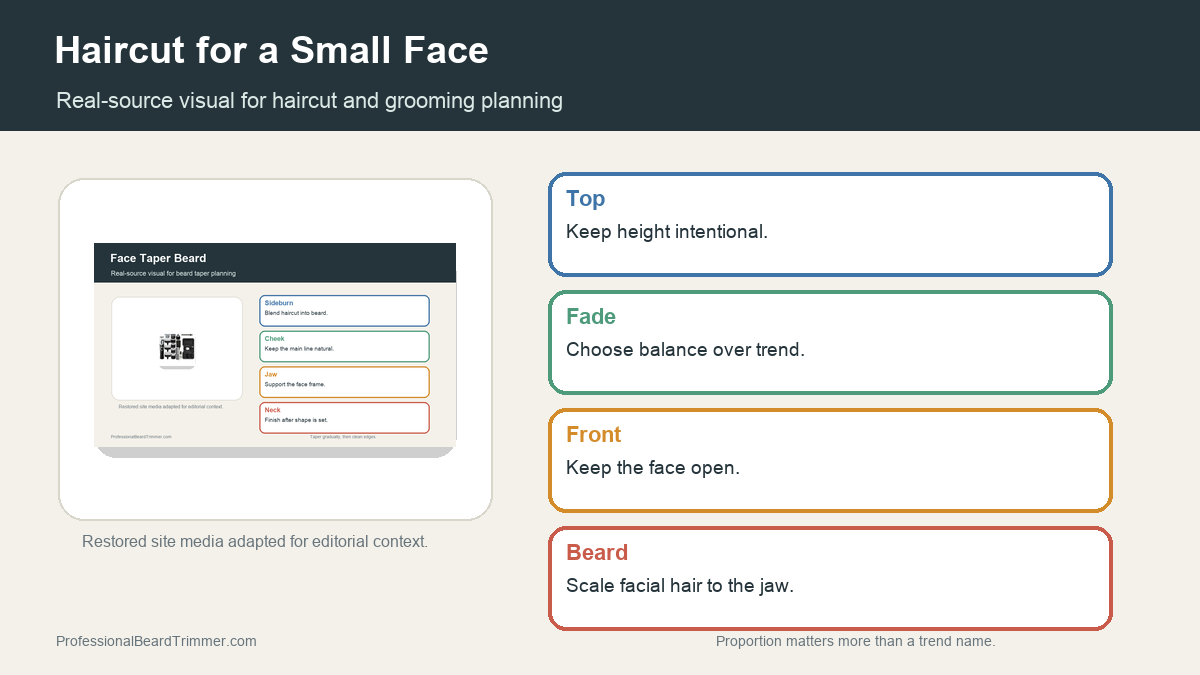
Image note: The image uses restored face-taper media for editorial context. It should be used as a planning aid, not a fixed rule for every face.
Direct answer: A haircut for a small face should protect proportion: avoid overwhelming the face with too much top volume, too much side bulk, or a beard that covers the jaw shape. The cleanest plan uses controlled height, tidy sides, realistic edges, and a simple daily routine.
Small-face haircut checks
| Check | What to do | Why it matters |
|---|---|---|
| Top length | Keep height intentional and easy to style | Too much volume can make the face look smaller |
| Fade height | Choose low, mid, or taper based on balance, not trend | Fade height changes the visible face frame |
| Side weight | Reduce bulk without making the sides look hollow | Balanced sides keep the head shape natural |
| Fringe | Use a light fringe only if it does not cover too much of the face | Heavy front hair can shorten the visible face |
| Facial hair | Keep beard or stubble neat and scaled to the jaw | Oversized facial hair can overpower the cut |
How to keep the haircut proportional
- Choose the main silhouette. Decide whether the haircut should look neat, textured, swept, or lightly faded before choosing guard lengths.
- Keep the top controlled. Use enough length for shape without building height that overwhelms the face.
- Avoid harsh side contrast. A taper or balanced fade can frame the face without making the sides too empty.
- Scale facial hair. Keep the beard line, goatee, or stubble clean and proportional to the jaw.
- Check the front view. Make sure the fringe, hairline, and sideburns leave the face open and balanced.
Small-face haircut checklist
- Controlled top: Adds shape without excessive height.
- Balanced fade: Frames the face without harsh contrast.
- Light front: Keeps eyes, brow, and face shape visible.
- Scaled beard: Supports the jaw without overpowering the cut.
For related reference pages, compare the face taper beard guide, the fade consultation guide, and the hairline guide.
Frequently asked questions
What haircut is good for a small face?
A proportional cut with controlled top height, balanced sides, and a light front usually works well. The exact fade or taper should match the head shape and hair type.
Should a small face use a high fade?
Not automatically. A high fade can work, but it can also create too much contrast. A taper or mid fade may be easier to balance for many face shapes.
Can facial hair help?
Yes. Short stubble, a neat goatee, or a tidy beard line can support the jaw if the shape stays scaled to the face.
What should I avoid?
Avoid very heavy fringe, oversized top volume, bulky sides, or facial hair that hides the natural jaw shape.