Disclosure: This site may use affiliate links. Product specifications should be checked against manufacturer or retailer pages before purchase.
Editorial update, June 19, 2026: This recovered page was rebuilt as a practical men's styling and cleanup guide using restored or current site media. It avoids hands-on test claims, live shopping data, score claims, treatment claims, and brand-owned imagery.
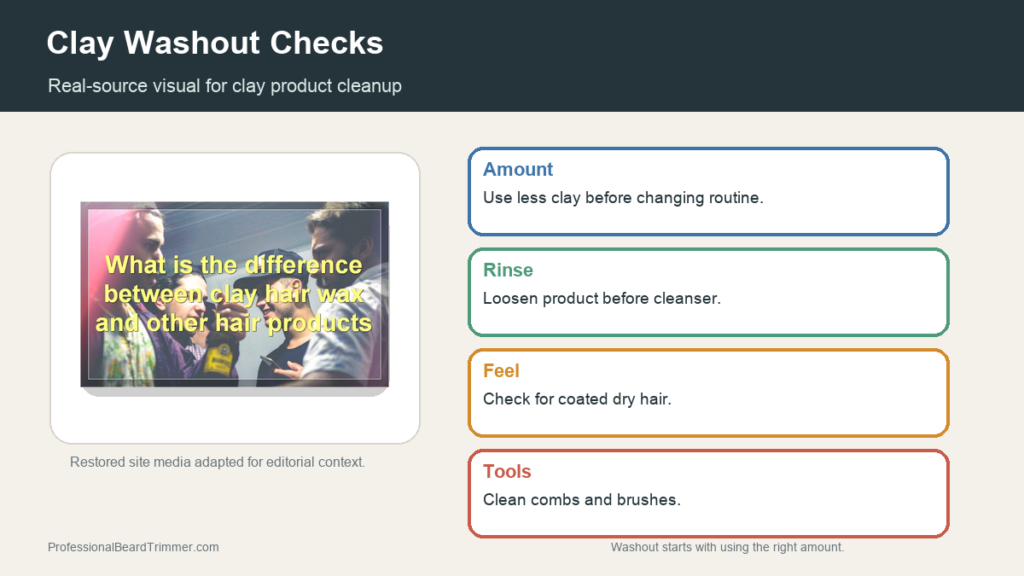
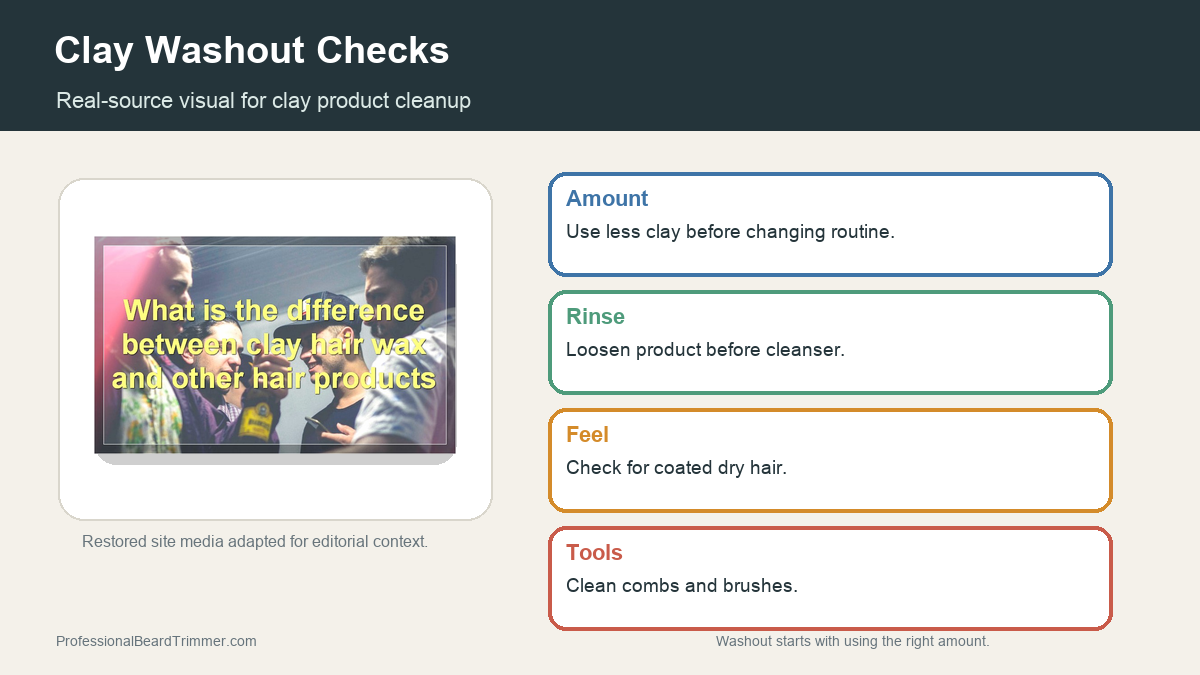
Image note: The image gives hair clay context from restored site media. It is not an ingredient label, current product instruction, or proof of hands-on testing.
Direct answer: Clay styling product should wash out cleanly enough that hair does not feel coated, waxy, or flat after cleaning. If clay buildup remains, reduce the amount used, rinse longer, and use a wash routine that removes styling residue without over-scrubbing the scalp.
Clay washout checks
| Check | What to do | Why it matters |
|---|---|---|
| Product amount | Start with less clay before changing the wash routine | Heavy application is the most common reason washout feels difficult |
| Rinse time | Rinse thoroughly before adding shampoo or cleanser | Water softens and loosens surface product |
| Hair feel | Check for coated, waxy, or stiff areas after drying | Residue often appears after hair dries |
| Wash frequency | Match washing to product use and scalp comfort | Daily heavy washing can irritate some scalps |
| Tool hygiene | Clean combs and brush teeth after product-heavy styling | Residue on tools can move buildup back into clean hair |
How to remove styling clay without over-washing
- Rinse first. Use warm water and work through the hair before adding cleanser.
- Clean the product-heavy areas. Focus on the front, crown, and areas where clay was applied most heavily.
- Use fingertips, not nails. Loosen residue gently so scalp cleaning does not become scratching.
- Rinse until hair moves freely. Stop only when the hair no longer feels coated or sticky.
- Reduce next application. If residue stays after washing, use less clay or switch to a lighter styling product.
Clay cleanup checklist
- Small application: Makes washout easier before the routine starts.
- Thorough rinse: Loosens surface product before cleansing.
- Residue check: Catches coated areas after the hair dries.
- Clean styling tools: Keeps old product from returning to clean hair.
For related reference pages, compare the styling clay guide, the grooming clay guide, and the product washout guide.
Frequently asked questions
Does hair clay wash out easily?
Some clay products wash out easily, while heavier products can leave a coated feel. Amount used, hair thickness, rinse time, and cleanser choice all affect washout.
Why does clay make hair feel waxy after washing?
A waxy feel usually means too much product was used, the rinse was too short, or residue remained on the hair or styling tools.
Should I wash clay out every day?
Wash frequency depends on product amount, scalp comfort, and how the hair feels the next day. Heavy daily product use usually needs more consistent cleanup.
Can product buildup make hair look flat?
Yes. Styling residue can reduce lift, dull texture, and make hair look heavier even when the haircut is unchanged.