Disclosure: This site may use affiliate links. Product specifications should be checked against manufacturer or retailer pages before purchase.
Editorial update, June 19, 2026: This recovered page was rebuilt as a practical haircut, styling, and grooming-tool guide using restored or current site media. It avoids fake testing, live commercial data, shop visit claims, and affiliate language.
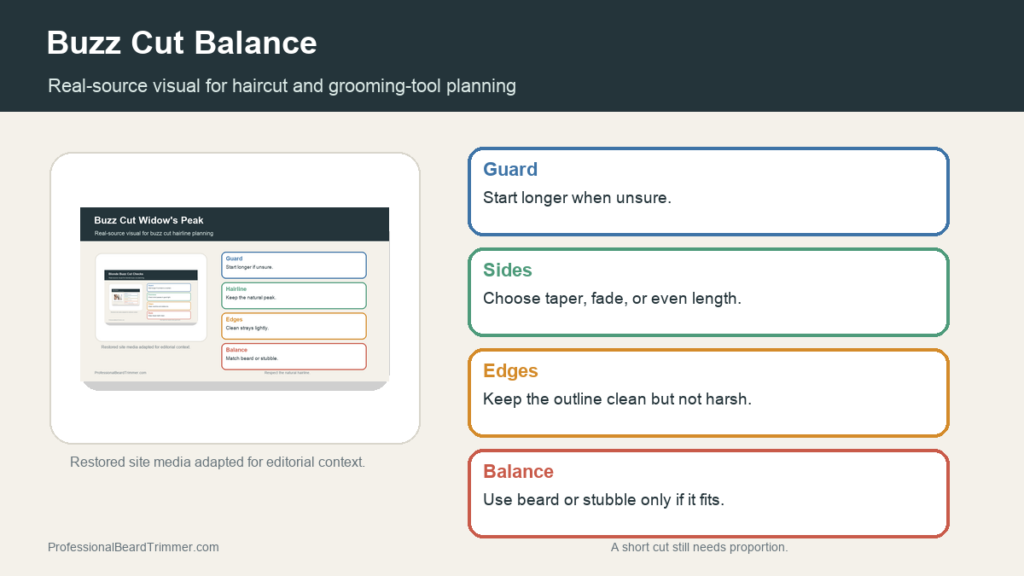
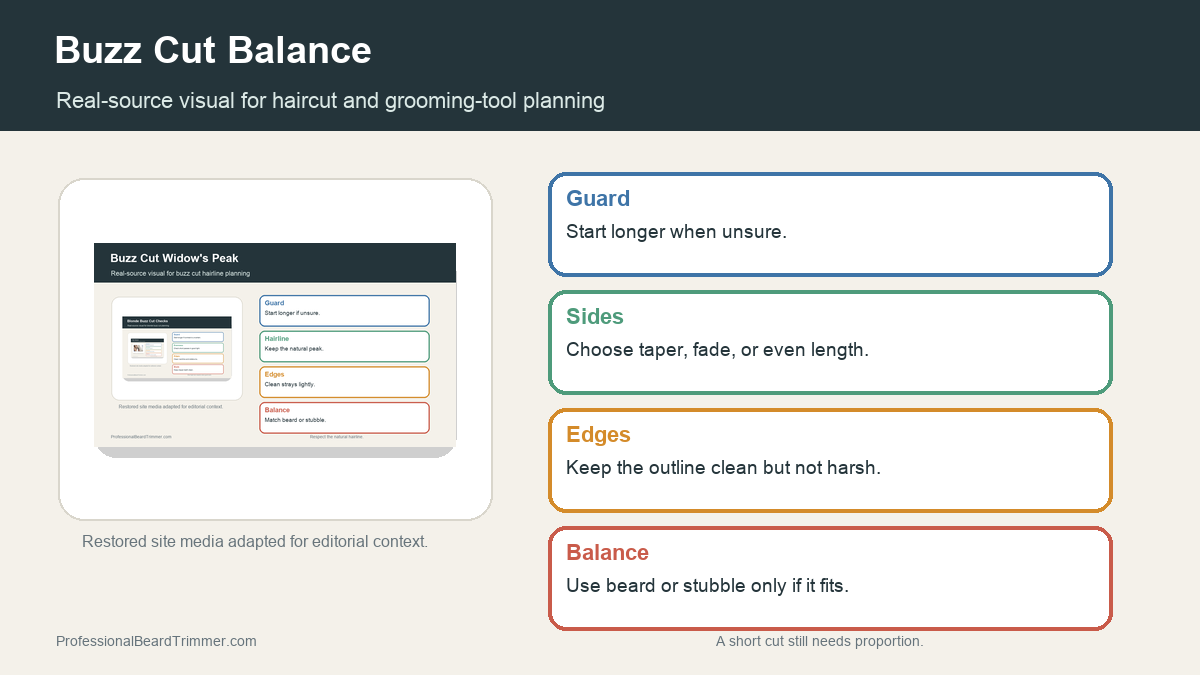
Image note: The image uses restored buzz-cut media for haircut-planning context. It avoids body-shaming claims and does not represent a personal consultation.
Direct answer: If you are worried a buzz cut will make facial features feel more prominent, avoid choosing the shortest guard by default. A slightly longer guard, cleaner neckline, softer edge work, and balanced beard or stubble can make the cut look more intentional.
Buzz cut balance checks
| Check | What to do | Why it matters |
|---|---|---|
| Guard length | Start with a slightly longer guard if unsure | Very short cuts create stronger contrast |
| Side shape | Decide between even length, taper, or fade | The side shape changes visual balance |
| Hairline detail | Keep edge work clean without making it harsh | Overly sharp edges can draw attention to one area |
| Facial hair | Use stubble or beard shape only if it fits your routine | Facial hair can balance a short haircut |
| Mirror check | Check front, side, and neckline before finishing | A buzz cut is simple but still needs proportion |
How to plan a buzz cut around face shape
- Choose a conservative guard. Start longer than the shortest option when you are testing a new buzz cut.
- Pick the side finish. Decide whether an even cut, taper, or fade gives the best balance for your face and hairline.
- Control the edges. Clean the neckline and sideburns without over-sharpening the outline.
- Check facial hair balance. Use beard or stubble only if it makes the overall look easier to maintain.
- Plan the next cleanup. Short cuts lose shape quickly, so plan when to refresh guard length and neckline.
Buzz cut consultation checklist
- Longer starting guard: Leaves room to adjust without going too short immediately.
- Soft edge control: Keeps the haircut clean without making the outline too severe.
- Beard balance: Can help a very short haircut feel more proportioned.
- Quick upkeep: Keeps the buzz cut from turning uneven as it grows.
For related reference pages, compare the buzz cut widow's peak guide, the burr haircut guide, and the taper and face-shape guide.
Frequently asked questions
What guard length is safest for a first buzz cut?
A longer starting guard is usually safer because you can shorten the cut gradually after checking the face shape, hairline, and side profile.
Can a beard help balance a buzz cut?
Yes, beard or stubble can add lower-face balance, but it should match your maintenance routine and natural growth pattern.
Should the edges be very sharp on a buzz cut?
Clean edges help, but extremely hard lines can draw attention to one area. A balanced neckline and sideburn shape often works better.
How often should a buzz cut be refreshed?
Buzz cuts show growth quickly, so neckline, sideburns, and guard length usually need more frequent cleanup than longer styles.