Disclosure: This site may use affiliate links. Product specifications should be checked against manufacturer or retailer pages before purchase.
Editorial update, June 19, 2026: This recovered page was rebuilt as a practical men's grooming guide using restored old-site media. It does not claim direct barber work, lab measurement, retailer offer data, or availability.
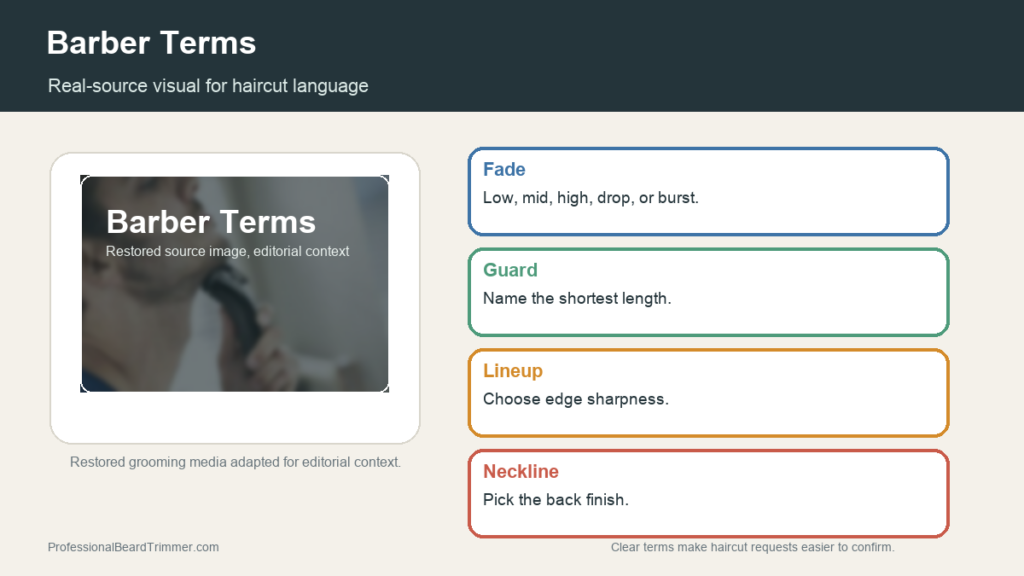
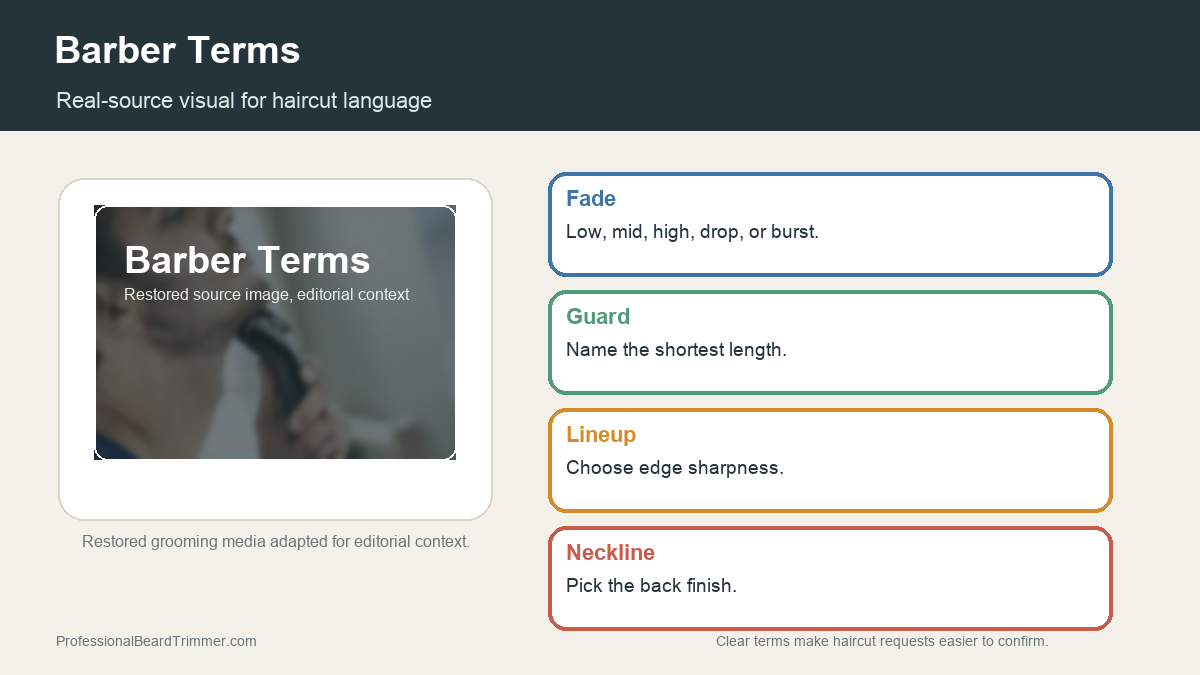
Image note: The image gives restored grooming-tool context. It is a consultation aid, not proof of a specific barber service or final haircut.
Direct answer: The most useful barber terms are fade height, taper, guard number, lineup, neckline, blend, bulk, texture, and sideburn shape. Use these words with a reference photo and explain what you want kept, removed, softened, or sharpened before cutting begins.
Common barber terms explained
| Check | What to do | Why it matters |
|---|---|---|
| Fade | A gradual change from shorter to longer hair | Controls contrast on the sides |
| Taper | A softer shortening around edges or sideburns | Keeps the haircut cleaner without a high fade |
| Guard number | A clipper attachment length such as #1, #2, or #3 | Prevents confusion about how short the cut should be |
| Lineup | Clean edge work around hairline, beard, or sideburns | Defines the outline |
| Neckline | The finish at the back of the neck | Changes how the haircut grows out |
How to use barber terms during a haircut
- Start with the haircut goal. Say whether you want a subtle cleanup, a sharper fade, or a major length change.
- Name the fade or taper height. Use low, mid, high, taper, drop, or burst only when those shapes match your reference.
- Explain guard lengths. Tell the barber the shortest guard and what length should stay on top.
- Confirm edge work. Choose the hairline, sideburn, beard, and neckline finish before detailing.
- Use a reference photo. Point out the parts of the photo you want copied and the parts you do not want.
Barber consultation checklist
- Fade height: Defines the side contrast.
- Guard number: Sets the cutting length.
- Lineup: Controls the edge shape.
- Neckline: Affects the back finish and grow-out.
For related reference pages, compare the fade request guide, the guard size guide, and the clipper open guide.
Frequently asked questions
What barber terms should I know before a haircut?
Know fade height, taper, guard number, lineup, neckline, blend, bulk, texture, and sideburn shape. These terms help explain the haircut clearly before the barber starts cutting.
What does guard number mean at a barber?
A guard number describes the clipper attachment length. Lower numbers cut shorter, but the exact result depends on the clipper, blade, lever position, and how the barber blends the cut.
What is the difference between a fade and a taper?
A fade usually creates more visible contrast on the sides, while a taper often shortens only the edges around the neckline, sideburns, or temples.
How do I avoid using the wrong barber term?
Use a photo, describe the result you want, and ask the barber to confirm the fade height, shortest guard, top length, and neckline before cutting.