
Disclosure: This site may use affiliate links. Product specifications should be checked against manufacturer or retailer pages before purchase.
Editorial update, June 19, 2026: This recovered page was rebuilt as a practical natural-hair, waves, taper, and edge-cleanup guide using restored or current site media. It avoids hands-on test claims, live shopping data, score claims, medical claims, and identity stereotypes.
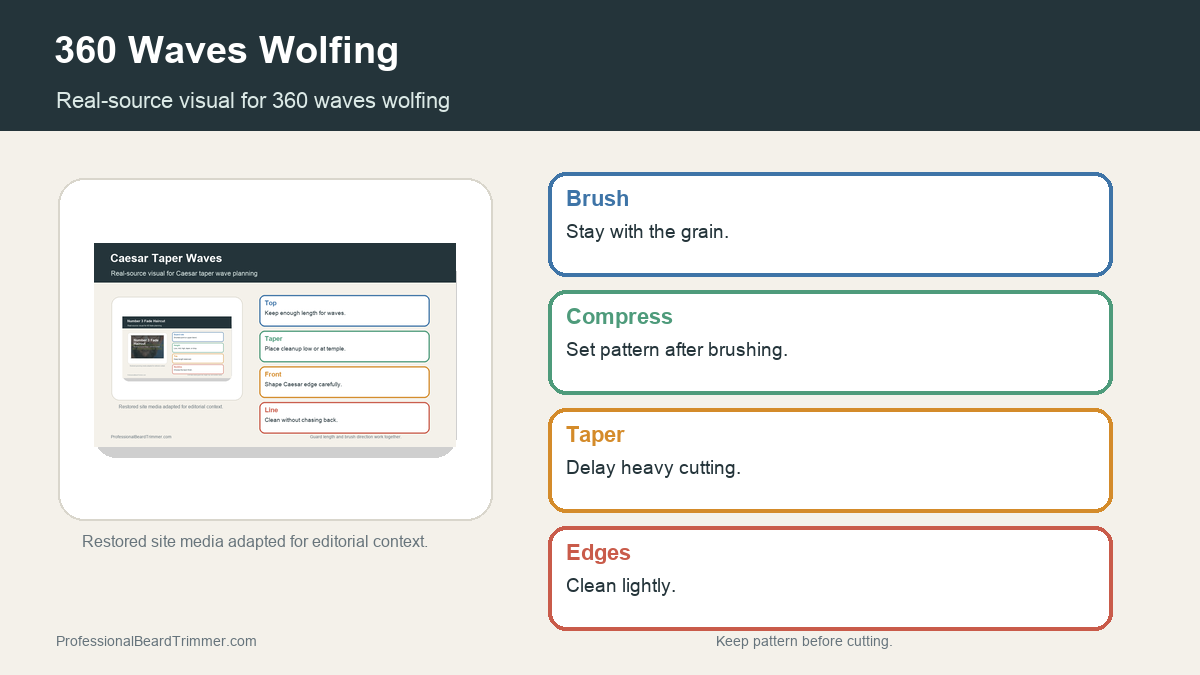
Image note: The image gives waves and taper context from existing site media. Wolfing is described as a styling grow-out phase, not a medical treatment.
Direct answer: 360 waves wolfing is a grow-out phase where brushing, compression, and controlled edge cleanup help the pattern deepen before the next cut. The goal is to preserve the wave pattern while keeping the outline presentable.
360 waves wolfing checks
| Check | What to do | Why it matters |
|---|---|---|
| Brush routine | Brush with the grain consistently | Routine keeps the pattern organized |
| Compression | Use compression after brushing when appropriate | Compression helps the pattern lay down |
| Taper timing | Delay major taper changes until needed | Cutting too early can interrupt progress |
| Edge cleanup | Clean only the outline lightly | Too much edge work can disturb the front |
| Wash control | Keep the scalp clean without heavy buildup | Clean hair is easier to brush into pattern |
How to manage 360 waves wolfing
- Brush with the grain. Follow the same direction each session to reinforce the pattern.
- Use compression. Use a durag or wave cap after brushing when it fits the routine.
- Limit heavy cutting. Keep major taper changes for the planned haircut rather than constant trimming.
- Clean edges lightly. Maintain the outline without pushing the line or thinning the pattern.
- Check buildup. Keep products light enough that brushing still moves the hair.
360 waves wolfing checklist
- Consistent brush direction: Maintains the 360 pattern.
- Compression habit: Helps the pattern settle.
- Delayed heavy cut: Preserves the wolfing phase.
- Light edge cleanup: Keeps the outline tidy.
For related reference pages, compare the 720 waves guide, the taper waves guide, and the fade consultation guide.
Frequently asked questions
What is wolfing for 360 waves?
Wolfing is a grow-out phase where the hair is allowed to build length while brushing and compression keep the wave pattern organized.
Can edges be cleaned during wolfing?
Yes. Light edge cleanup can keep the outline neat, but heavy cutting can disturb the pattern or shorten the phase too early.
Should the taper be refreshed during wolfing?
A light cleanup can work, but major taper changes are usually better saved for the planned cut.
How do you prevent buildup while wolfing?
Use lighter products, wash as needed, and keep brushing sessions consistent so the hair still moves with the grain.