Disclosure: This site may use affiliate links. Product specifications should be checked against manufacturer or retailer pages before purchase.
Editorial update, June 19, 2026: This recovered page was rebuilt as a practical clipper, guard, and fade-planning guide using restored or current site media. It avoids hands-on test claims, live shopping data, score claims, and unsupported barber-service claims.
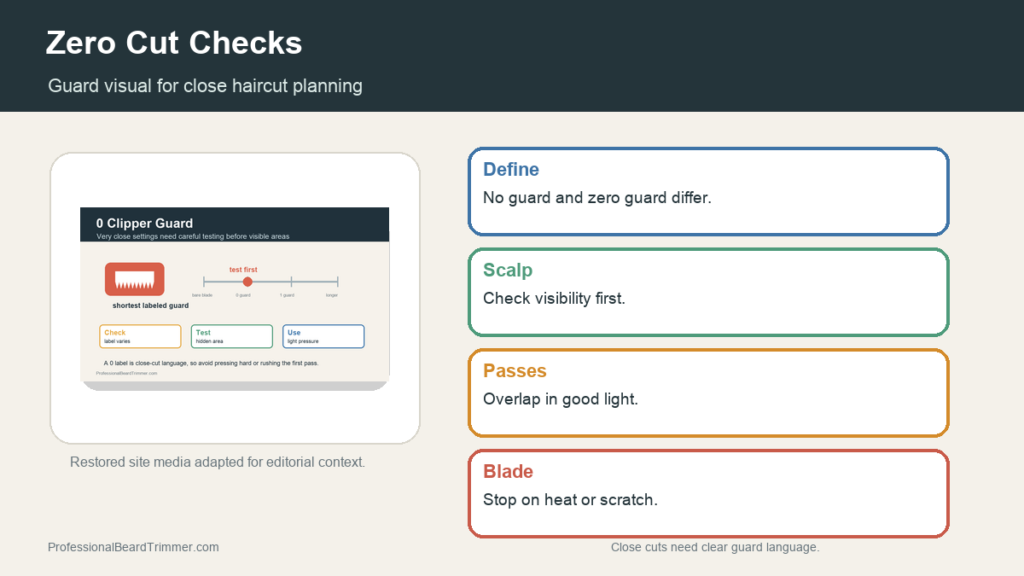
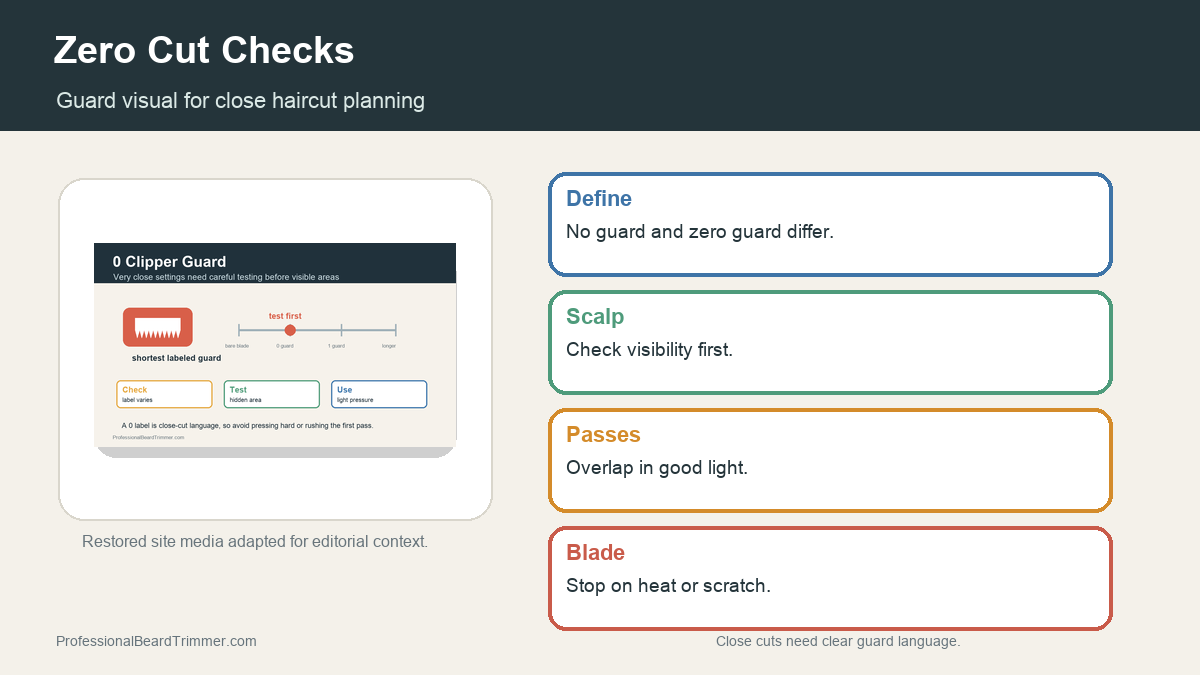
Image note: The image is a practical guard-planning visual. It is not a universal length guarantee because tools and blades vary.
Direct answer: A 0 degree haircut is best treated as a very close clipper cut, so plan for scalp visibility, hair density, neckline cleanup, and blade comfort before going shorter. Start conservatively if you are unsure how close the final result will look.
0 degree haircut checks
| Check | What to do | Why it matters |
|---|---|---|
| Scalp visibility | Check how much skin will show at close length | Very short cuts reveal density and growth pattern |
| Guard choice | Confirm whether zero means no guard, zero guard, or a close blade setting | Terms vary by barber and tool |
| Even passes | Overlap clipper paths in good light | Close hair exposes missed strips |
| Edge cleanup | Clean sideburns and neckline gradually | Simple cuts depend on tidy edges |
| Blade comfort | Stop if the blade feels hot, rough, or scratchy | Close contact leaves little room for discomfort |
How to plan a close zero-style cut
- Define zero first. Ask whether zero means no guard, a zero guard, or a specific blade setting.
- Check scalp contrast. Look at hair density and growth direction before committing to the shortest pass.
- Cut in overlapping paths. Use steady overlapping passes so the close cut stays even.
- Clean the edges lightly. Finish neckline and sideburns with controlled trimmer passes.
- Watch blade feel. Pause if the blade heats, pulls, or scratches during close work.
Zero cut checklist
- Clear zero definition: Prevents confusion between no guard and zero guard.
- Scalp check: Shows whether the length will look too exposed.
- Overlapping passes: Keeps a very short cut even.
- Clean blade: Improves comfort near the scalp.
For related reference pages, compare the 0 clipper guard guide, the guard size guide, and the burr haircut guide.
Frequently asked questions
What is a 0 degree haircut?
A 0 degree haircut usually refers to a very close clipper cut, but the exact meaning depends on whether the barber means no guard, a zero guard, or a specific blade setting.
Is a zero haircut the same as bald?
No. A zero clipper cut can be very short, but it is not always shaved bald. Tool and blade setup determine the final closeness.
Should I start with zero if I am unsure?
Start slightly longer if scalp visibility or density is uncertain. You can step down after checking the cut in good light.
Why does a close haircut look uneven?
Unevenness can come from missed clipper paths, growth direction, scalp contrast, dull blades, or going too short before checking the first pass.