Disclosure: This site may use affiliate links. Product specifications should be checked against manufacturer or retailer pages before purchase.
Editorial update, June 20, 2026: This recovered page was rebuilt as a practical men's grooming, clipper length, and haircut planning guide using restored or current site media. It avoids fake testing, live commercial data, shop visit claims, medical promises, and affiliate language.
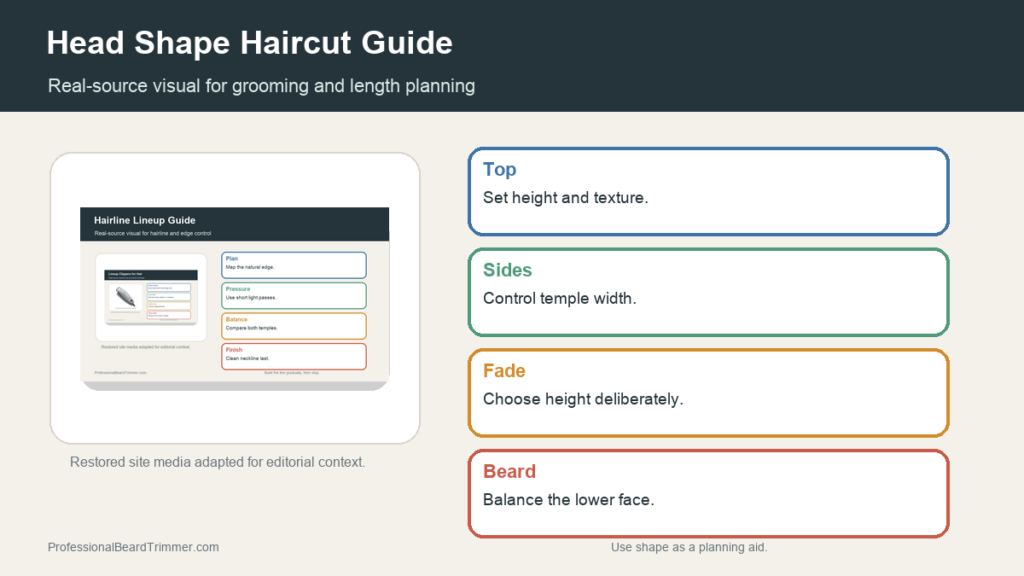
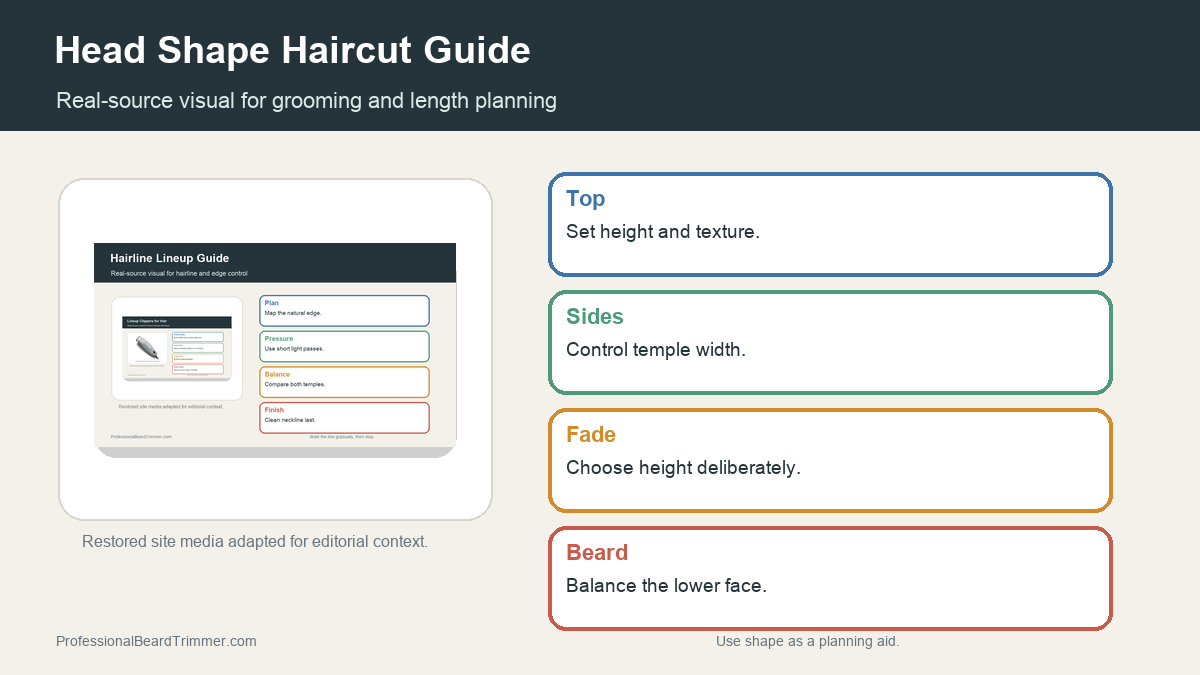
Image note: The image uses restored hairline planning media for editorial context. It does not claim a diagnosis, measurement, or guaranteed appearance result.
Direct answer: Head shape matters most as a haircut planning tool, not a fixed label. Use it to decide top height, side weight, fade height, hairline cleanup, beard balance, and neckline shape so the finished style looks balanced from the front and profile.
Head shape haircut planning checks
| Check | What to do | Why it matters |
|---|---|---|
| Top height | Decide whether the style needs lift, texture, or a flatter finish | Top shape changes visual height |
| Side weight | Control bulk around temples and above the ears | Side weight affects width and balance |
| Fade height | Choose low, mid, high, or no fade based on proportions | Fade height changes the outline |
| Hairline | Clean edges lightly without chasing an unnatural line | A realistic hairline looks more stable |
| Beard balance | Use beard length and neckline to support the haircut | Facial hair can balance the lower face |
How to plan a haircut around head shape
- Look at front and profile. Check height, width, crown, temples, and jaw balance before choosing a cut.
- Choose top shape. Decide whether texture, lift, or a smoother finish supports the overall outline.
- Control side bulk. Use fade height, tapering, or scissor work to manage width above the ears.
- Plan beard connection. Match sideburns, beard length, and neckline so the haircut and facial hair work together.
- Keep edges realistic. Clean the hairline and neckline without over-sharpening areas that grow unevenly.
Head shape haircut checklist
- Top shape: Controls visual height and movement.
- Side control: Balances width around temples and ears.
- Fade choice: Changes the outline without changing the whole style.
- Beard connection: Supports the lower face and sideburn transition.
For related reference pages, compare the hairline guide, the bald head shapes guide, and the buzz cut hairline guide.
Frequently asked questions
How should head shape affect a haircut?
Use head shape to plan top height, side weight, fade height, hairline cleanup, sideburn transition, and beard balance rather than to force one fixed style.
Can a beard help balance head shape?
Yes. Beard length, neckline position, and sideburn connection can change how the lower face balances with the haircut.
Is a high fade always slimming?
No. A high fade can reduce side weight, but on some head shapes it may add too much contrast. Low or mid fades can be more balanced.
What should I ask a barber?
Ask how much top height, side weight, fade height, hairline cleanup, and beard connection will best match your front and profile view.