
Disclosure: This site may use affiliate links. Product specifications should be checked against manufacturer or retailer pages before purchase.
Editorial update, June 19, 2026: This recovered page was rebuilt as a practical haircut and grooming-length guide using restored old-site media. It does not claim hands-on barber testing, current product specifications, retailer offers, or availability.
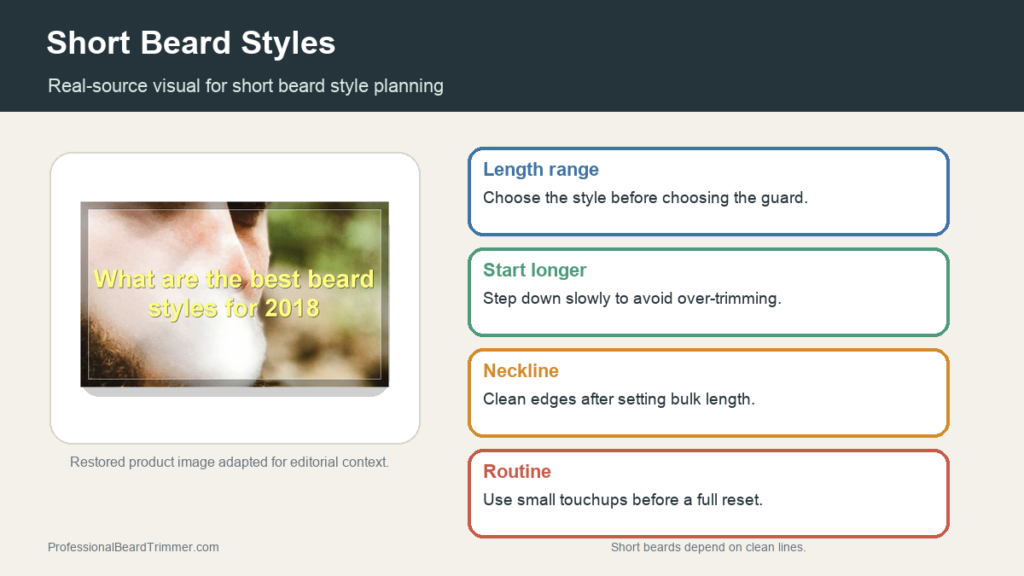
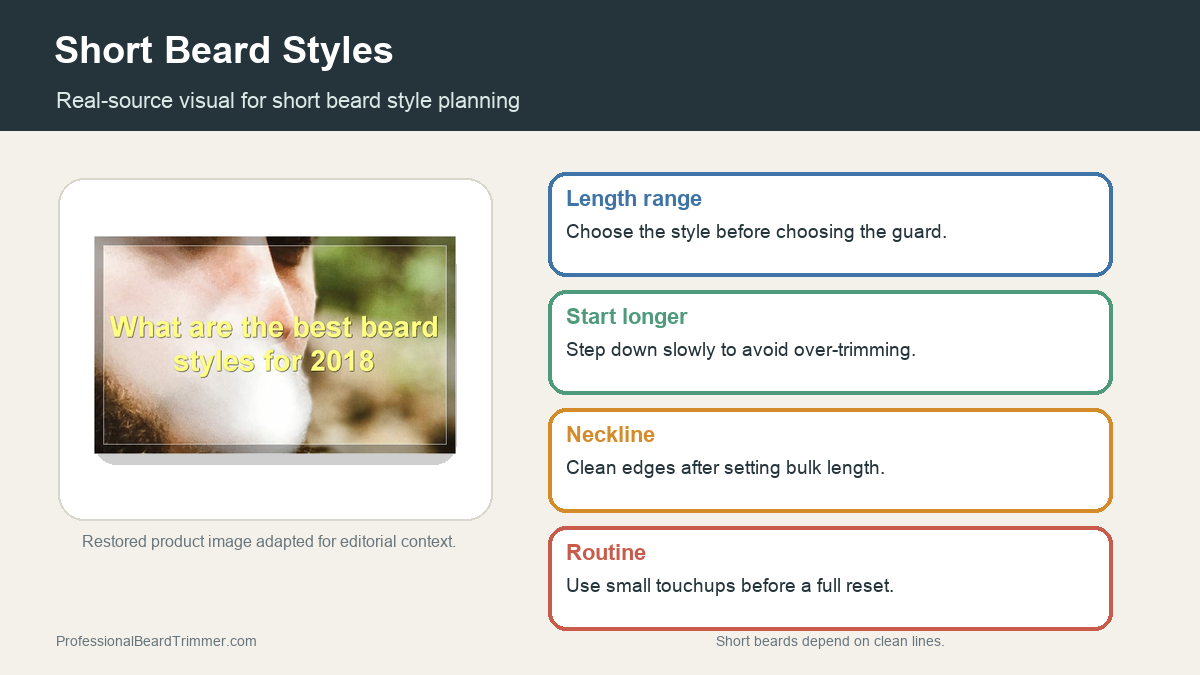
Image note: The image gives beard-style context from restored site media. It supports grooming decisions and does not claim a trend ranking or product test.
Direct answer: Short beard styles work best when you choose a length range, trim gradually with a longer guard first, and clean the neckline and cheek line separately from the main beard length. The edge work usually matters as much as the guard number.
Short beard style planning checks
| Check | What to do | Why it matters |
|---|---|---|
| Length range | Choose stubble, short boxed, or fuller short beard before trimming | A clear range prevents over-trimming |
| Guard choice | Start with a longer guard and step down slowly | Short beards show mistakes quickly |
| Neckline | Clean the neckline after the bulk length is set | A messy neckline can make a short beard look unfinished |
| Cheek line | Keep natural or sharpened based on face shape and density | The cheek line controls how formal the beard appears |
| Maintenance | Set a repeat routine for length and edge cleanup | Short styles need regular small trims |
How to trim a short beard style
- Pick the beard range. Decide whether the goal is stubble, a neat short boxed beard, or a slightly fuller short beard.
- Start longer. Use a longer guard first, then step down only if the beard still looks too full.
- Set the neckline. Trim the neckline separately so the beard keeps shape without cutting into the jawline too high.
- Clean the cheek line. Remove stray hairs while keeping the main cheek line natural or intentionally sharp.
- Maintain in small passes. Repeat light trims before the beard becomes uneven instead of waiting for a major reset.
Short beard maintenance checklist
- Longer starting guard: Reduces the chance of cutting the beard too short.
- Separate edge work: Keeps length trimming and line cleanup controlled.
- Neckline check: Makes short styles look intentional.
- Routine touchups: Maintain shape without a full restart.
For related reference pages, compare the beard trimmer buying guide, the beard trimmer length chart, and the beard neckline guide.
Frequently asked questions
What is the easiest short beard style to maintain?
A simple short boxed beard or even stubble range is usually easiest because the length is controlled with a guard and the main work is keeping the neckline and cheek line tidy.
Should I trim beard length or edges first?
Trim the main length first with a guard, then clean the neckline, cheek line, mustache edge, and stray hairs separately.
How do I avoid trimming a short beard too low?
Start with a longer guard, trim in dry conditions when possible, brush the beard into place, and step down gradually only after checking both sides.
Why does a short beard look messy even after trimming?
The main length may be even, but the neckline, cheek line, mustache edge, or stray hairs can still make the beard look unfinished.