Disclosure: This site may use affiliate links. Product specifications should be checked against manufacturer or retailer pages before purchase.
Editorial update, June 19, 2026: This recovered page was rebuilt as a practical men's haircut and grooming guide using restored or current site media. It avoids hands-on test claims, live shopping data, score claims, and stereotypes.
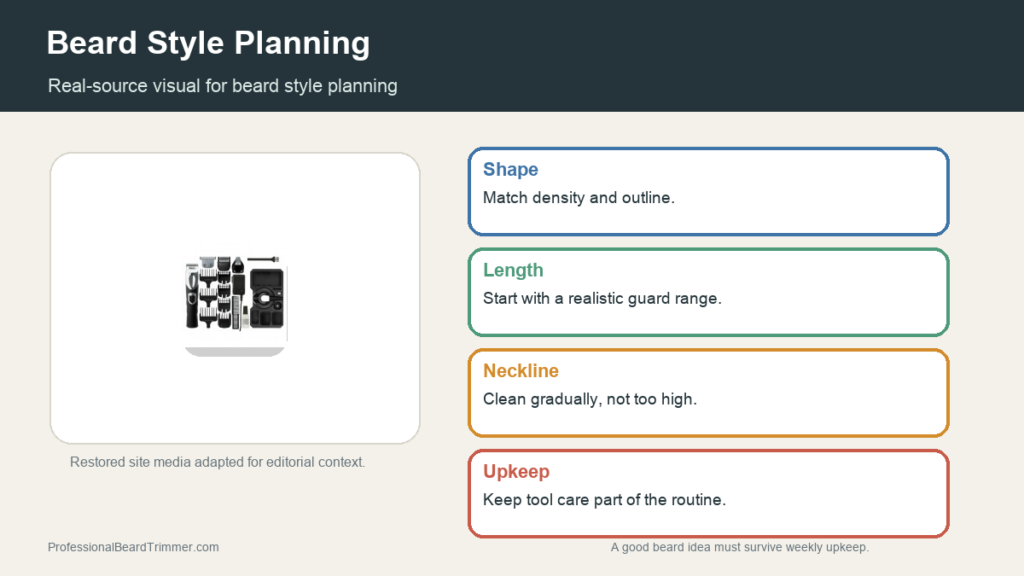
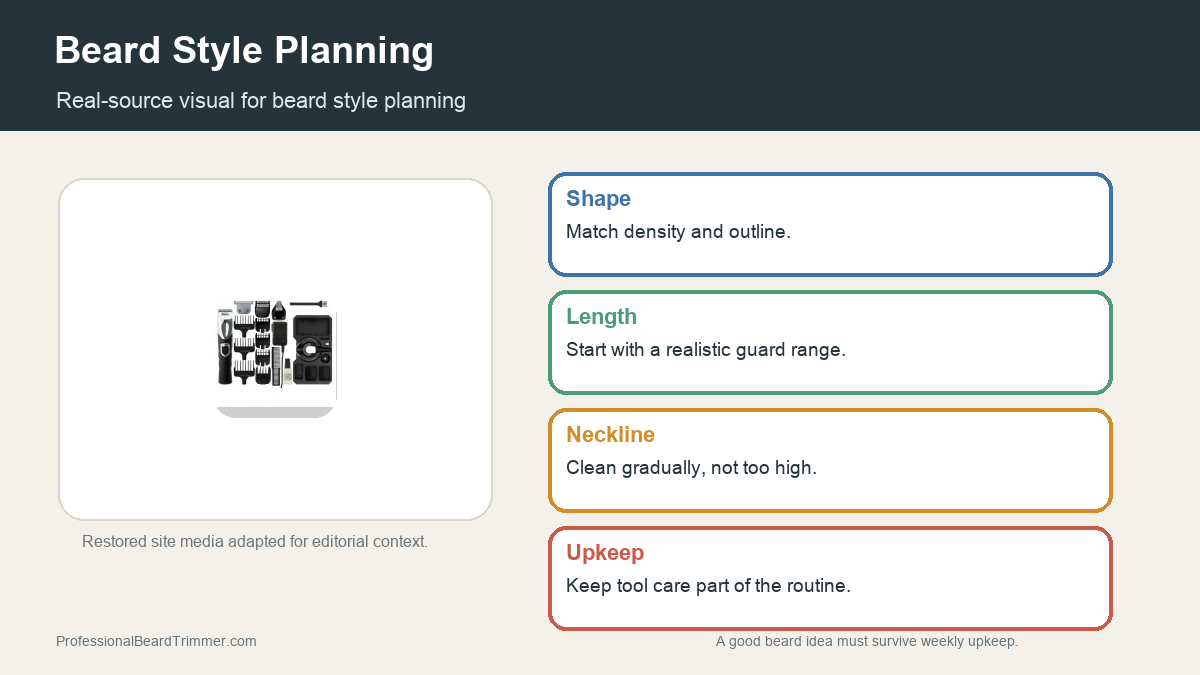
Image note: The image gives tool and grooming context from restored site media. It is not proof of hands-on testing, a trend ranking, or a claim that one beard shape fits every face.
Direct answer: The best beard idea is the one that matches your beard density, face shape, neckline tolerance, and maintenance schedule. Choose the shape first, then set a practical trimmer length, cheek line, neckline, and cleanup rhythm.
Beard style planning checks
| Check | What to do | Why it matters |
|---|---|---|
| Beard density | Choose a style that works with the thickest and thinnest areas | A style that fights patchy areas is harder to maintain |
| Length target | Pick a guard range before shaping the outline | Length controls fullness, softness, and daily upkeep |
| Neckline | Set the neckline conservatively and avoid chasing it too high | A high neckline can make a beard look smaller than intended |
| Cheek line | Keep it natural, lightly cleaned, or sharply defined | The cheek line changes how formal the beard looks |
| Maintenance rhythm | Plan cleanup every few days or weekly depending on growth | A style only works if the upkeep fits your schedule |
How to choose a beard style you can maintain
- Start with growth pattern. Look at density, patchy spots, mustache connection, and jaw coverage before choosing a style.
- Pick a realistic length. Use a guard range that gives shape without requiring daily correction.
- Set the neckline first. Clean the neckline gradually so the beard keeps enough visual weight under the jaw.
- Choose cheek-line sharpness. Keep the cheek line natural for a softer look or lightly define it for a cleaner outline.
- Maintain the tool. Brush hair from the trimmer and keep blades cared for so cleanup stays even.
Beard style checklist
- Short boxed beard: Works well when you want a tidy outline and moderate daily upkeep.
- Stubble beard: Fits low-maintenance routines but still needs clean neckline control.
- Full beard: Adds fullness when density supports it and trimming rhythm is consistent.
- Goatee or anchor: Can work when cheek growth is lighter but mustache and chin growth are stronger.
For related reference pages, compare the beard length chart, the beard neckline trimming guide, and the guard size guide.
Frequently asked questions
What beard style is easiest to maintain?
Short boxed beards and controlled stubble are usually easier because the outline is clear and the length does not need heavy shaping. The easiest choice still depends on growth density and neckline cleanup.
How do I choose a beard length?
Choose beard length by density, face shape, work setting, and upkeep time. Start slightly longer than the final target, then shorten only after checking the outline in good light.
Should the cheek line be natural or sharp?
A natural cheek line looks softer and is easier to maintain, while a sharper cheek line looks cleaner but needs more frequent touchups.
What trimmer setting should I use for beard ideas?
There is no universal setting. Use guard length as a planning tool, test a longer guard first, and step down only after the beard shape still looks balanced.